Gateway of India beside boats on Mumbai Harbour, Mumbai, India.

India · Chapter 03 · City and work

मुंबई

Mumbai

Bombay in the archives.
Mumbai in motion.

We left the bags and went straight to the waterfront. The next day, the hotel became our base for work as well as rest.

Enter the city ↓

Opening scene

The bags were still closed.
The city was already open.

Mumbai did not arrive quietly. It came through the airport doors, the movement around us, and the immediate feeling that sitting still would be the wrong response.

This was our first time in Mumbai—the city many people still remember as Bombay. We had barely arrived when curiosity took over. We left our luggage at Holiday Inn Mumbai, kept only what we needed for the afternoon, and ordered an Uber toward South Mumbai.

There was no complicated first-day plan. We wanted one clear introduction: the historic waterfront at Colaba, where the Gateway of India faces the harbour and the Taj Mahal Palace stands across the plaza. Sometimes a city gives you a logical place to begin.
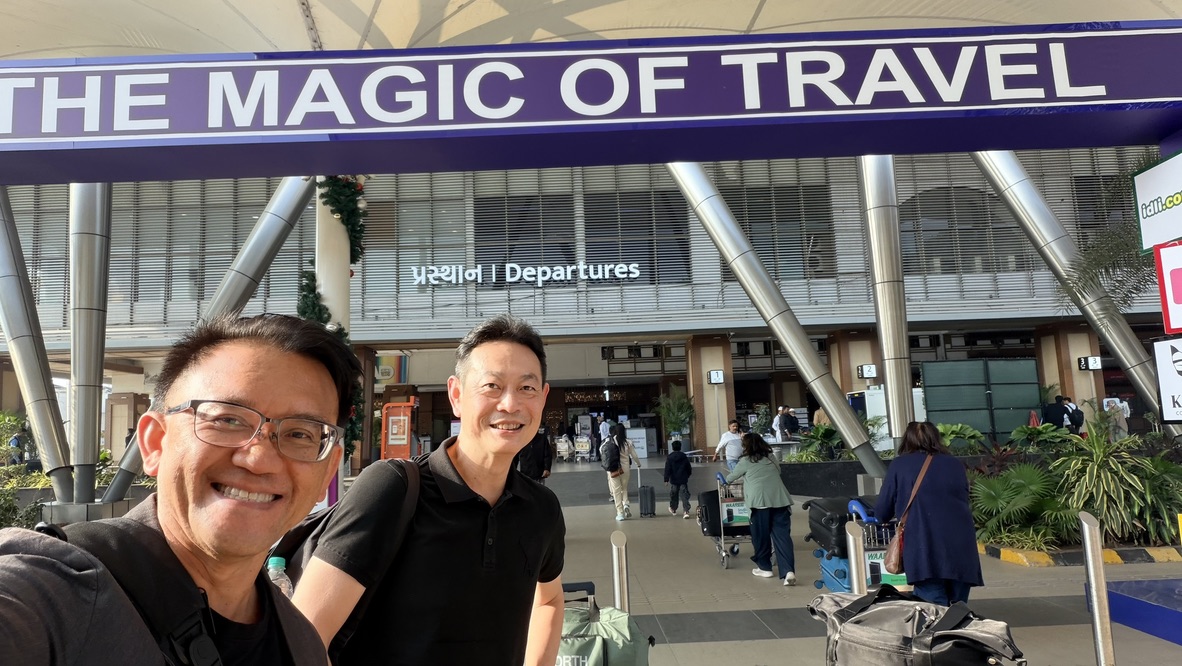
Two travellers with luggage outside an airport departures entrance, India.
Another departure. Ahmedabad had finished its story; the next chapter was already asking us to move.
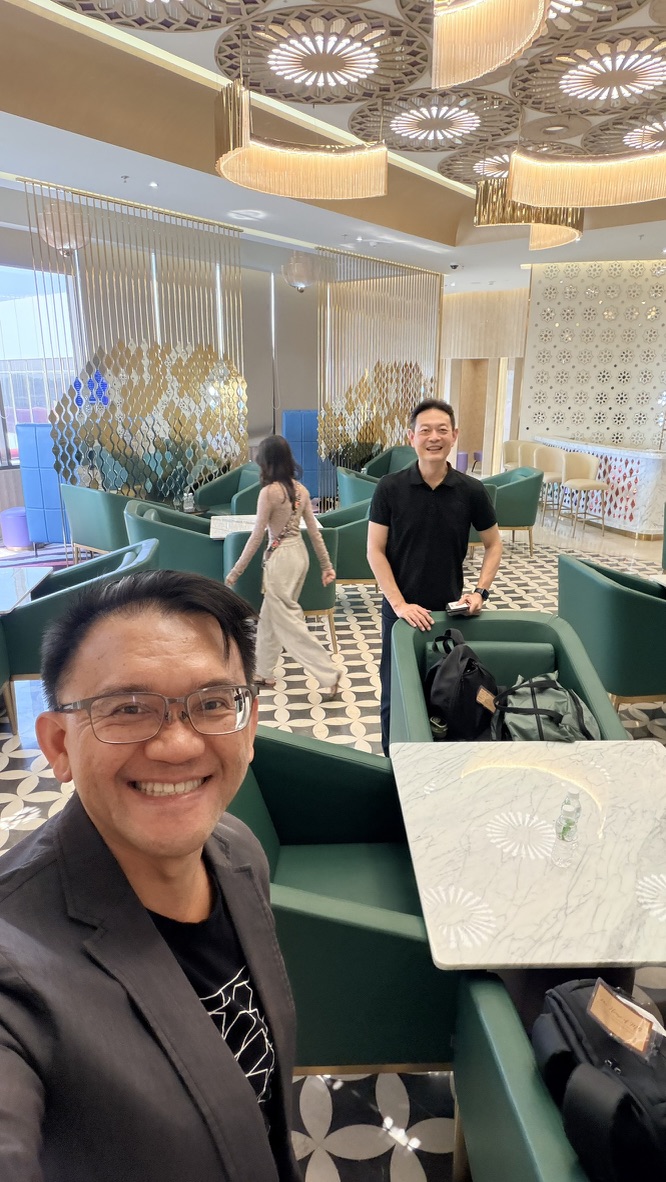
Two travellers seated in an airport lounge, India.
A pause before takeoff. One quiet hour made room for the anticipation of arriving somewhere entirely new.
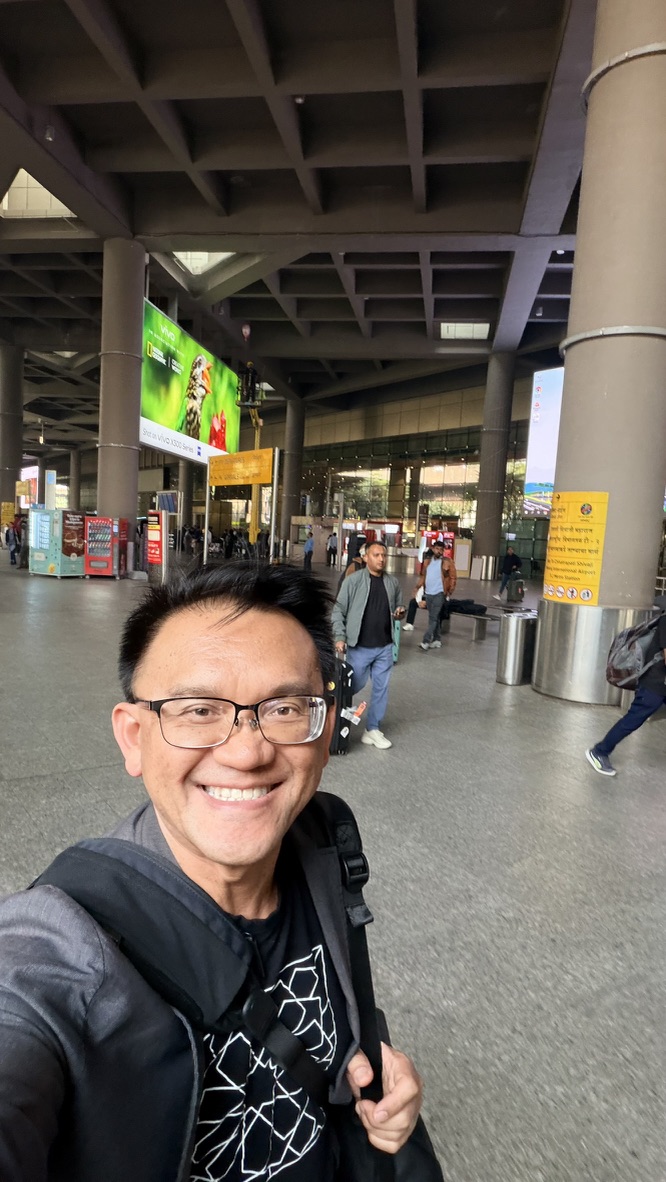
Traveller inside the airport arrivals area, Mumbai, India.
Mumbai, officially. The terminal was only a threshold; we had already decided not to slow down.

The stay · first impression

Holiday Inn began as our reset point. The next day, it became the story.

For those first hours, the hotel simply held our luggage while we met the city. By the following morning, it had become a working base for meetings, Zoom calls, meals, and the practical work of preparing a new product portfolio for the India market. Continue to the workday ↓

Mumbai · Bombay · a city shaped by the sea

Two names hold different parts of the story.

“Bombay” belongs to the city’s colonial record and remains familiar in older institutions, family memories, films, books, and conversations. “Mumbai” is the city’s official name today, rooted in Mumbadevi and the cultural identity of Maharashtra.

Long before either name carried global weight, the area was an archipelago of seven islands associated with Koli fishing communities. Portuguese and then British rule changed its political identity; land reclamation gradually joined the islands and helped turn the natural harbour into a major port.
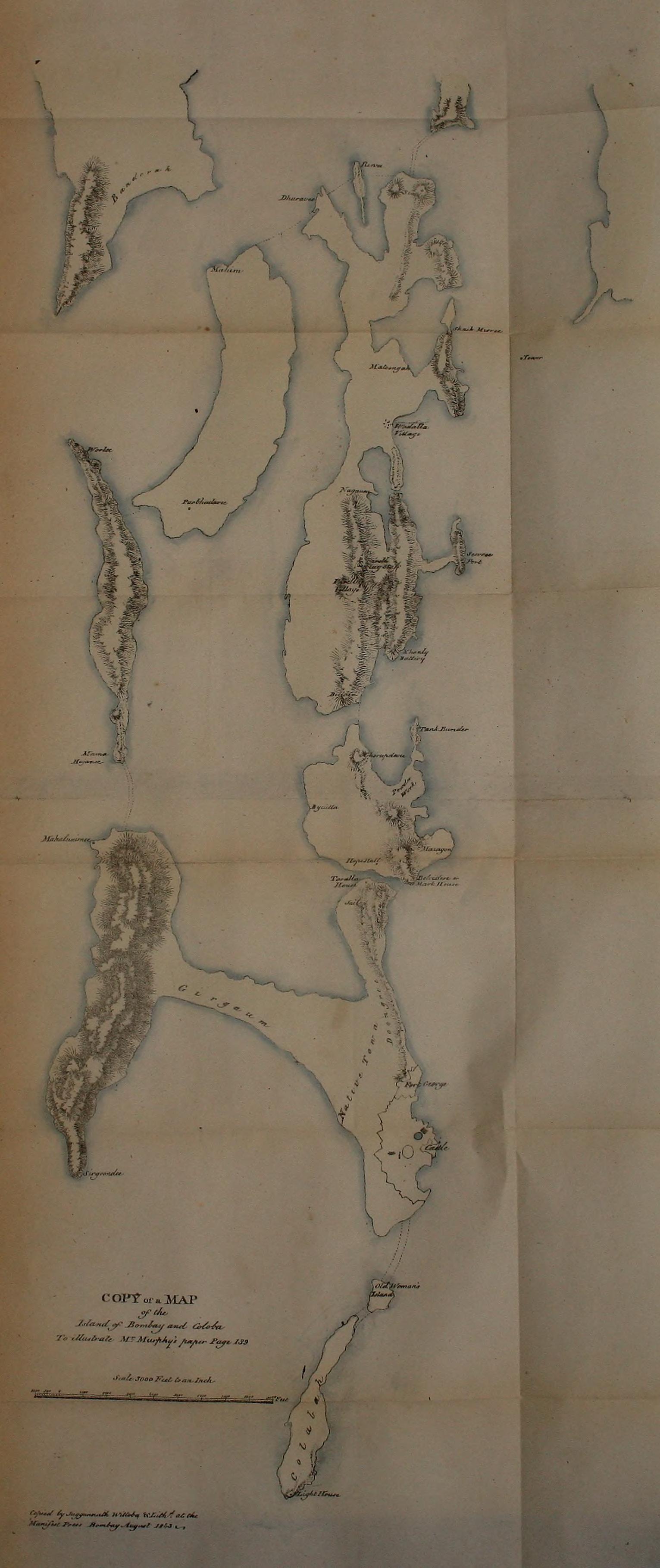
Historical map of Bombay dated 1838, Mumbai, India.
Photograph: R. X. Murphy · Wikimedia Commons · Public domain
View source and licence ↗

Colaba · Apollo Bunder

Our first landmark was built to stage an arrival.

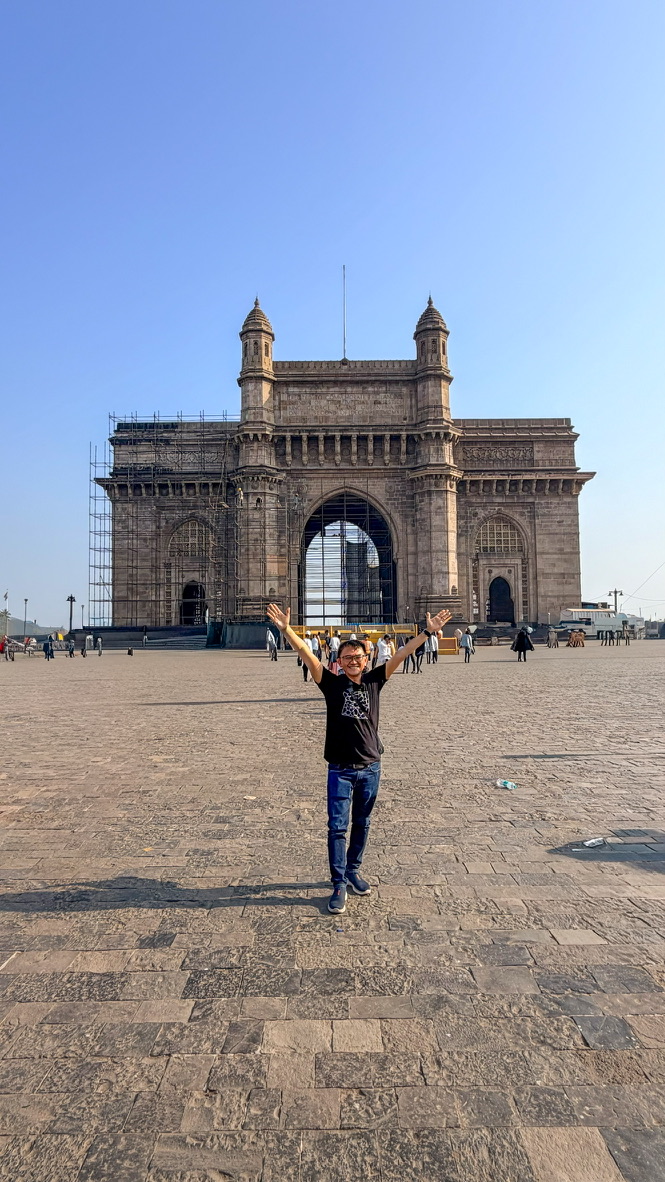
We stepped onto the open plaza and immediately understood why the Gateway of India works as Mumbai’s ceremonial front door. The stone arch has scale, but the experience around it is wonderfully democratic: families, travellers, photographers, vendors, harbour boats, and people simply standing still to take it all in.
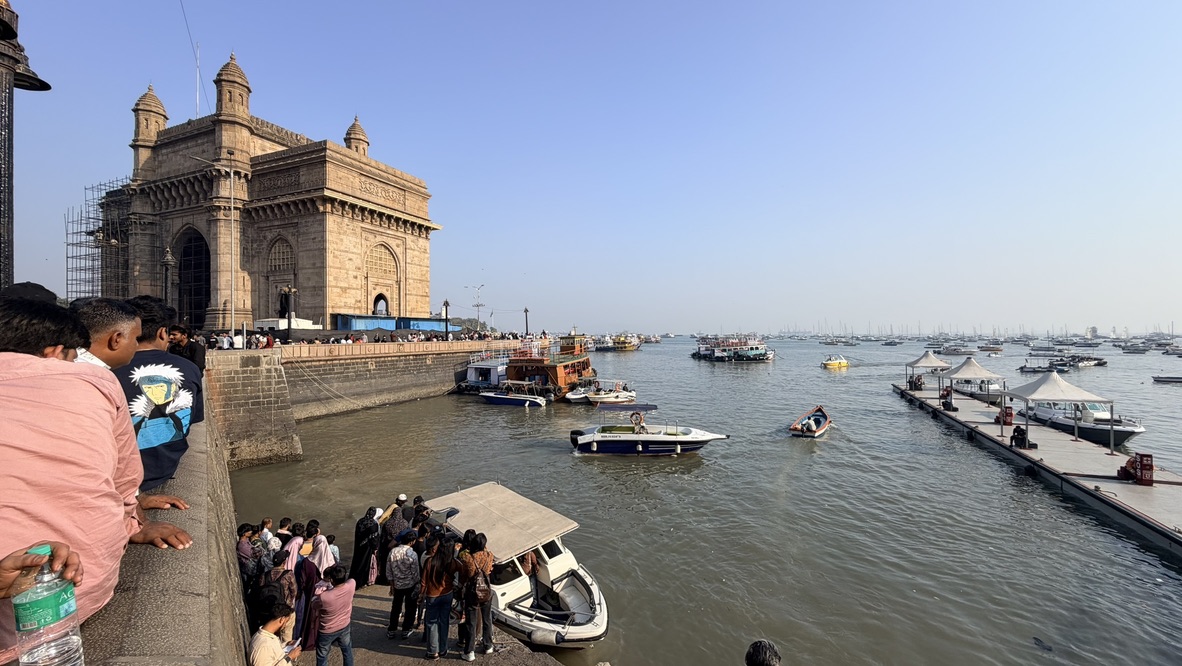
Traveller standing with raised arms before the Gateway of India, Mumbai, India.
No rehearsal needed. Our first view of the Gateway turned a name from history into a place we could finally inhabit.
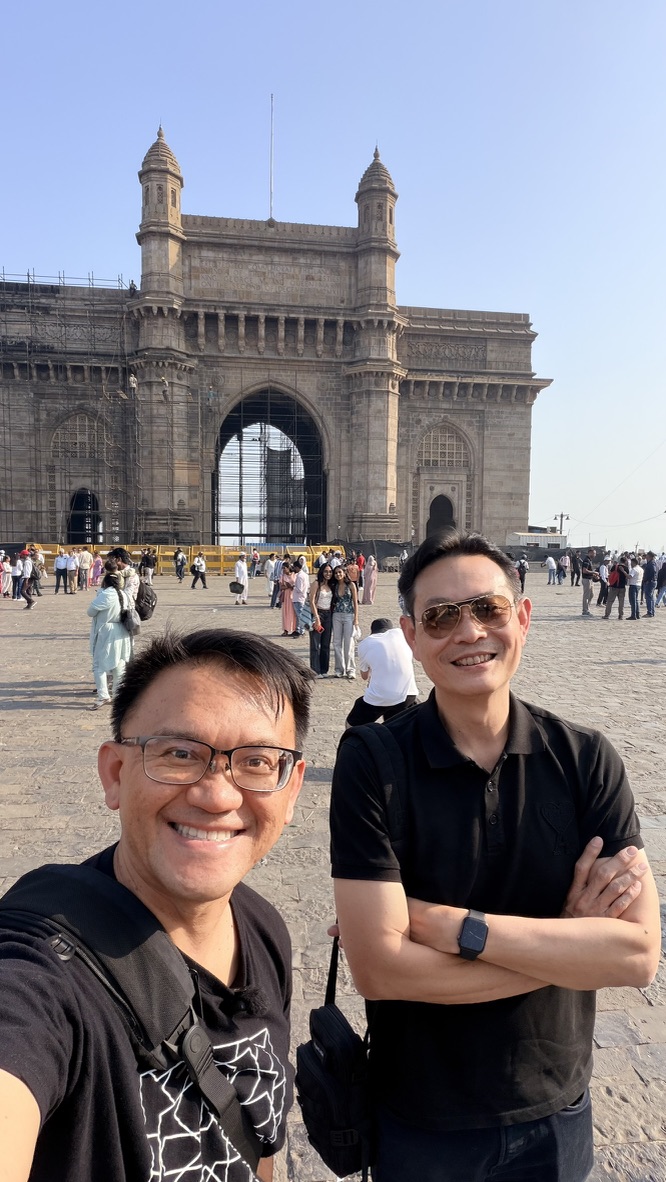
Two travellers taking a selfie before the Gateway of India, Mumbai, India.
First landmark, shared. The beginning mattered more because we had someone beside us to remember it with.
Gateway of India and passenger boats along Mumbai Harbour, Mumbai, India.
A city facing outward. The harbour explains why movement, migration, trade, and arrival sit so close to Mumbai’s identity.

Across the plaza · The Taj Mahal Palace

The hotel was there first.

From the Gateway, we turned around and met another Mumbai icon. The Taj Mahal Palace is not simply a luxurious backdrop. It is part of the waterfront’s visual memory—its red dome, arched windows, and layered façade holding the corner with remarkable confidence.

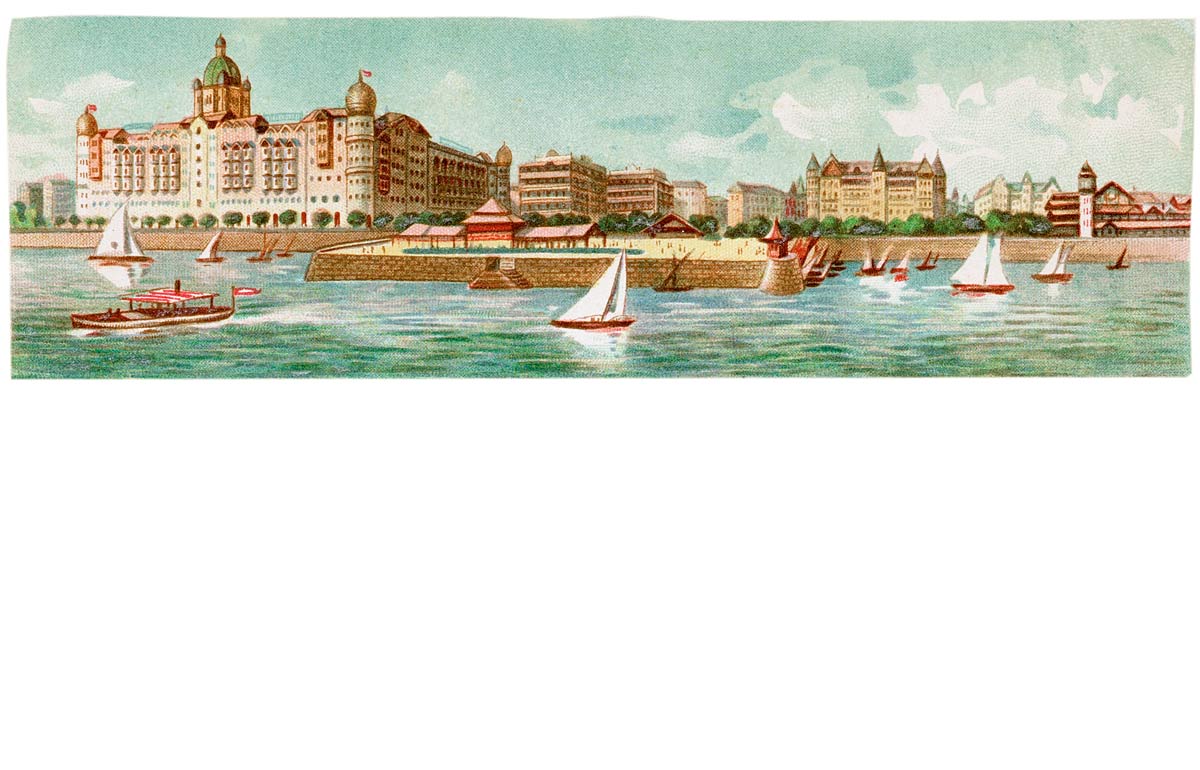
What surprised us was the timeline. The hotel opened in 1903, more than two decades before the Gateway was completed. The relationship looks inevitable today, but the Taj had already been welcoming travellers while the monument opposite it was still an idea.
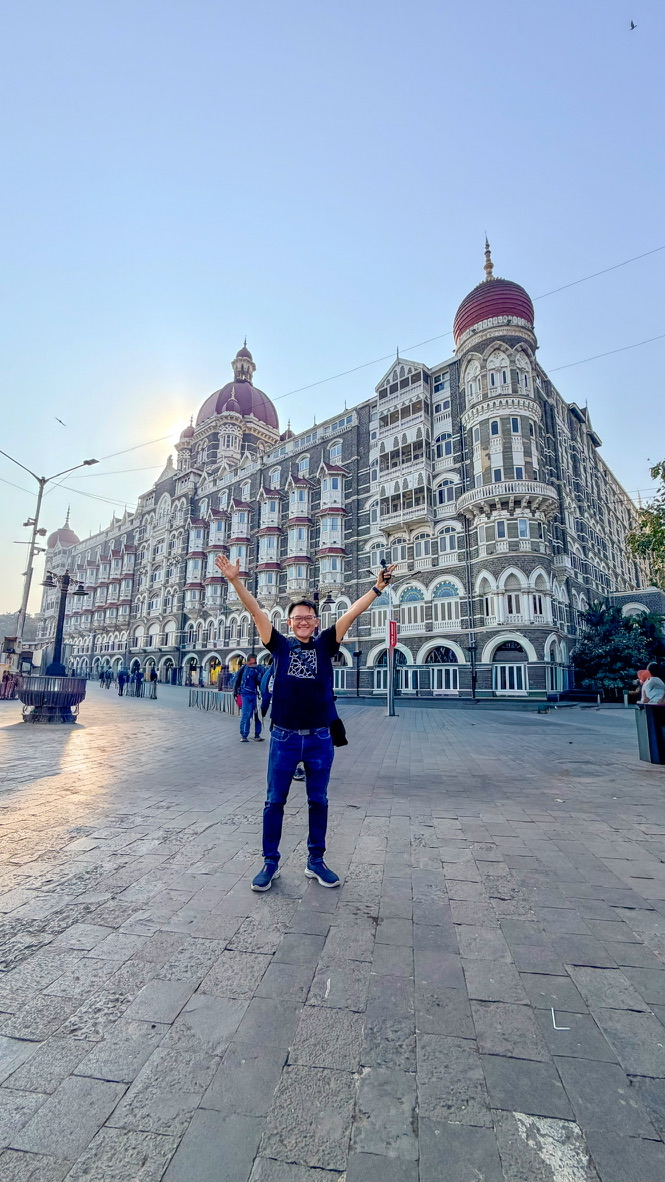
Traveller standing before the Taj Mahal Palace hotel, Mumbai, India.
Across one plaza. Two landmarks turned our first walk into a conversation between different eras of the city.
Historical postcard of the Taj Mahal Palace hotel circa 1910, Mumbai, India.
Photograph: Bombay Lithographic Co. · Wikimedia Commons · CC BY 4.0
View source and licence ↗

Next stop · Colaba Causeway

After the monuments,
lunch inside another landmark.

From the waterfront, we moved into the streets of Colaba with one destination in mind: Leopold Café. This time the landmark was not something to stand in front of. It was somewhere to sit down, order lunch, and let Mumbai gather around our table.
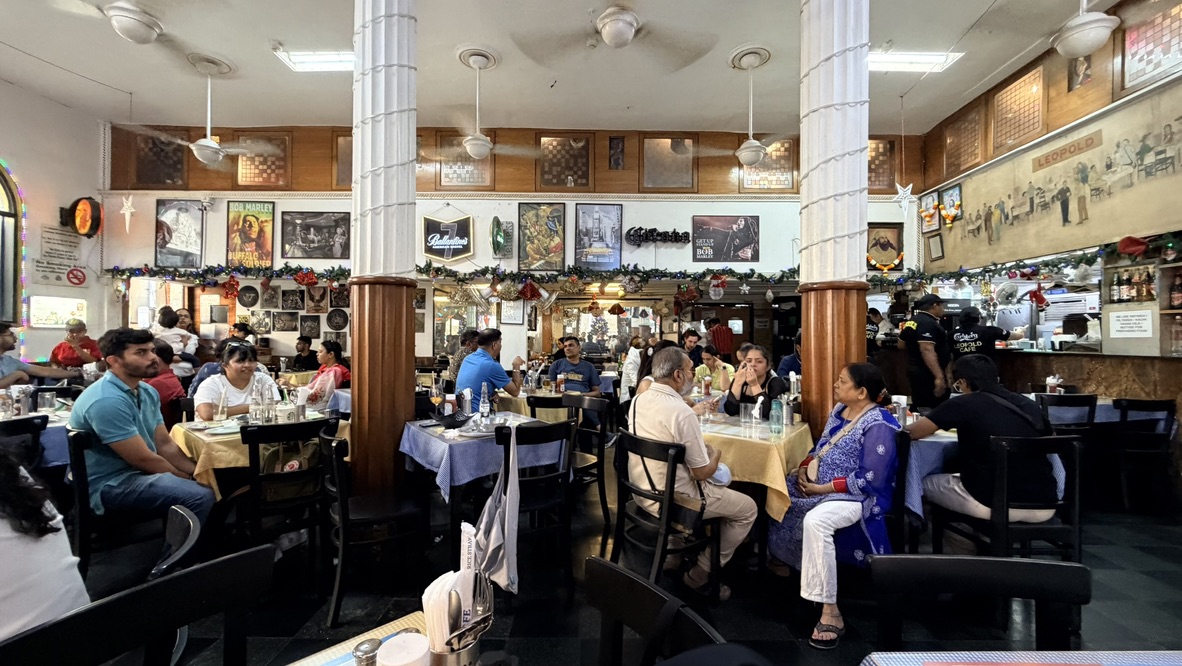
Busy dining room inside Leopold Café, Mumbai, India.
A room still in motion. The crowded tables made lunch feel less like a pause and more like another way of entering the city.
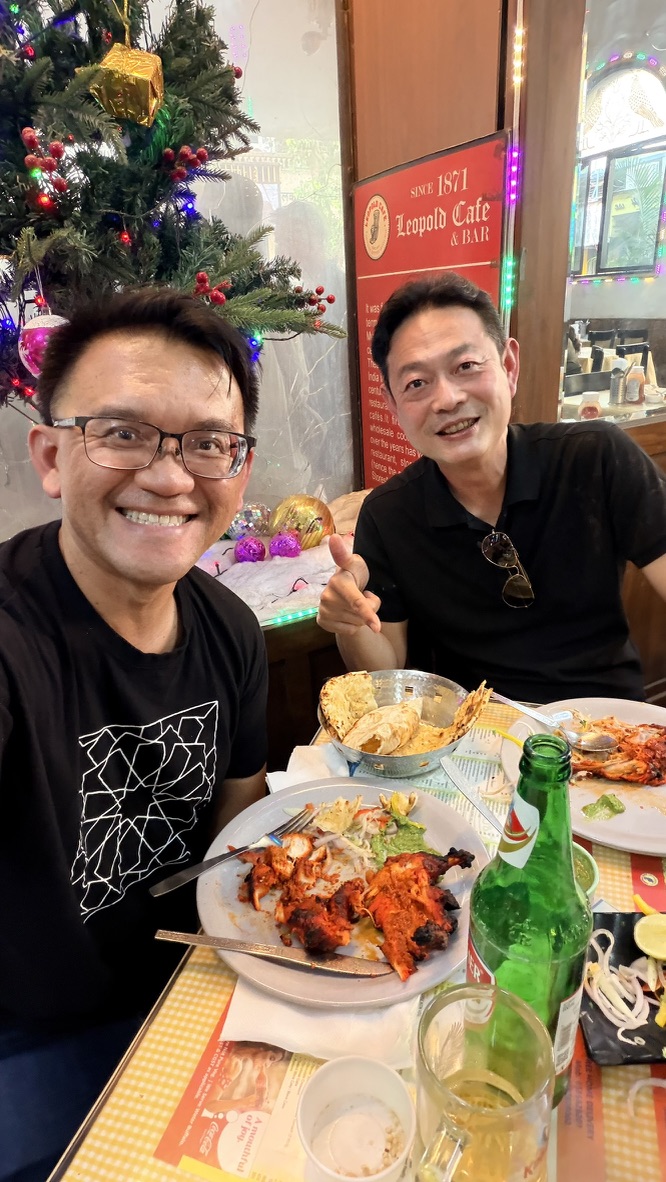
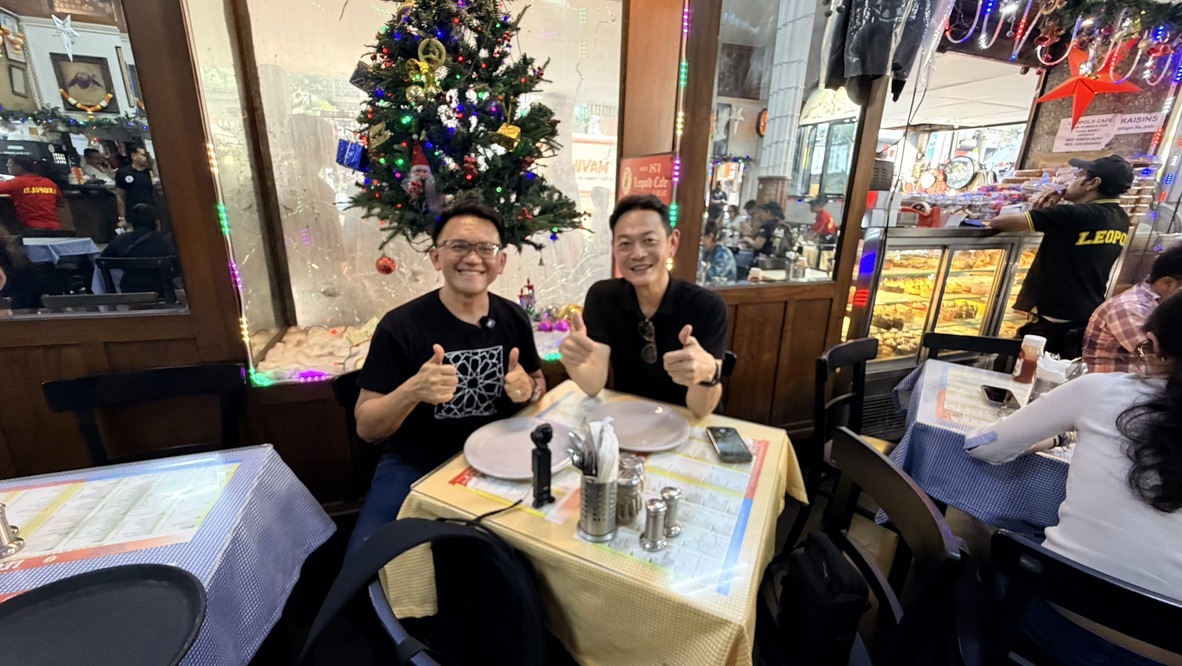
Two travellers seated beside a Christmas tree at Leopold Café, Mumbai, India.
Table for two. We arrived hungry, happy, and ready to trade the open waterfront for the energy of a full dining room.
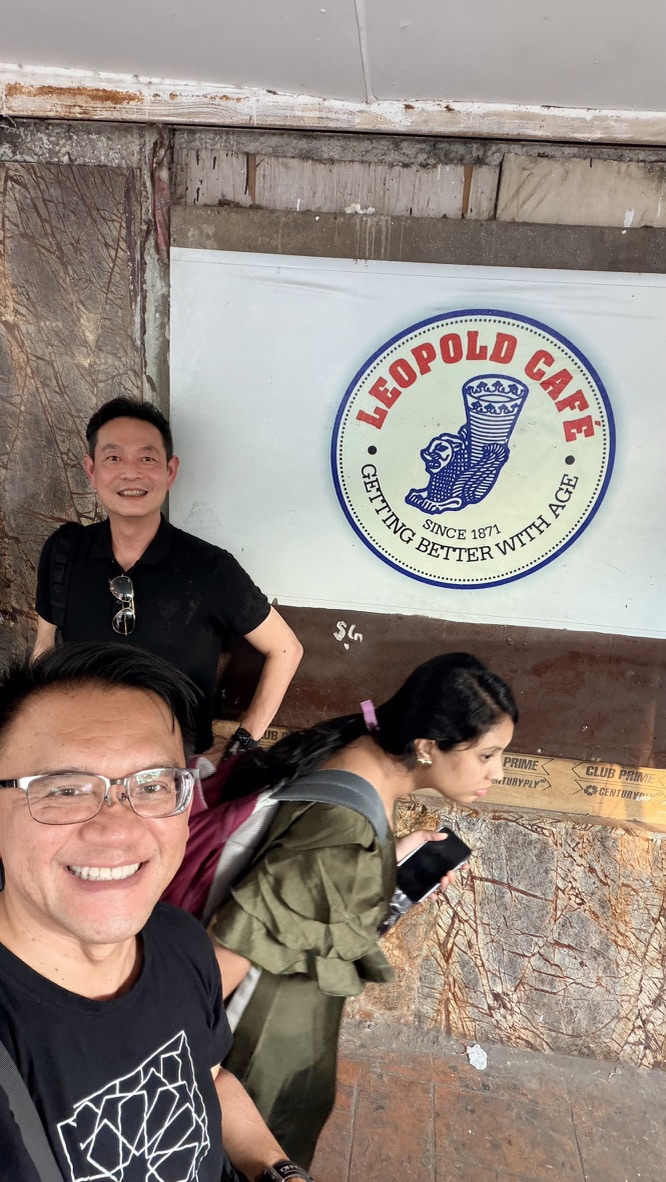
Two travellers beside the Leopold Café wall sign, Mumbai, India.
Since 1871. One small sign opened the door to a much larger story about Mumbai’s café culture.

An Irani café · established 1871

Before it became an icon, it kept changing with the city.

Leopold traces its beginning to 1871. Historical accounts describe a business that started as a wholesale cooking-oil store and, over the years, also operated as a store, pharmacy, and restaurant. Its long life is not a story of standing still; it is a story of adapting.

The café also belongs to the wider history of Mumbai’s Irani cafés, opened by Zoroastrian migrants from Iran in the late nineteenth and early twentieth centuries. These approachable, mixed social spaces became part of the city’s everyday rhythm—places where different kinds of people could share the same room and table.
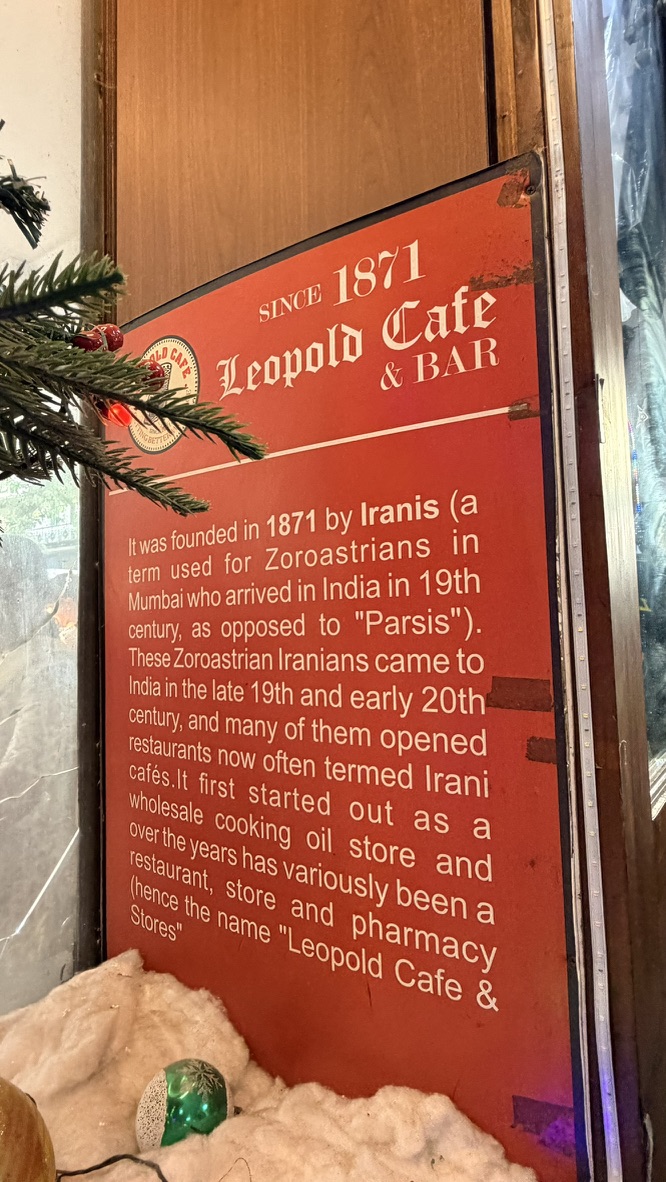
History sign inside Leopold Café, Mumbai, India.
The story on the wall. A restaurant known around the world still introduces itself through the history inside its own room.

Editorial archive · 2007 to today

Three photographs.
One continuing life.

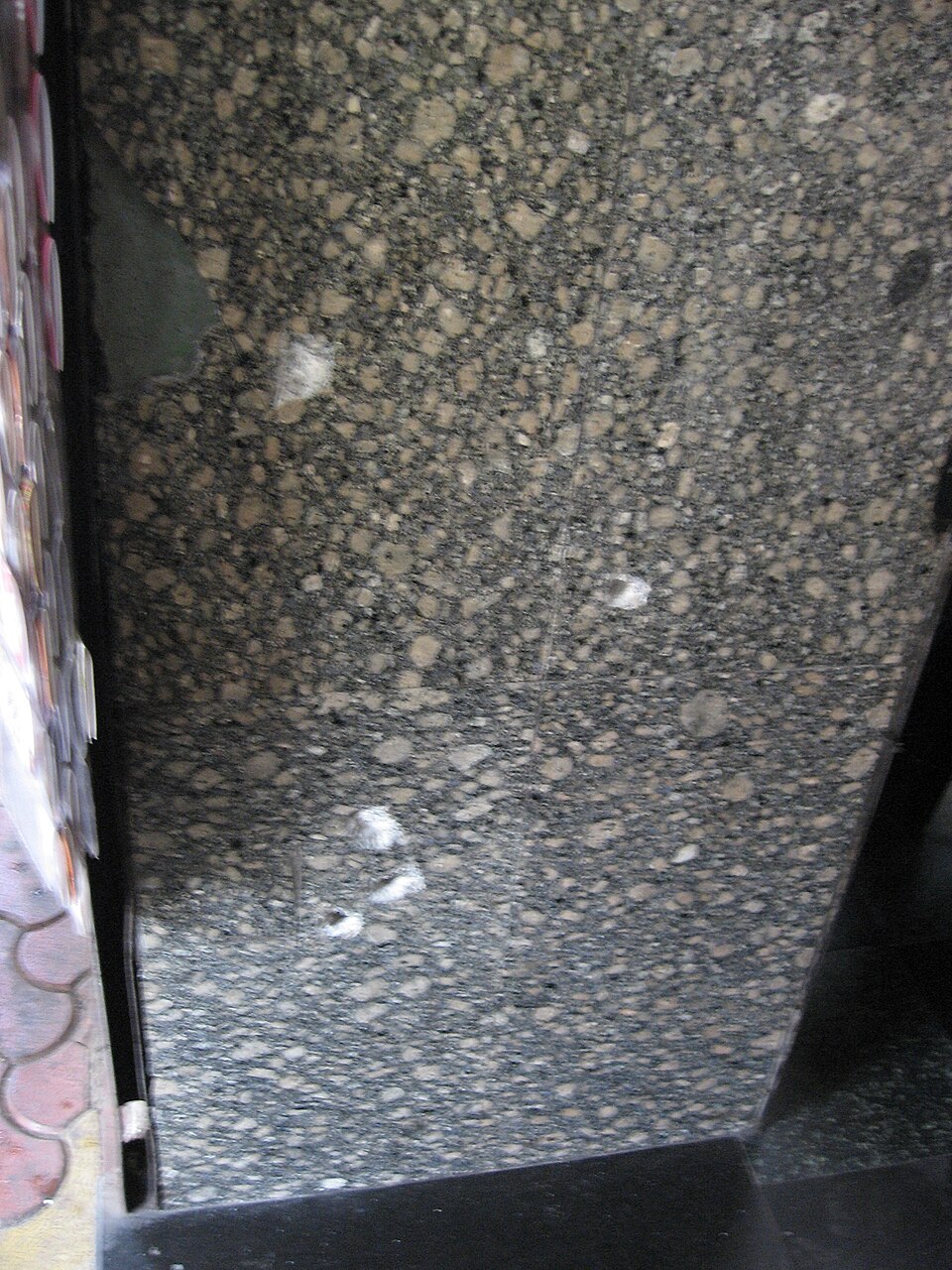
The images do more than prove that Leopold has endured. Together, they show an everyday dining room before 2008, the physical memory left immediately afterward, and the living café that still meets Colaba Causeway today.
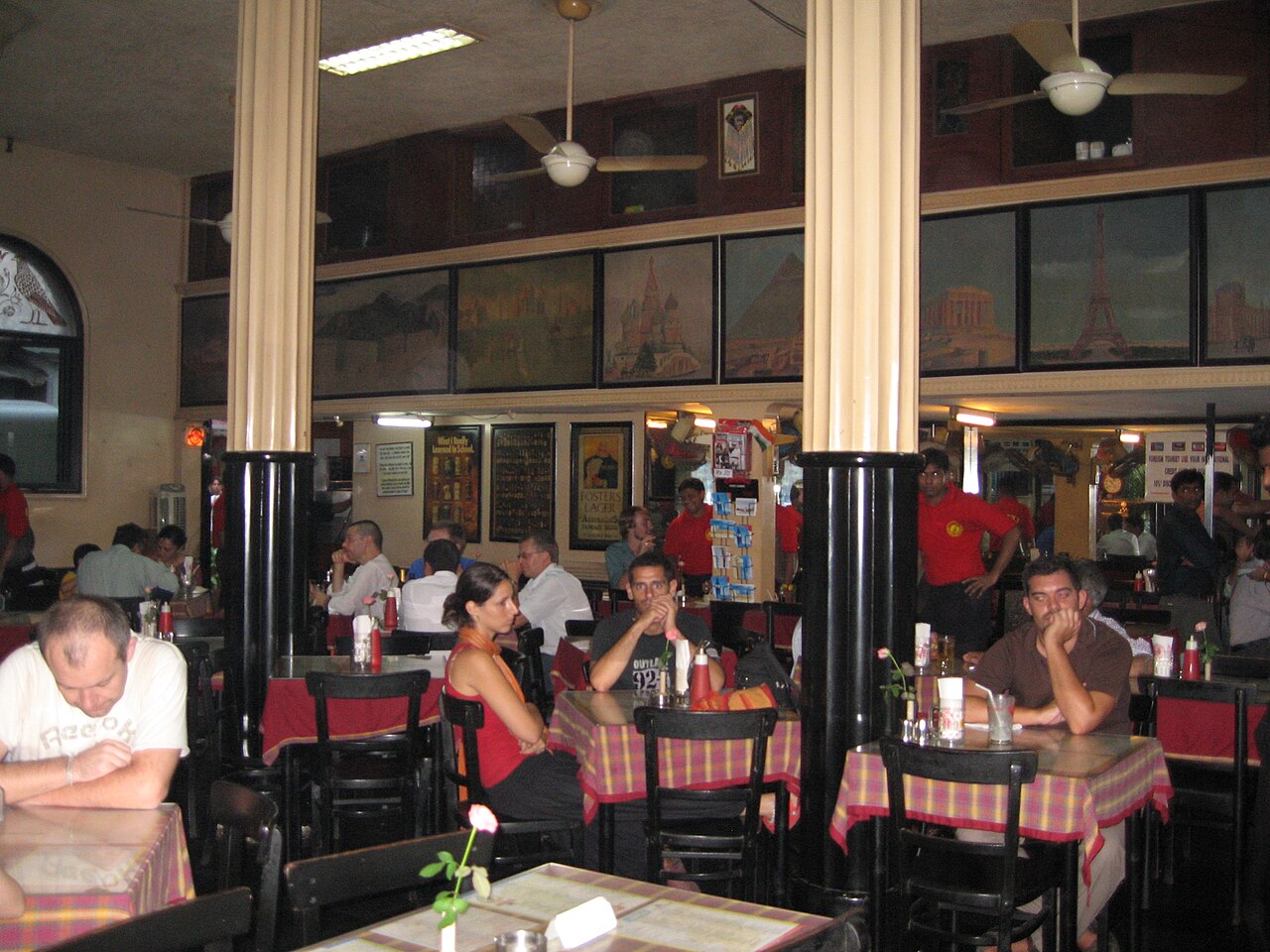
01 · September 2007Dining room at Leopold Café in September 2007, Mumbai, India.
Before the rupture. The fans, columns, crowded tables, and red-shirted staff record the café as an ordinary social room one year before it entered a global tragedy.
Photograph: Greg O’Beirne · Wikimedia Commons · CC BY-SA 3.0
View source and licence ↗
02 · December 2008Bullet marks on a wall at Leopold Café in December 2008, Mumbai, India.
Memory in the stone. Photographed shortly after the attacks, these marks make the history tangible without turning loss into spectacle.
Photograph: Nicholas “Nichalp” · Wikimedia Commons · CC BY-SA 3.0
View source and licence ↗
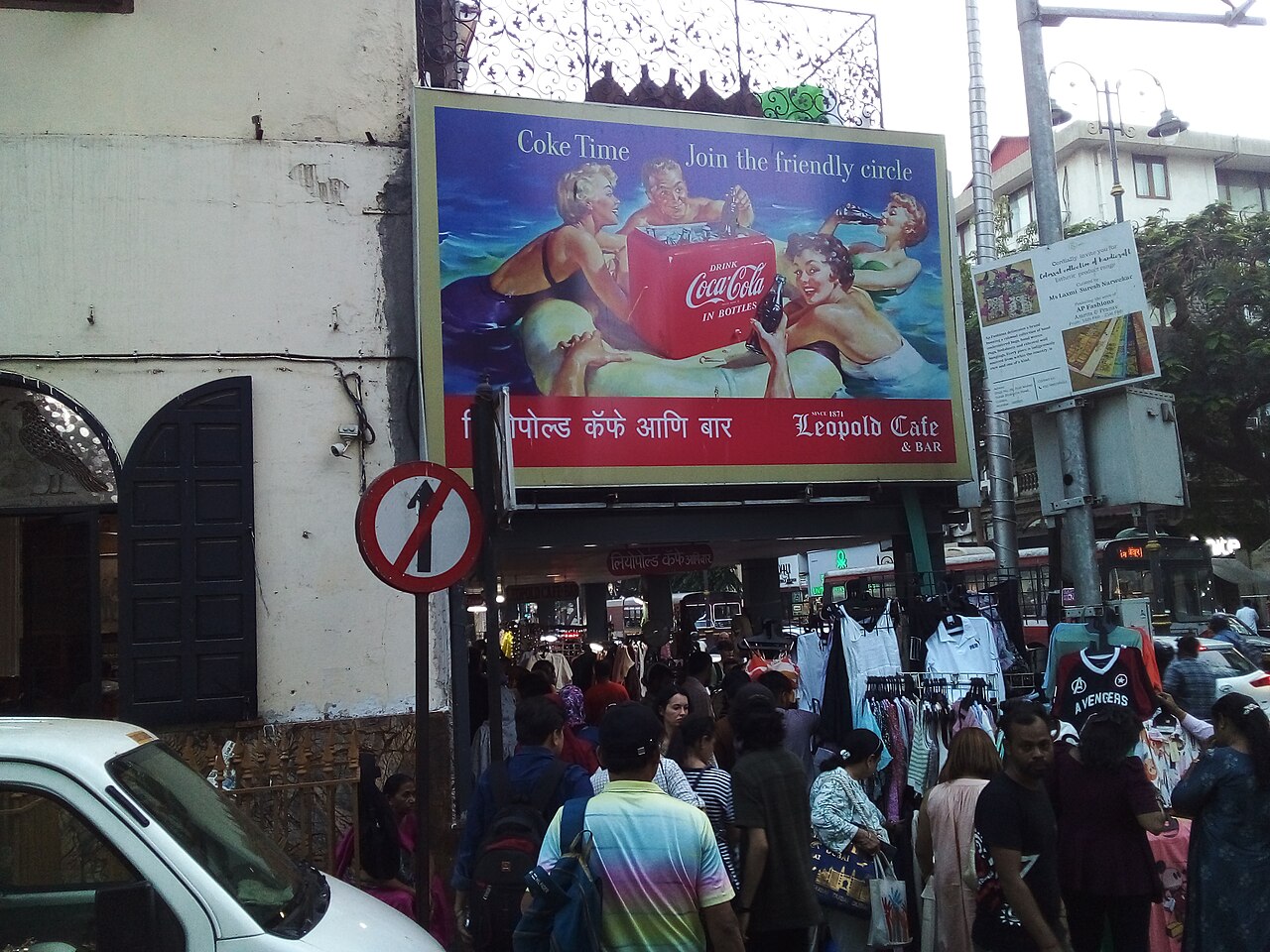
03 · Present dayStreet entrance of Leopold Café on Colaba Causeway, Mumbai, India.
Still part of Colaba. The open frontage returns the story to ordinary city life: people arriving, eating, talking, and keeping the room alive.
Photograph: Shishirdasika · Wikimedia Commons · CC BY-SA 4.0
View source and licence ↗

What we ordered · what we remember

A cold Kingfisher, charred chicken, warm bread—and finally, time to sit.

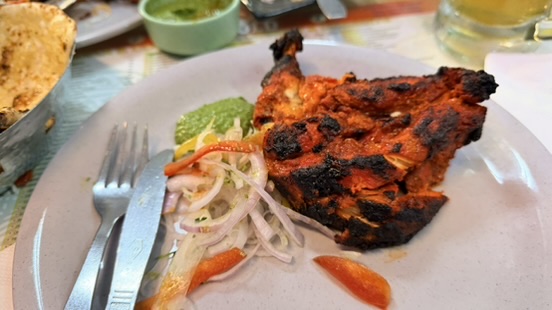
The beer arrived first, cold enough to mark a clean break from the heat and movement outside. Then came the food: smoky chicken with crisp, charred edges, flatbread, sliced onions, and bright green chutney. It was generous, direct, and exactly the lunch we wanted.

We had spent the morning collecting Mumbai through landmarks and timelines. Around this small table, the city became more immediate: plates shared between us, glasses lifted, servers moving quickly, and conversations filling every gap in the room.
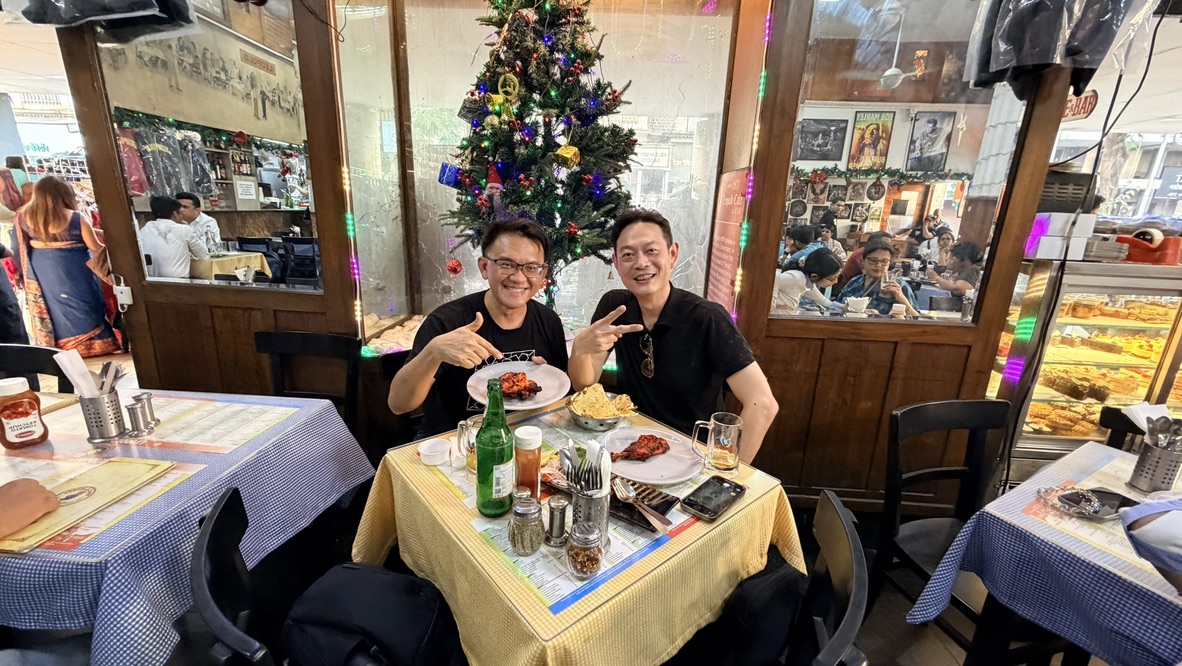
Two travellers sharing lunch at Leopold Café, Mumbai, India.
Lunch, at last. After a morning of arrivals and monuments, the pleasure was simply being together at the table.
Charred chicken with onions and green chutney at Leopold Café, Mumbai, India.
Smoke and spice. The charred edges and sharp chutney gave the meal the boldness the day had earned.
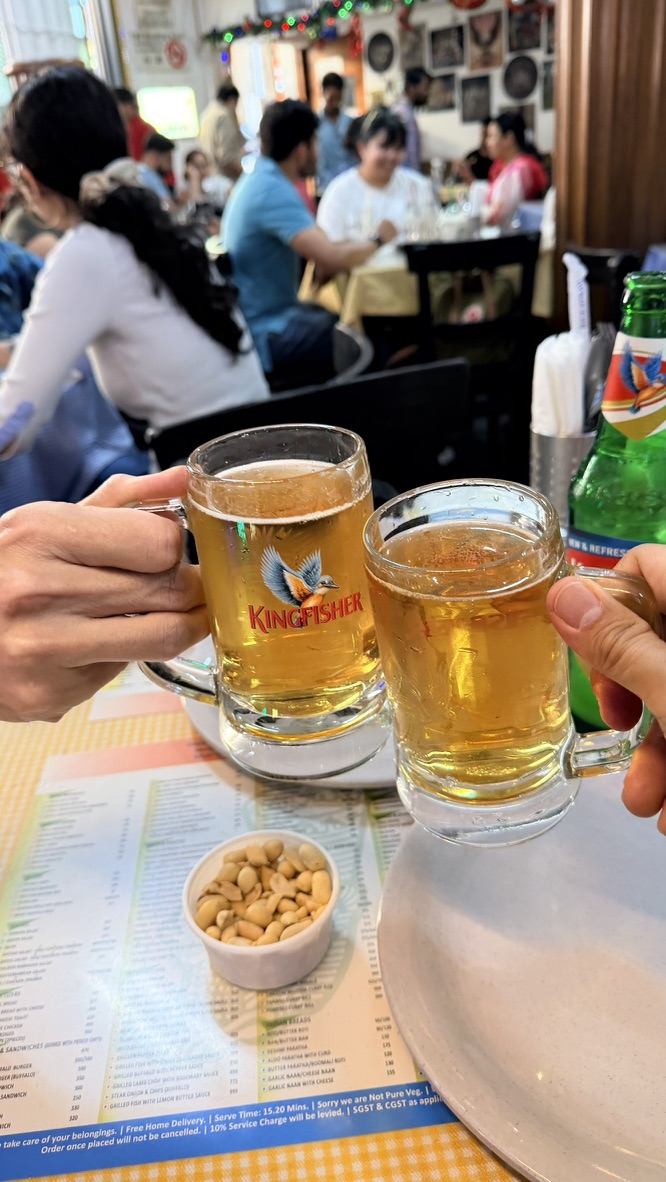
Two Kingfisher beer glasses raised at Leopold Café, Mumbai, India.
To Mumbai. A simple toast turned a famous stop into our own shared memory.
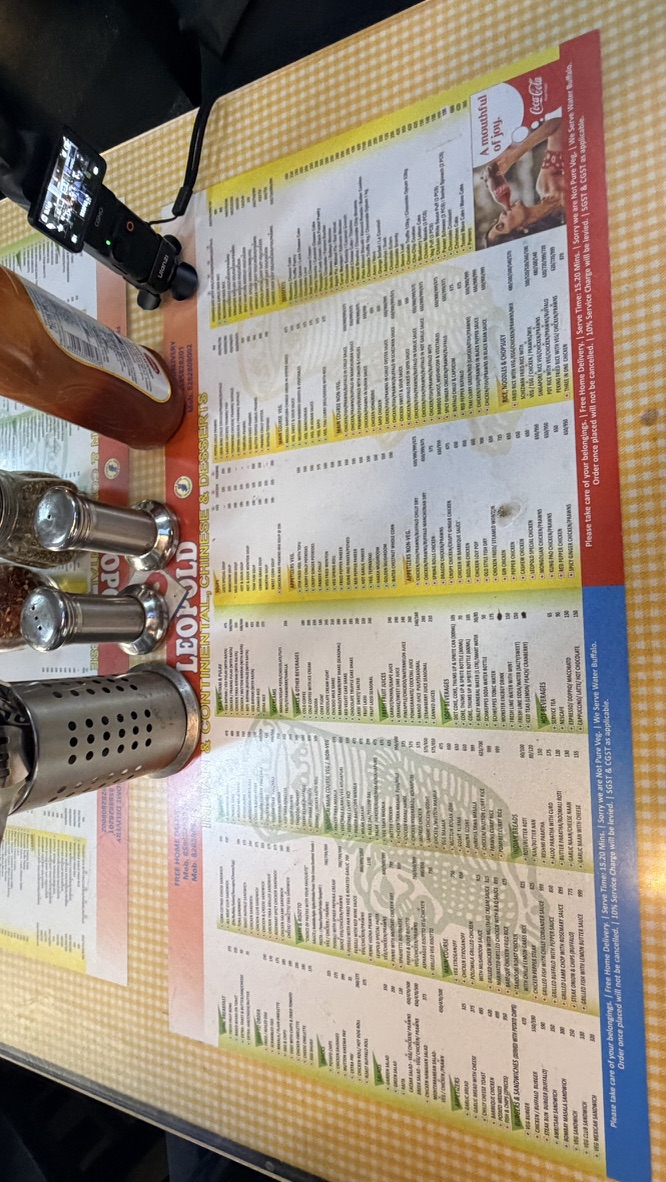
Printed food and drinks menu on a table at Leopold Café, Mumbai, India.
So much choice. The long menu felt like another expression of a café that has learned to serve many generations.
Two travellers smiling over lunch at Leopold Café, Mumbai, India.
More than a checklist stop. We came because Leopold was famous; we left remembering the warmth of our own afternoon inside it.

After lunch · back to Apollo Bunder

We had seen the icon.
Now we wanted to enter its story.

After Leopold, we walked back toward the red dome. From the plaza, the Taj Mahal Palace had been part of Mumbai’s skyline. Inside, it became a sequence of rooms, objects, courtyards, and memories—less a single monument than a living archive.
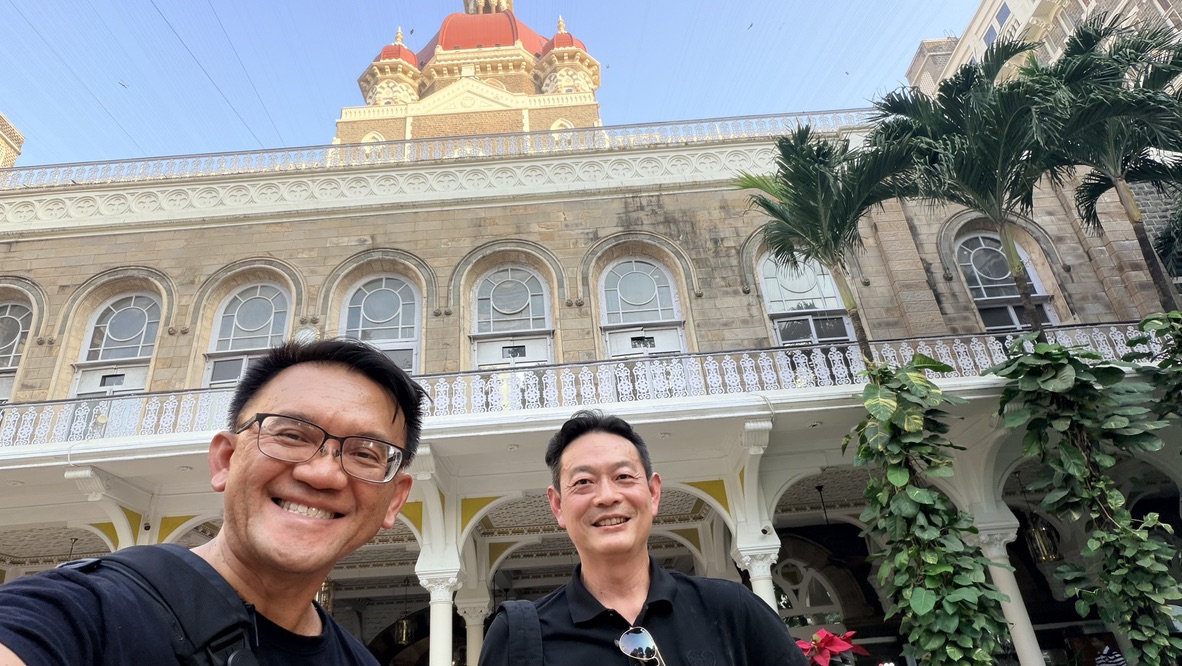
Two travellers in the courtyard of the Taj Mahal Palace, Mumbai, India.
Beyond the façade. Crossing the threshold changed the Taj from something we admired at a distance into a place we could move through together.
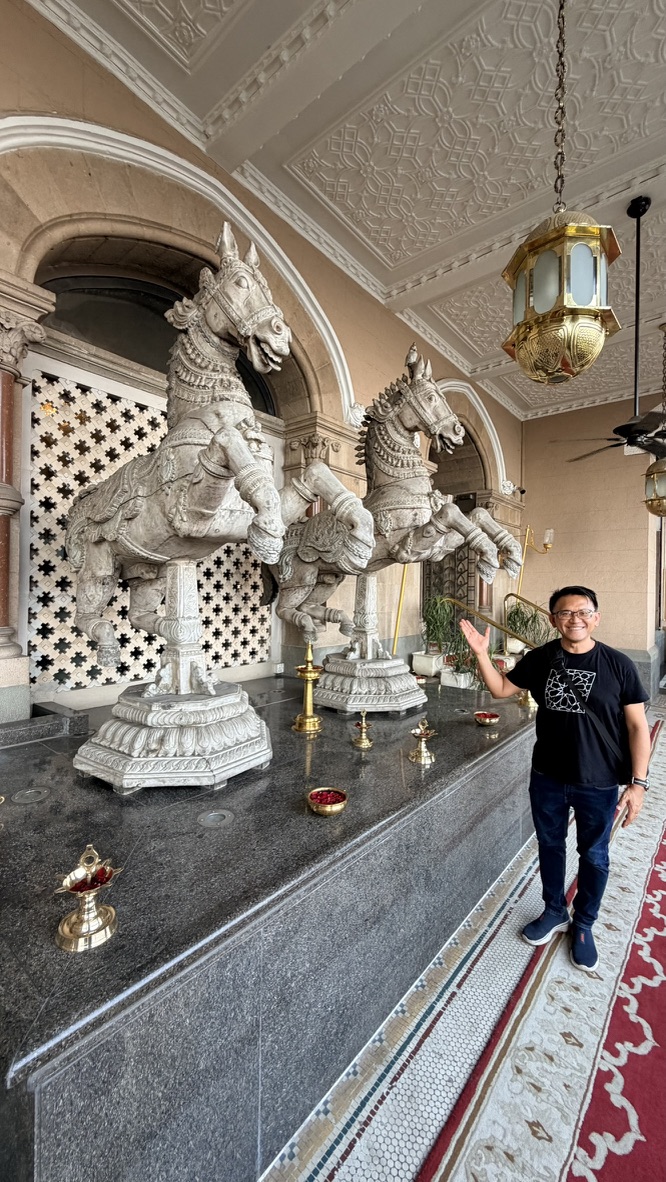
Traveller beside carved horse sculptures at the Taj Mahal Palace, Mumbai, India.
A ceremonial welcome. The carved horses, brass lamps, and patterned ceiling made the entrance feel composed as carefully as a stage.
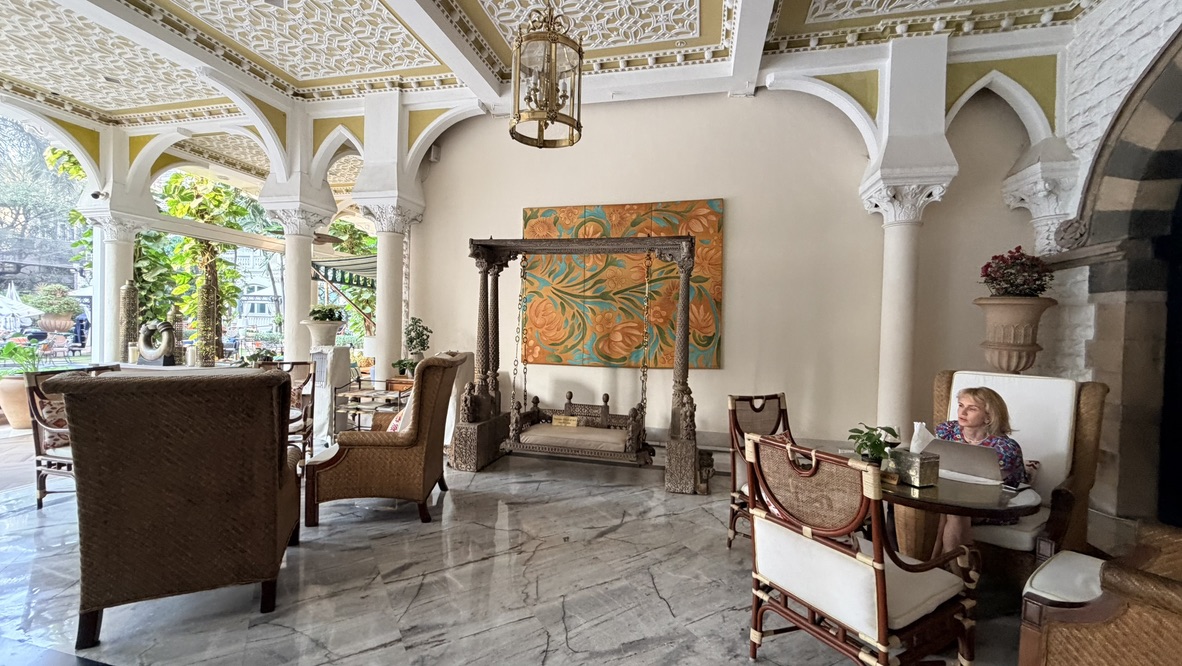
Furnished garden verandah at the Taj Mahal Palace, Mumbai, India.
Grandeur, softened. Beyond the stone and scale, cane chairs, a swing, and garden light gave the palace a surprisingly human rhythm.

The founding vision · 1898–1903

A gift to the city he believed Bombay could become.

Tata Central Archives describes Jamsetji N. Tata’s decision to build a modern hotel at Apollo Bunder as a gift to Bombay. Construction began in 1898. When the hotel opened on December 16, 1903, its first night welcomed just 17 guests.

The ambition was both civic and international: an Indian-owned hotel that could meet the world at the harbour. Its architecture brought together Rajput, Saracenic, and Victorian Gothic influences, while its interiors introduced comforts that were strikingly modern for their time.
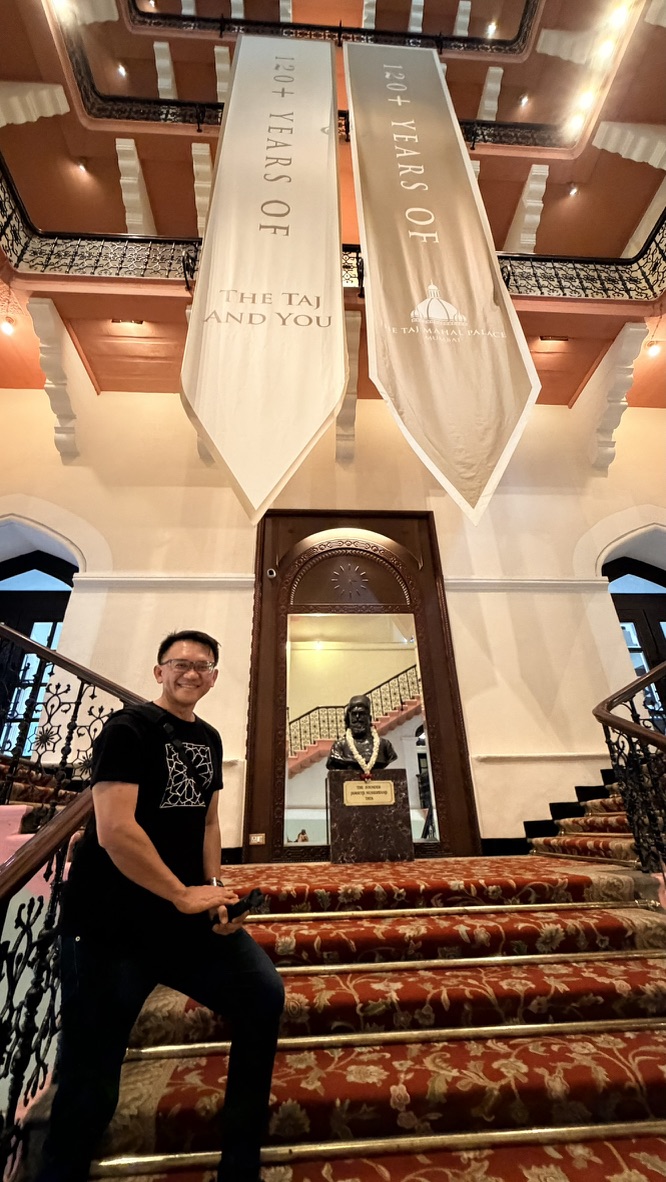
Traveller on the grand staircase beside Jamsetji Tata's bust, Mumbai, India.
The founder at the centre. On the staircase, Jamsetji Tata’s bust turns the hotel’s origin story into a presence every visitor passes.

Editorial archive · four turning points

A hotel becomes
part of a city’s memory.

The timeline begins with the founder, follows the palace as Mumbai’s waterfront changes around it, and pauses at the moment when architectural heritage became inseparable from collective loss and restoration.
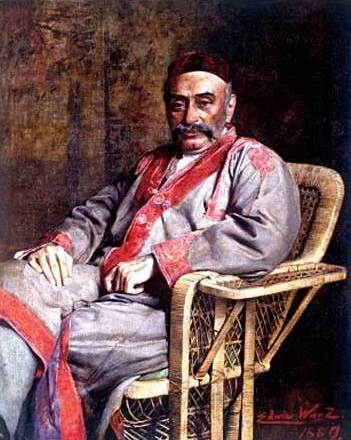
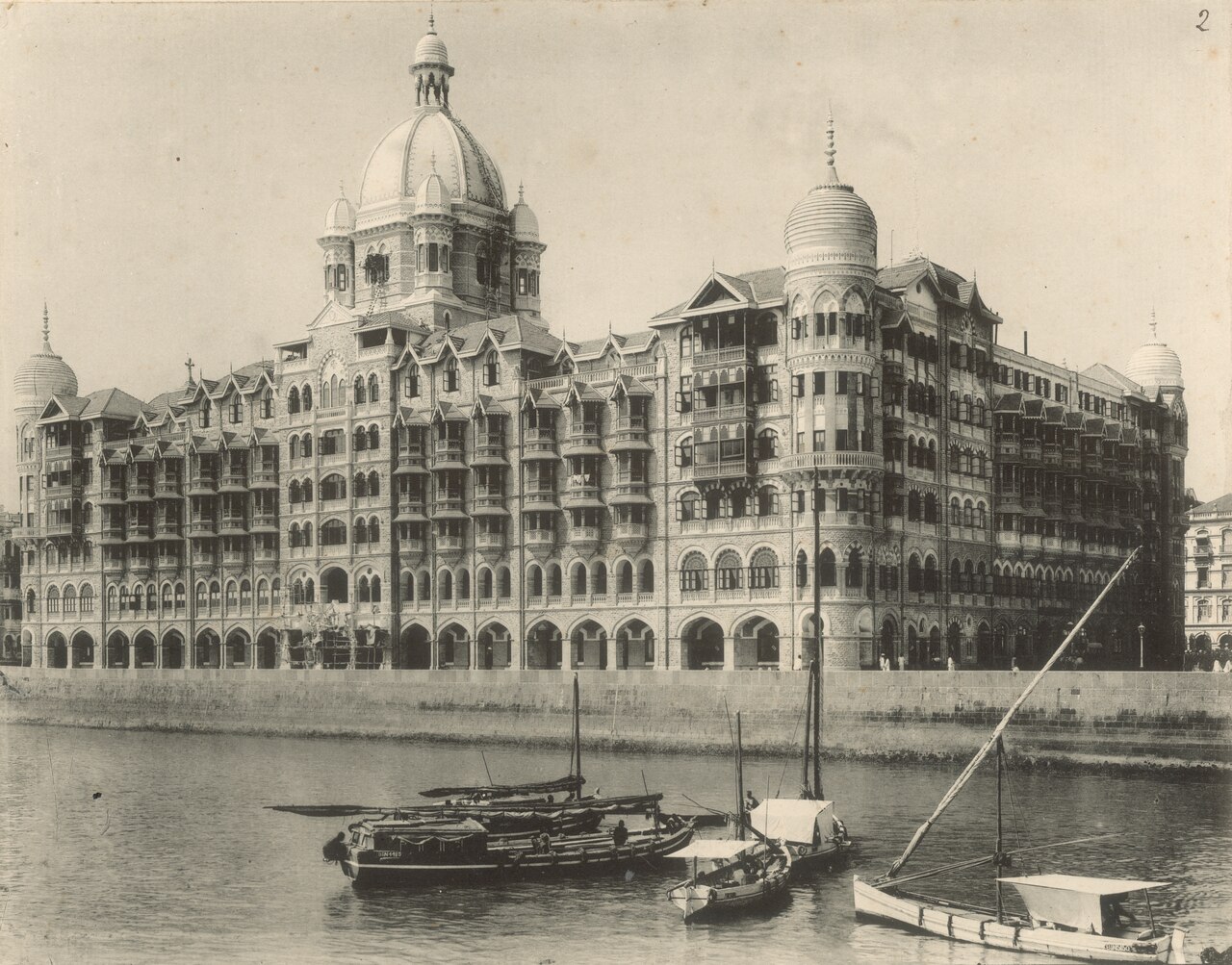
01 · The founder · 1889Painted portrait of Jamsetji Tata dated 1889, Mumbai, India.
The vision came first. Edwin Arthur Ward’s portrait introduces the industrialist who imagined a harbour hotel as an investment in Bombay’s future.
Painting: Edwin Arthur Ward · CSMVS collection · Public domain
View source and rights ↗
02 · The new landmark · circa 1905Taj Mahal Palace beside harbour boats around 1905, Mumbai, India.
Before the Gateway. Clifton & Co.’s photograph shows the newly opened palace commanding Apollo Bunder while small working boats fill the foreground.
Photograph: Clifton & Co. · Leiden University Library · Public domain
View source and rights ↗
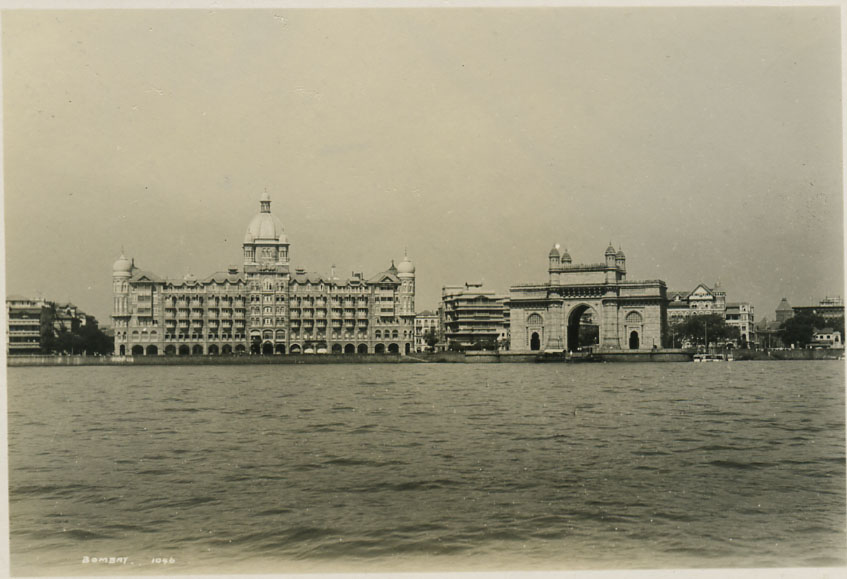
03 · The waterfront pair · 1930sGateway of India and Taj Mahal Palace seen from the harbour in the 1930s, Mumbai, India.
The composition completes. By the 1930s, hotel and Gateway had become the paired waterfront image that still introduces Mumbai to the world.
Photographer unknown · Columbia University source · Public domain
View source and rights ↗
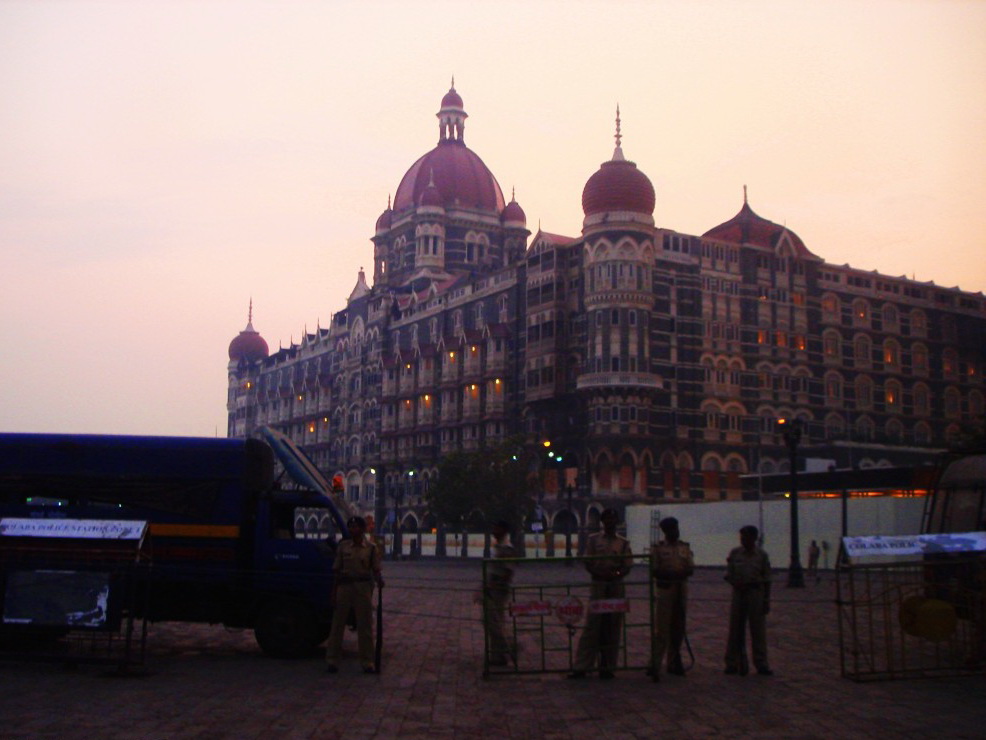
04 · After the attacks · December 2008Taj Mahal Palace behind barricades after the 2008 attacks, Mumbai, India.
A landmark wounded. Photographed one week later, the familiar façade stands behind barricades—recognisable, altered, and held within a grieving city.
Photograph: Stuti Sakhalkar · Wikimedia Commons · CC BY 2.0
View source and licence ↗
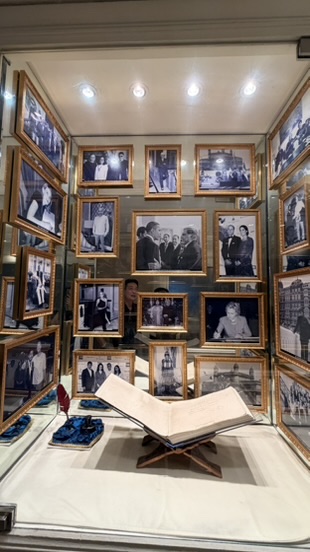
Historical photograph display inside the Taj Mahal Palace, Mumbai, India.
Memory, kept visible. The photographs and open guest book made the hotel’s long public life part of the interior rather than a story hidden away.

November 2008 · restoration and return

To restore the Taj was to defend more than a building.

The Taj Mahal Palace was one of the places attacked during the coordinated terrorist attacks in Mumbai in November 2008. The loss belongs first to the victims, their families, the staff, and the city. Any architectural story must begin there.

The palace then underwent a comprehensive restoration. IHCL’s official milestone history records its reopening in 2010. Returning the hotel to use did not erase what happened; it allowed hospitality, work, and ordinary public life to continue in a place violence had tried to redefine.

The palace today · our walk inside

History remained everywhere—but the hotel did not feel frozen.

Light moved through the arches into the courtyard. Guests talked beside the pool. Staff crossed the lobby beneath chandeliers and flowers. The Taj carries its age through craftsmanship and ceremony, but what gives those rooms meaning is that they are still being used.
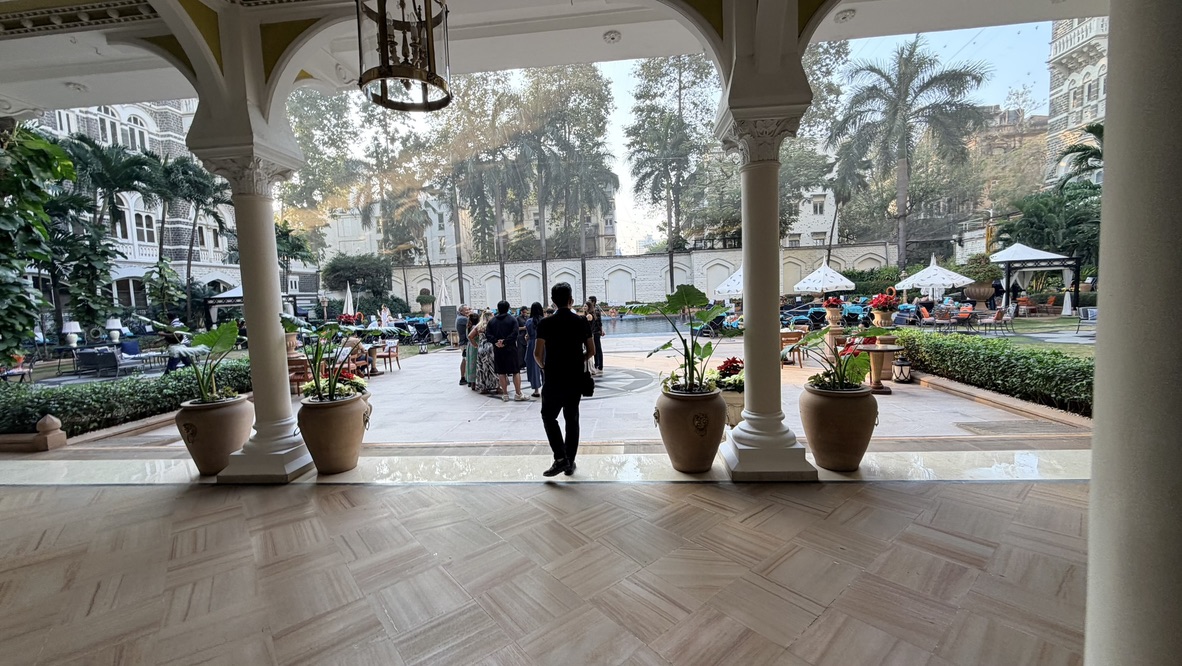
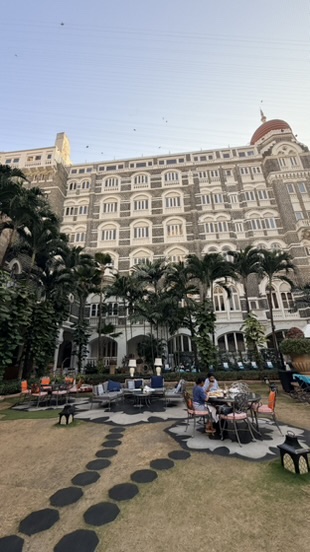
Pool courtyard seen through arches at the Taj Mahal Palace, Mumbai, India.
An inward world. Beyond the famous harbour façade, the arches opened toward a quieter courtyard of palms, water, and afternoon light.
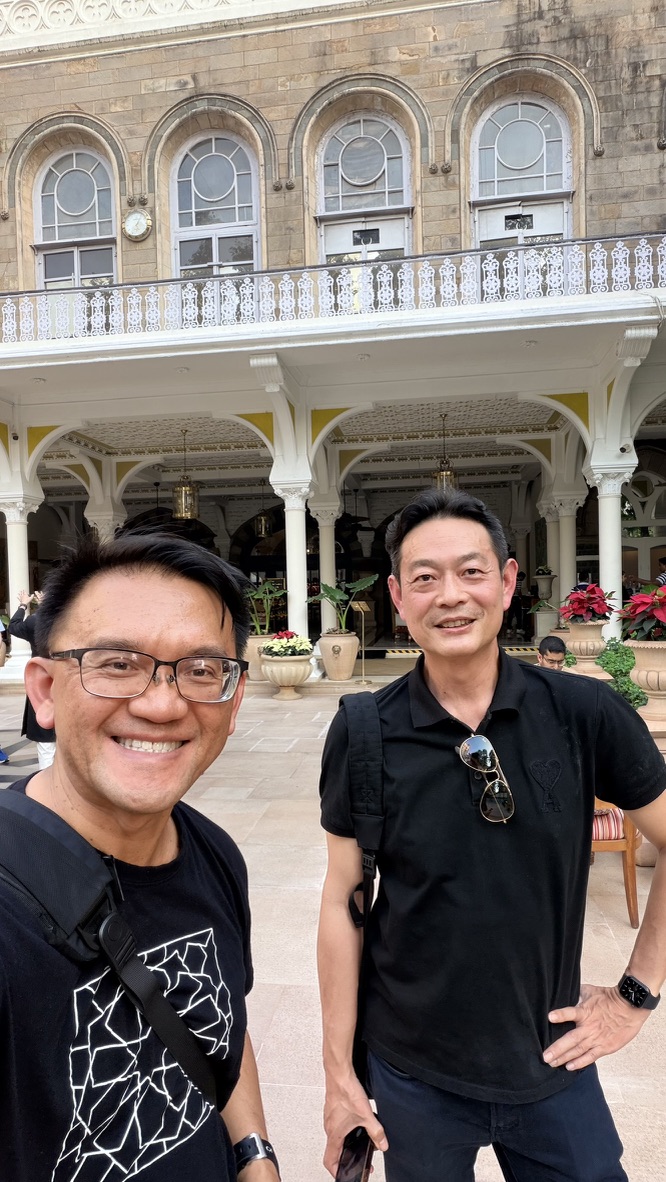
Historic courtyard façade at the Taj Mahal Palace, Mumbai, India.
Layers facing inward. From the garden, the palace revealed balconies and windows that the monumental waterfront view keeps hidden.
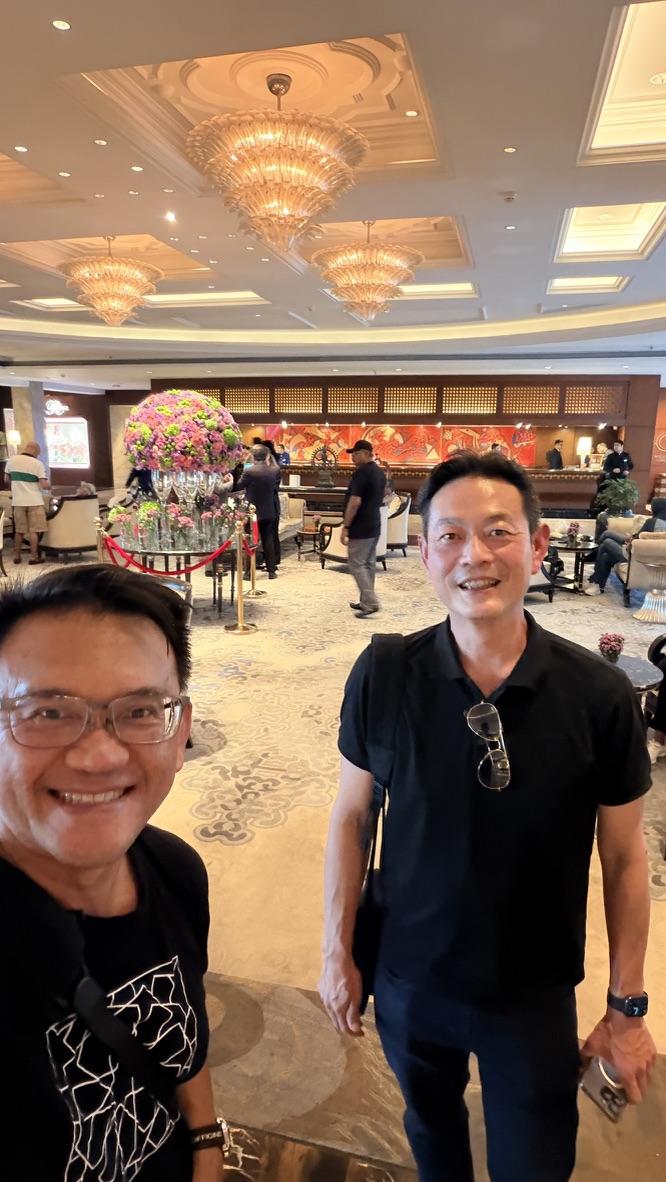
Two travellers beneath chandeliers in the Taj Mahal Palace lobby, Mumbai, India.
Still receiving the world. Chandeliers, flowers, and constant movement returned the story to the hotel’s original purpose: welcome.
Two travellers in the Taj Mahal Palace courtyard, Mumbai, India.
History, shared. The most lasting souvenir was not luxury itself, but the chance to walk through a Mumbai story side by side.

Next landmark · CSMT

A railway station built with the confidence of a palace.

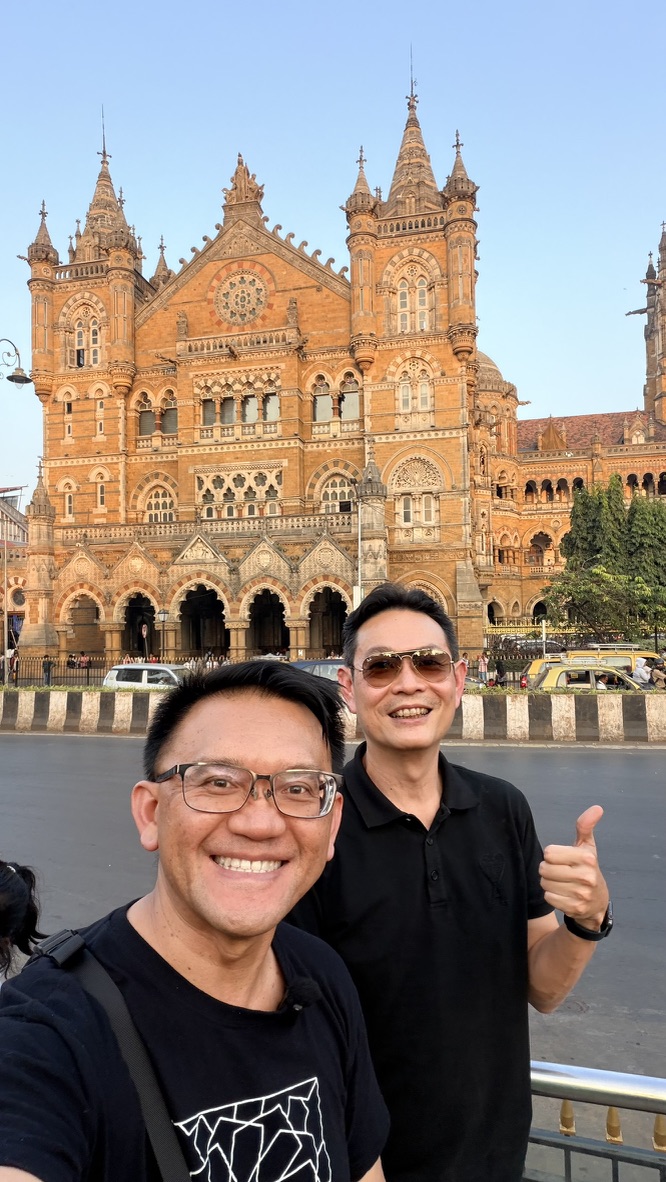
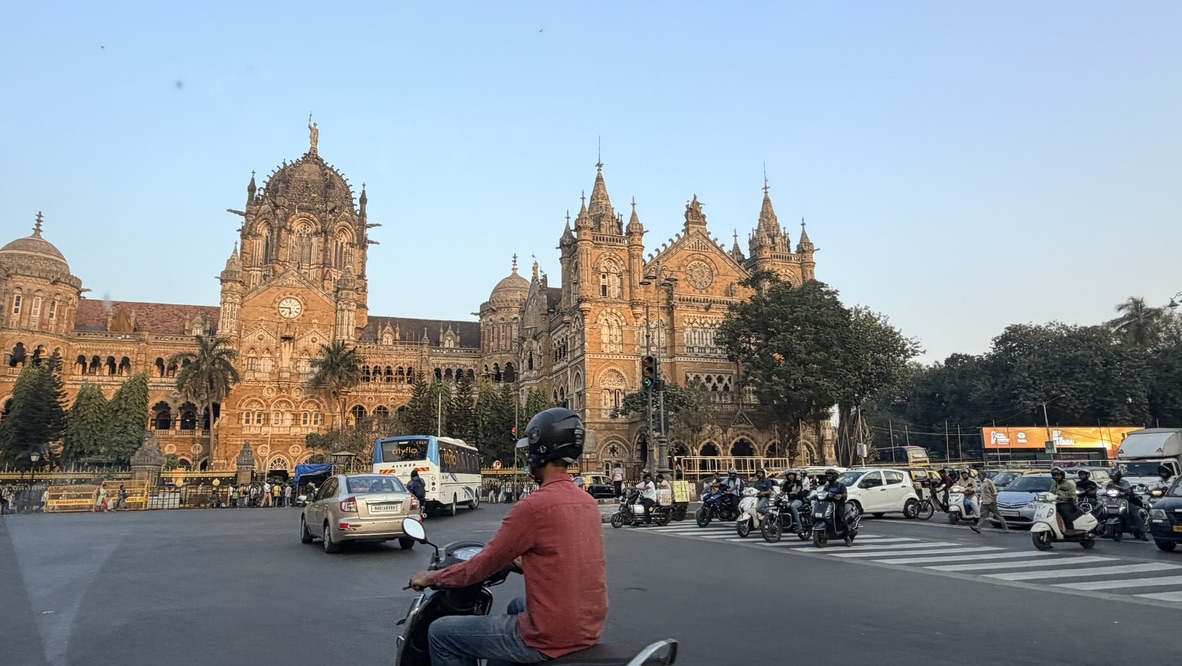
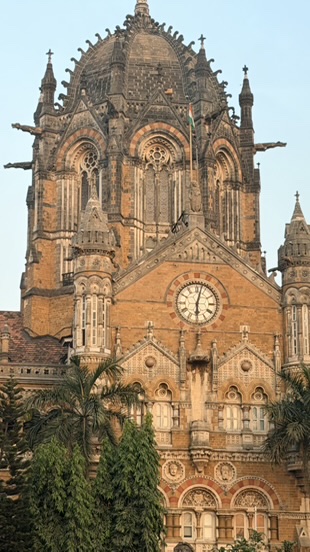
Chhatrapati Shivaji Maharaj Terminus did not sit quietly at the end of the road. Its towers, carved stone, pointed arches, and clock seemed to gather the whole junction around them—even as taxis, buses, and motorcycles kept cutting through the foreground.
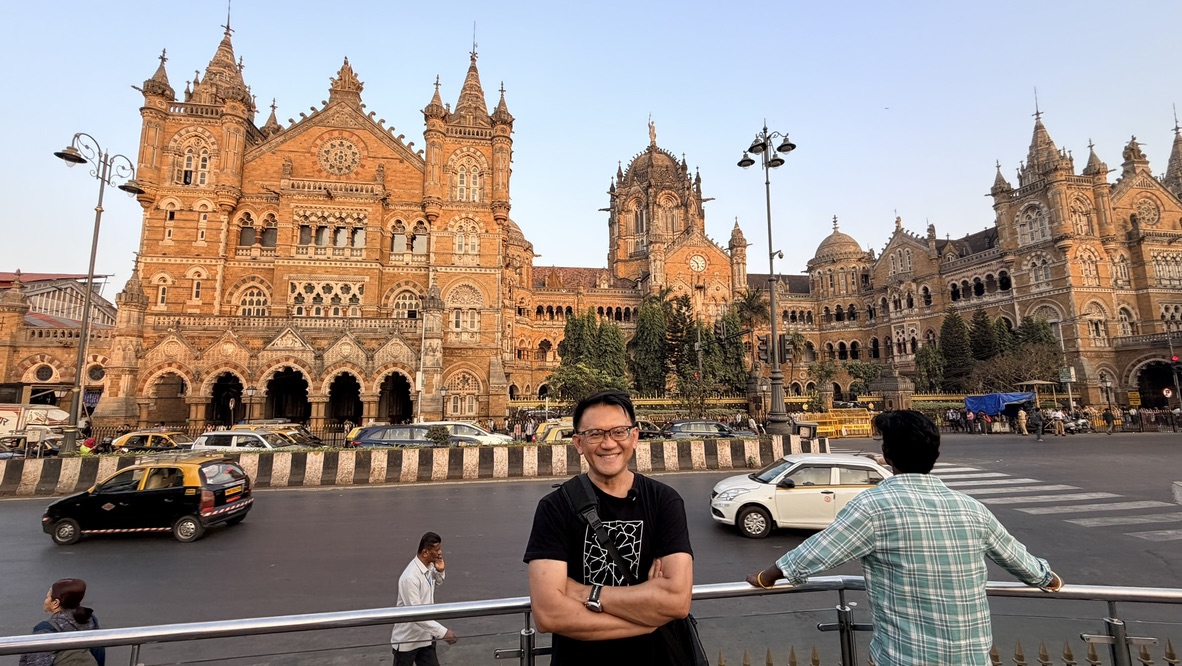
Traveller before Chhatrapati Shivaji Maharaj Terminus, Mumbai, India.
Architecture in traffic. The station rose behind an ordinary Mumbai crossing: a world landmark with the city still moving at full speed in front of it.
Clock tower detail at Chhatrapati Shivaji Maharaj Terminus, Mumbai, India.
Look upward. The clock, tracery, spires, and carved stone turned the central tower into a piece of civic theatre.
Two travellers before Chhatrapati Shivaji Maharaj Terminus, Mumbai, India.
Scale, understood. A close portrait made the building behind us feel even larger—less like a façade than a complete skyline.
Traffic passing Chhatrapati Shivaji Maharaj Terminus, Mumbai, India.
A monument that works. CSMT is not a preserved shell. It remains a railway terminus, and the movement around it is part of the landmark’s present tense.

1853 · 1878–1888 · 2004

The railway came first. The monument grew around its ambition.

India’s first passenger train left Bori Bunder for Thane on 16 April 1853. A generation later, construction began on the grand terminus that would replace the earlier station. Designed by F. W. Stevens and built over ten years from 1878, it joined High Victorian Gothic Revival architecture with forms and craftsmanship drawn from Indian traditions.

UNESCO inscribed the terminus on the World Heritage List in 2004, recognising that fusion—and the extraordinary fact that this elaborate nineteenth-century building continues to serve railway life.
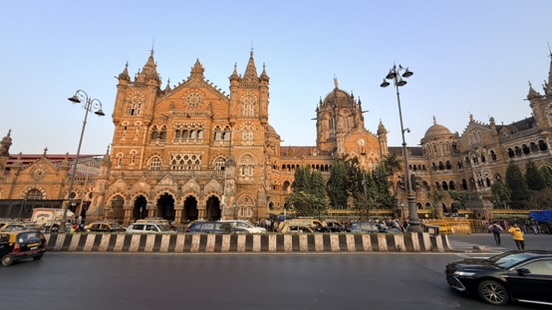
Wide façade of Chhatrapati Shivaji Maharaj Terminus, Mumbai, India.
A complete composition. From the arched entrance to the central dome, the station reads as one enormous civic façade rather than a single railway hall.

Editorial visual timeline

From terminus to civic stage.

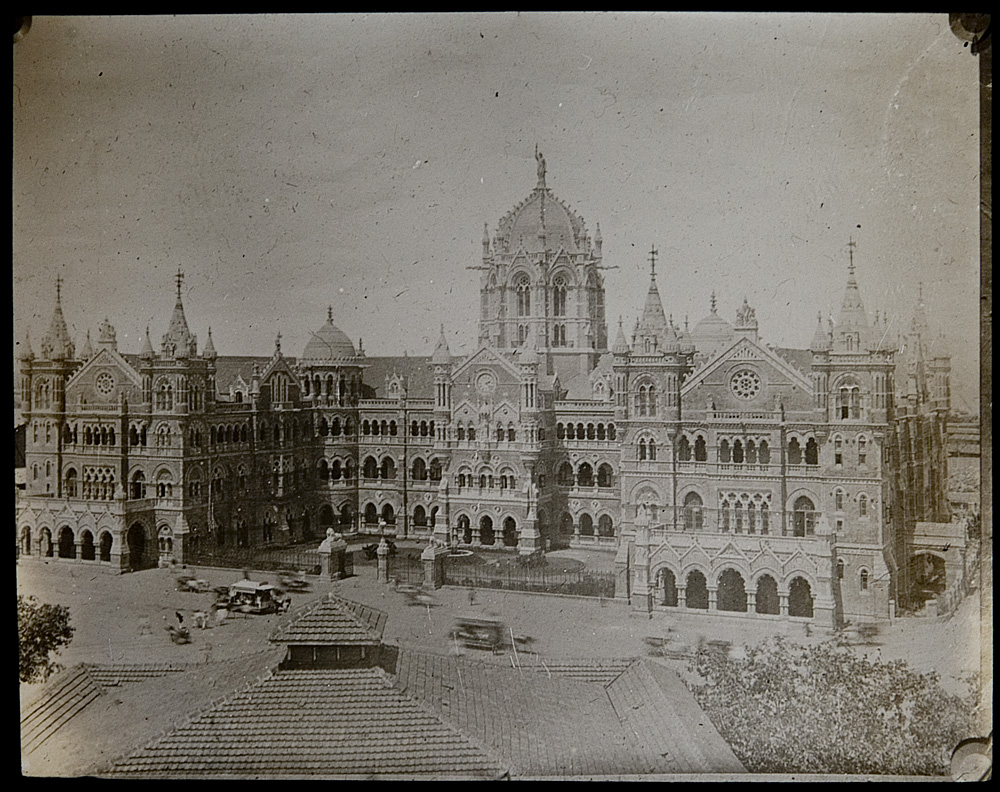
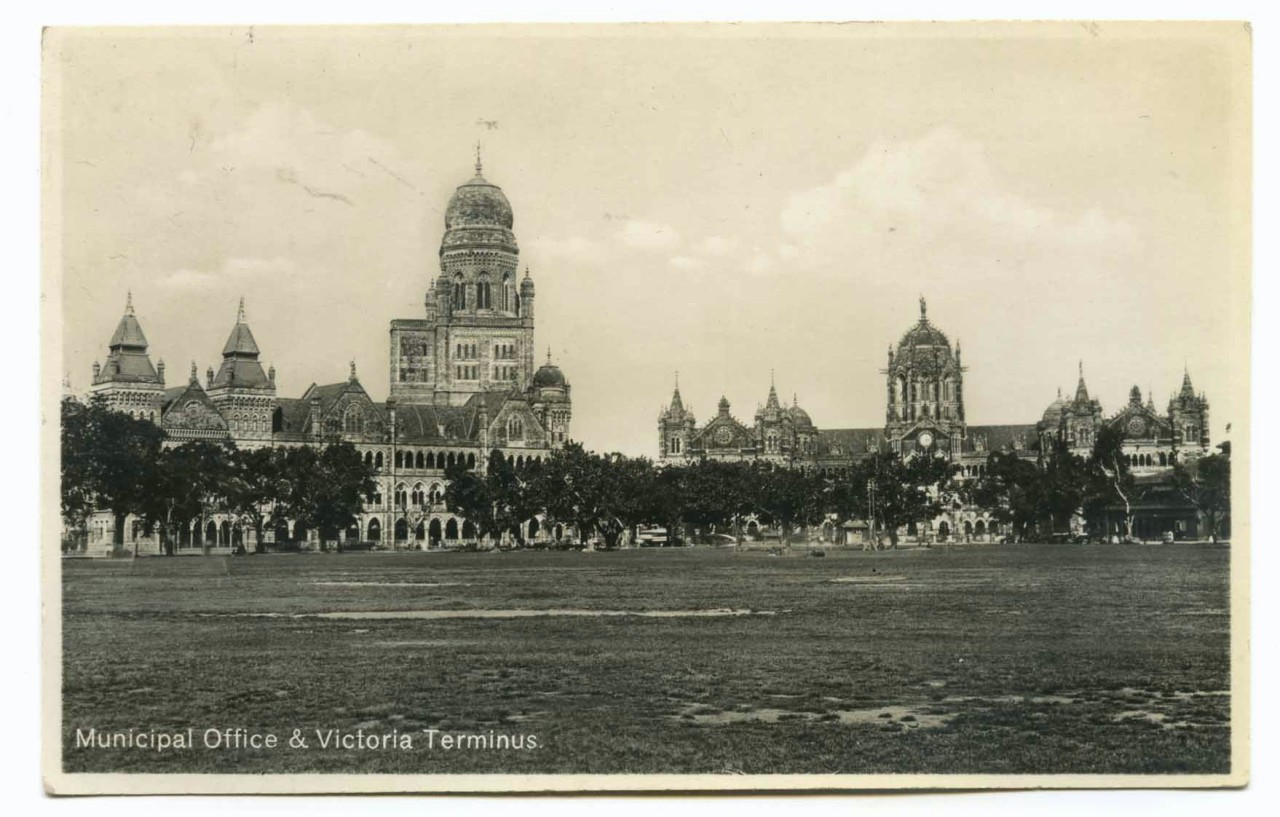
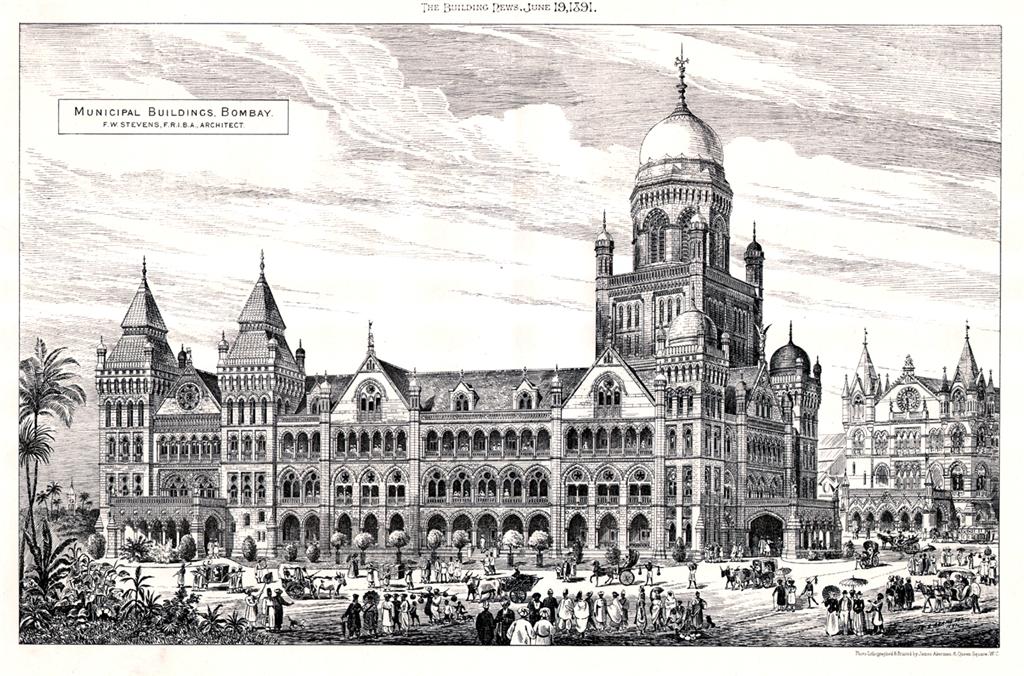
The archive makes the junction legible: first the railway palace, then its municipal counterpart, then the two towers sharing the same urban frame.
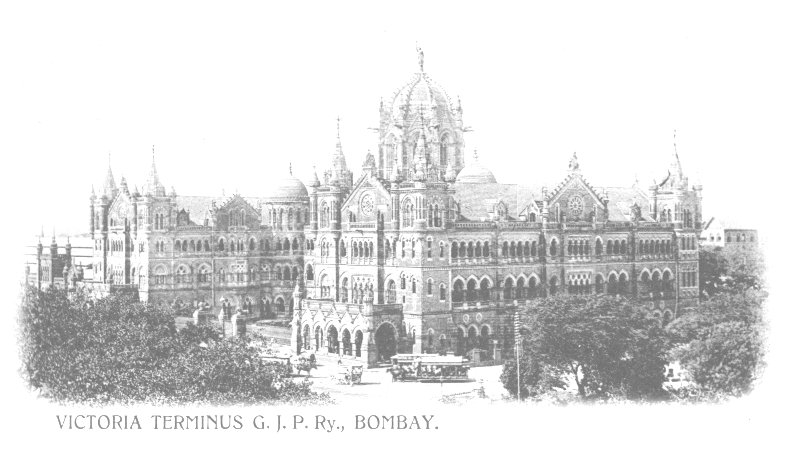
01 · The completed terminus · c. 1895–1904Early photograph of Victoria Terminus, Bombay, India, circa 1895 to 1904.
The railway palace. Photographed within years of completion, the former Victoria Terminus already carried the silhouette that still dominates the junction.
Photographer unknown · W. G. Skinner album · Wikimedia Commons · Public domain
View source and rights ↗
02 · A second civic tower · 1891Architectural drawing of the Municipal Buildings, Bombay, India, 1891.
Across the road. This published drawing shows the proposal for the Municipal Corporation headquarters before its 1893 completion.
The Building News · Wikimedia Commons · Public domain
View source and rights ↗
03 · The working station · c. 1900Lantern-slide view of Victoria Terminus, Bombay, India, circa 1900.
Grandeur in use. An early lantern slide records the station not as an isolated monument but as infrastructure already embedded in city life.
Photographer unknown · Wikimedia Commons · Public domain
View source and rights ↗
04 · Two landmarks, one frame · early 20th centuryVintage postcard of the Municipal Office and Victoria Terminus, Bombay, India.
The dialogue appears. The postcard places railway and municipal power together—the same architectural conversation our photographs found at the junction.
Unknown publisher · Wikimedia Commons · Public domain
View source and rights ↗

The junction today

The archive was sepia. The present arrived in horns, headlights, and warm stone.

That contrast made CSMT memorable. The craftsmanship asks you to stop and look; the road insists that Mumbai will keep moving around you. Both impressions belong in the same frame.
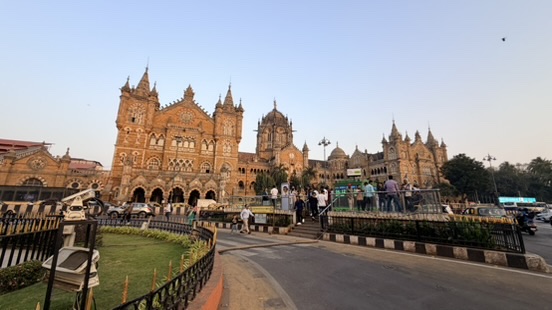
CSMT seen from the landscaped traffic junction, Mumbai, India.
Still the centre. Even from the edge of the crossing, the station gathered pedestrians, vehicles, trees, towers, and evening light into one restless panorama.
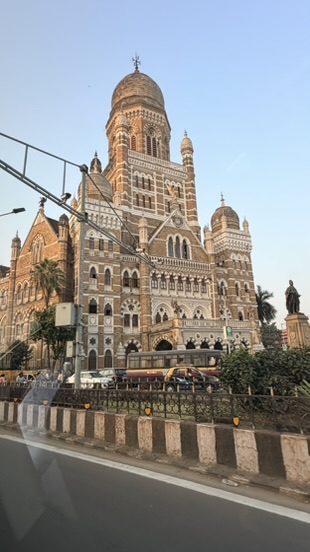
Brihanmumbai Municipal Corporation headquarters, Mumbai, India.
The tower opposite. This is not another wing of CSMT: it is Mumbai’s Municipal Corporation headquarters across the junction.

Turn across the road · BMC headquarters

Then another landmark answered back.

Completed in 1893, the Municipal Corporation building was also designed by F. W. Stevens. Its central tower gives the crossroads a rare architectural tension: railway power on one side, civic government on the other, both expressed at monumental scale.

Seeing the two buildings together changed the stop. This was not one famous façade; it was a whole nineteenth-century civic room, still filled every day by twenty-first-century Mumbai.
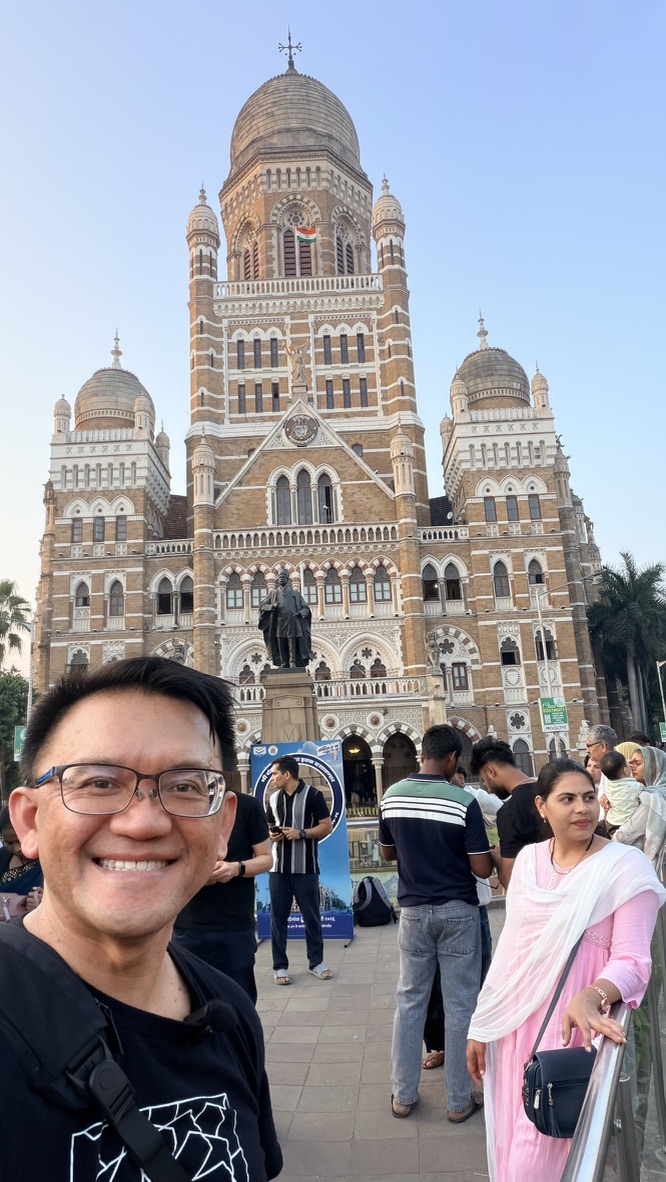
Traveller before the Brihanmumbai Municipal Corporation headquarters, Mumbai, India.
One last portrait. The municipal tower completed the visual story: two buildings, one crossing, and more history than a single stop could hold.

Next stop · golden hour

Above Marine Drive, Mumbai traded its street-level rush for a long horizon.

Before dinner, we went to Dome—the open-air rooftop bar at the InterContinental Marine Drive. The plan was simple: one drink, a place facing the Arabian Sea, and enough time to watch the city change colour.
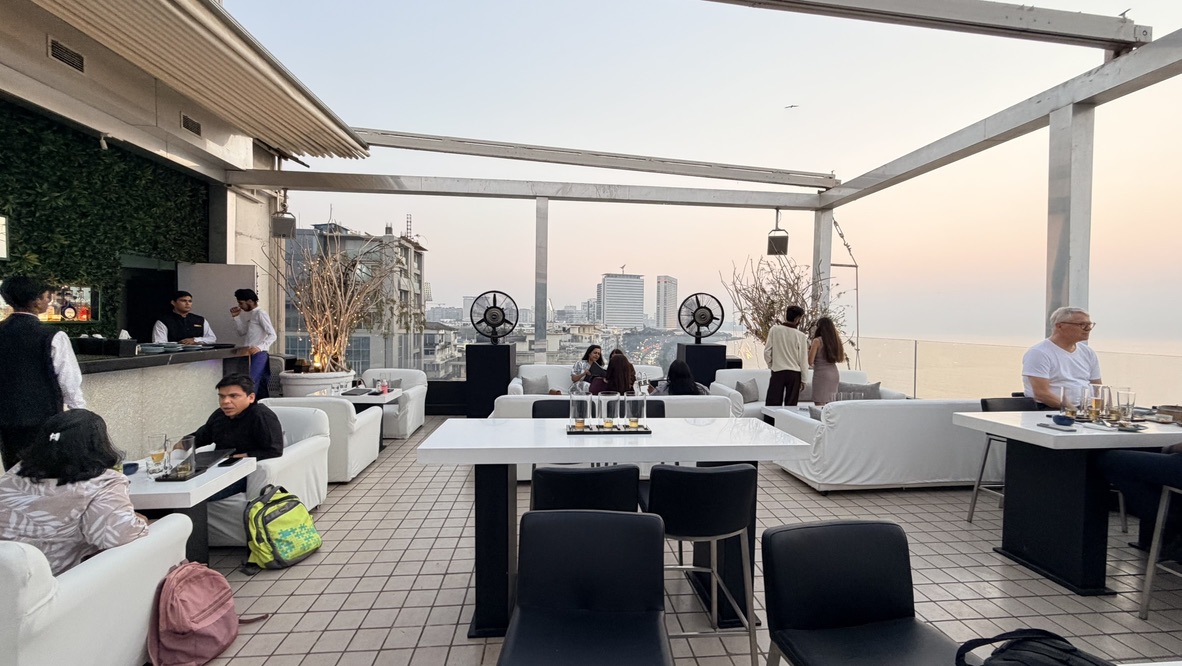
Open-air Dome rooftop bar overlooking Marine Drive, Mumbai, India.
White above the city. The rooftop kept its palette quiet—white seating, black tables, pale stone—so the sea and evening sky could do the talking.
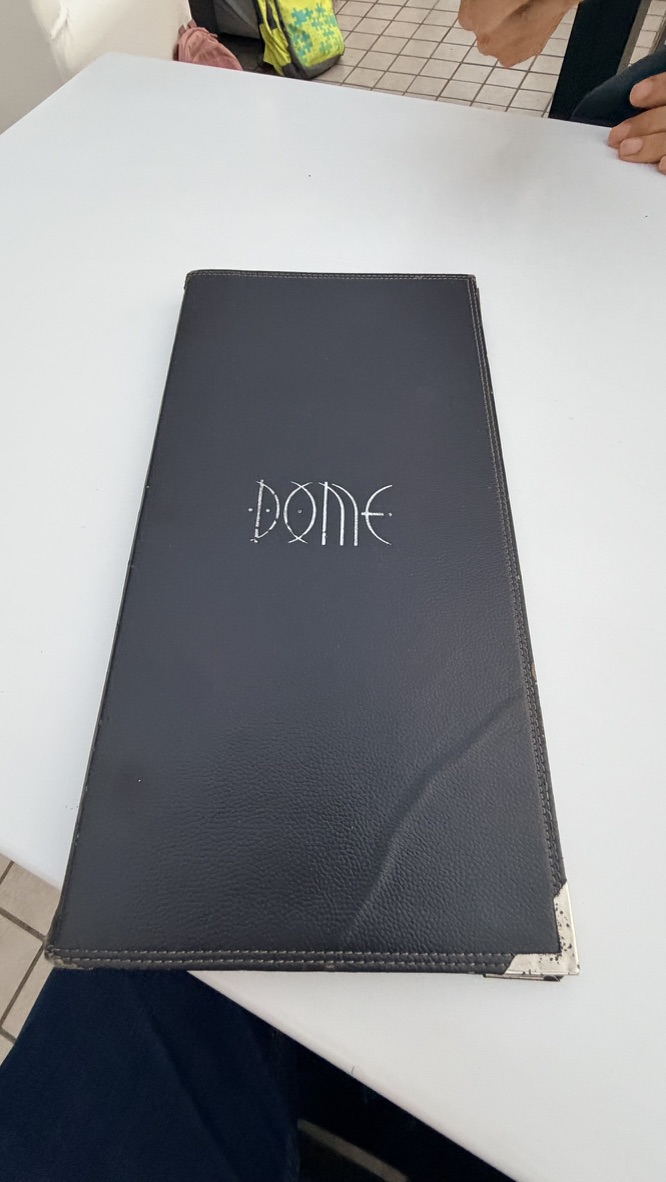
Dome bar menu on a rooftop table at InterContinental Marine Drive, Mumbai, India.
The name on the table. A single word on the menu marked the transition from sightseeing to the slower hour before dinner.
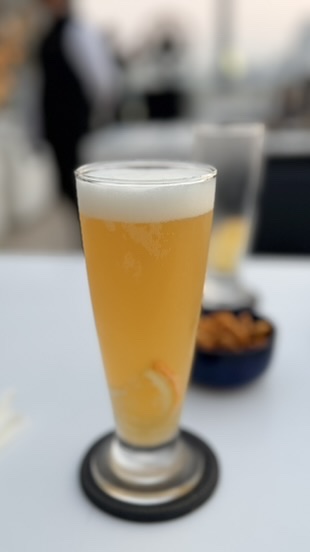
Glass of wheat beer at Dome rooftop bar, Mumbai, India.
First pour. Cold beer, a light breeze, and no schedule for the next few minutes.
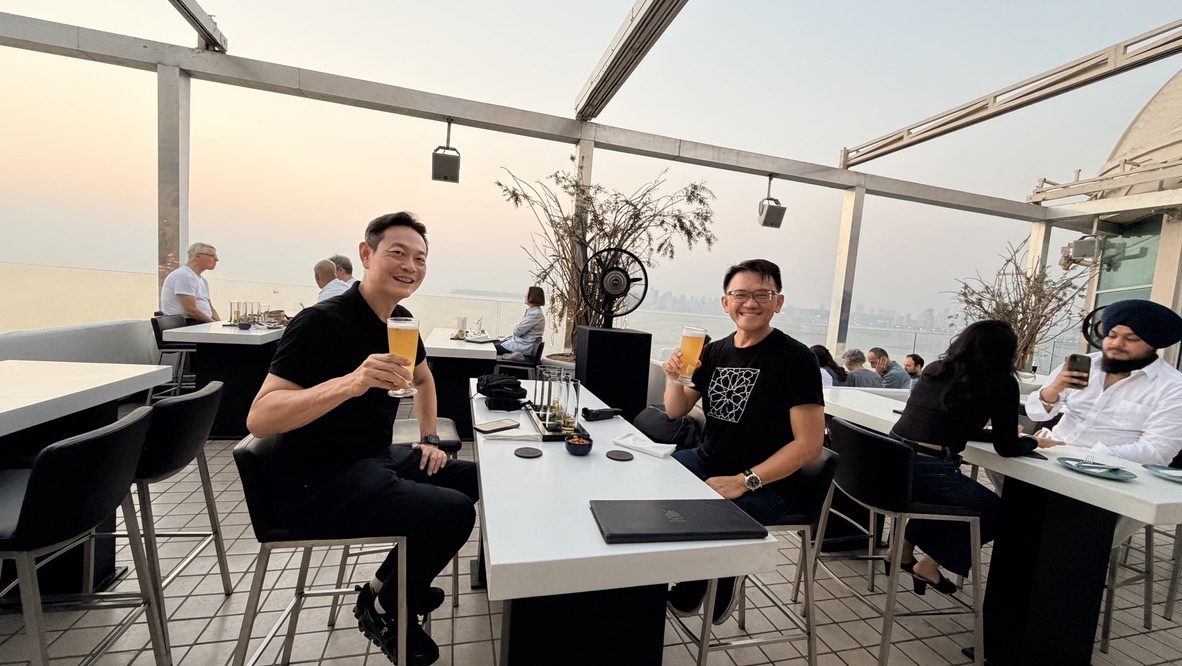
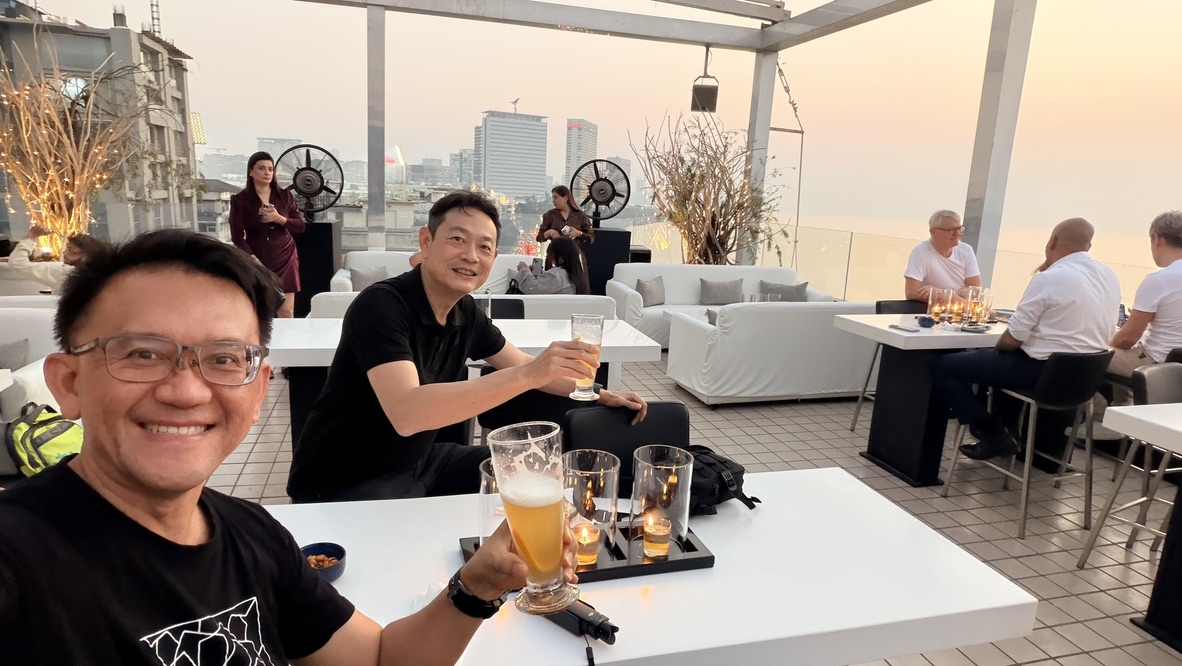
Two travellers with drinks at Dome rooftop bar, Mumbai, India.
The sundowner pause. We had spent the afternoon moving from landmark to landmark; here, the journey finally became still enough to look back across the city.
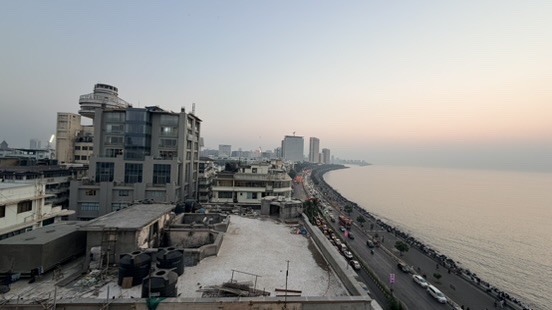
Marine Drive curving beside Back Bay at dusk, Mumbai, India.
The curve reveals itself. From above, Marine Drive was no longer just a waterfront road. It became a single, sweeping line holding the edge of Back Bay.
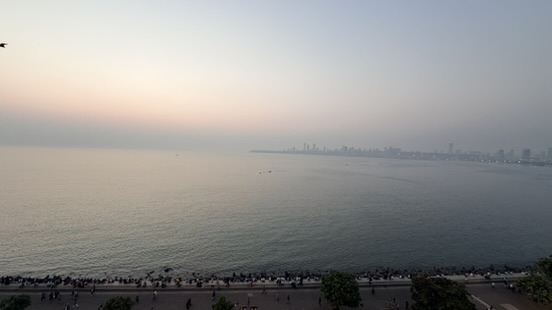
Back Bay and the Mumbai skyline seen from a rooftop at dusk, Mumbai, India.
Water before lights. At dusk, the bay still dominated the view; the famous necklace would arrive only after the road began to glow.

Back Bay · reclamation · Art Deco

This crescent was shaped by the city, not simply found by it.

Marine Drive emerged from the Back Bay reclamation works of the early twentieth century. The reclaimed waterfront gave Bombay room to expand westward and created a new sea-facing promenade framed by Art Deco residences, commercial buildings, and places of entertainment.

UNESCO now recognises that urban ensemble as part of Mumbai’s Victorian Gothic and Art Deco World Heritage property. Seen from Dome, the history becomes geography: the curve of the bay, the promenade beside it, and the modern city rising behind both.

Editorial visual timeline

Before the road. The new promenade. The necklace at night.

Three elevated views explain why this rooftop matters: the shoreline before Marine Drive, the transformed waterfront, and the illuminated arc that gave the bay its enduring nickname.
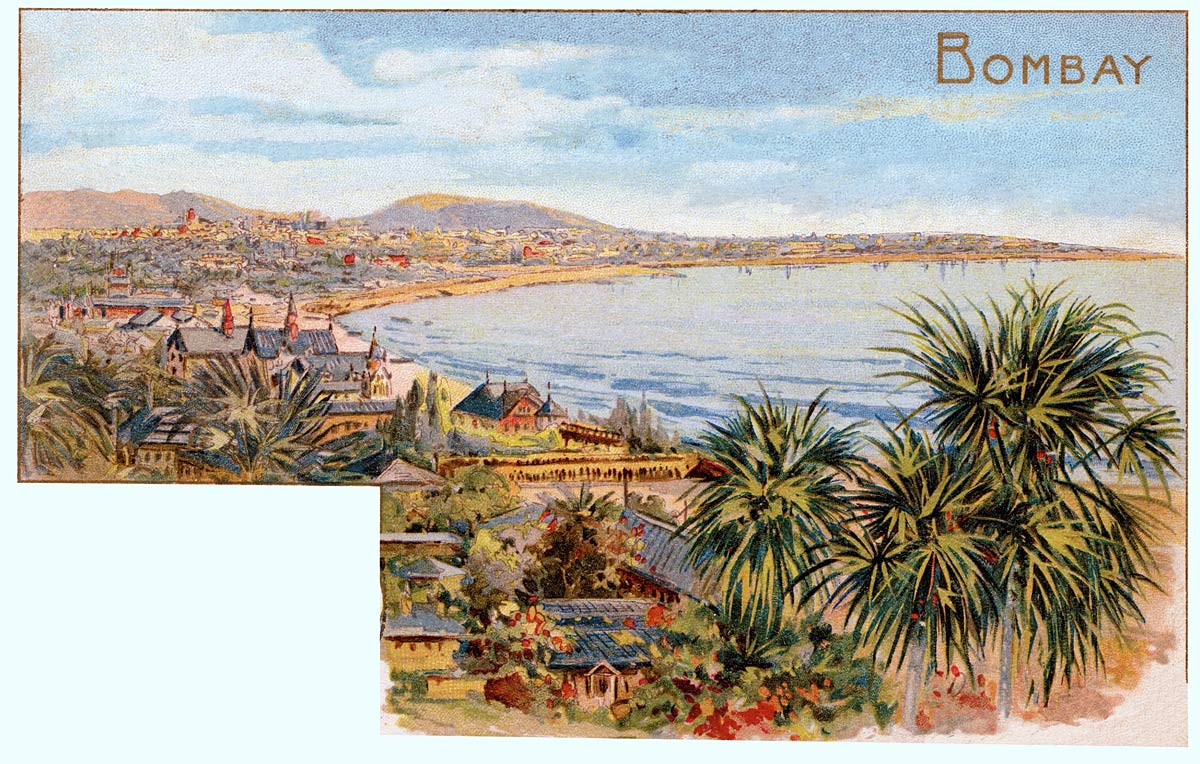
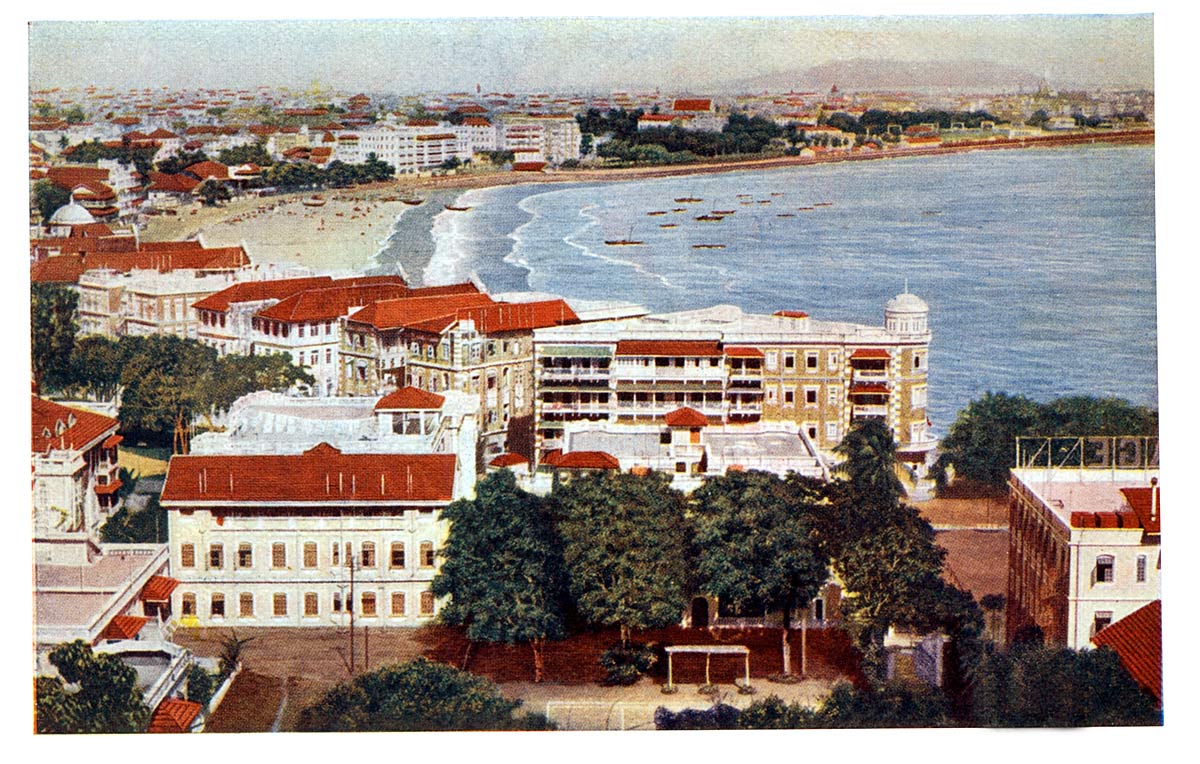
01 · Before the Art Deco waterfront · c. 1900Lithographic view of Bombay Bay before the Art Deco waterfront, India, circa 1900.
Before Marine Drive. This early postcard preserves a shoreline that predates the later reclamation and the dense Art Deco frontage we associate with the bay today.
Bertarelli & Co. postcard · Paper Jewels · Wikimedia Commons · CC BY 4.0
View source and licence ↗
02 · Marine Drive takes form · 1930Bird's-eye postcard view of the new Marine Drive waterfront, Bombay, India, 1930.
A modern edge. By 1930, the promenade had redrawn the bay and created a new stage for the modern architecture that would follow.
D. B. Taraporevala & Sons · Paper Jewels · Wikimedia Commons · CC BY 4.0
View source and licence ↗
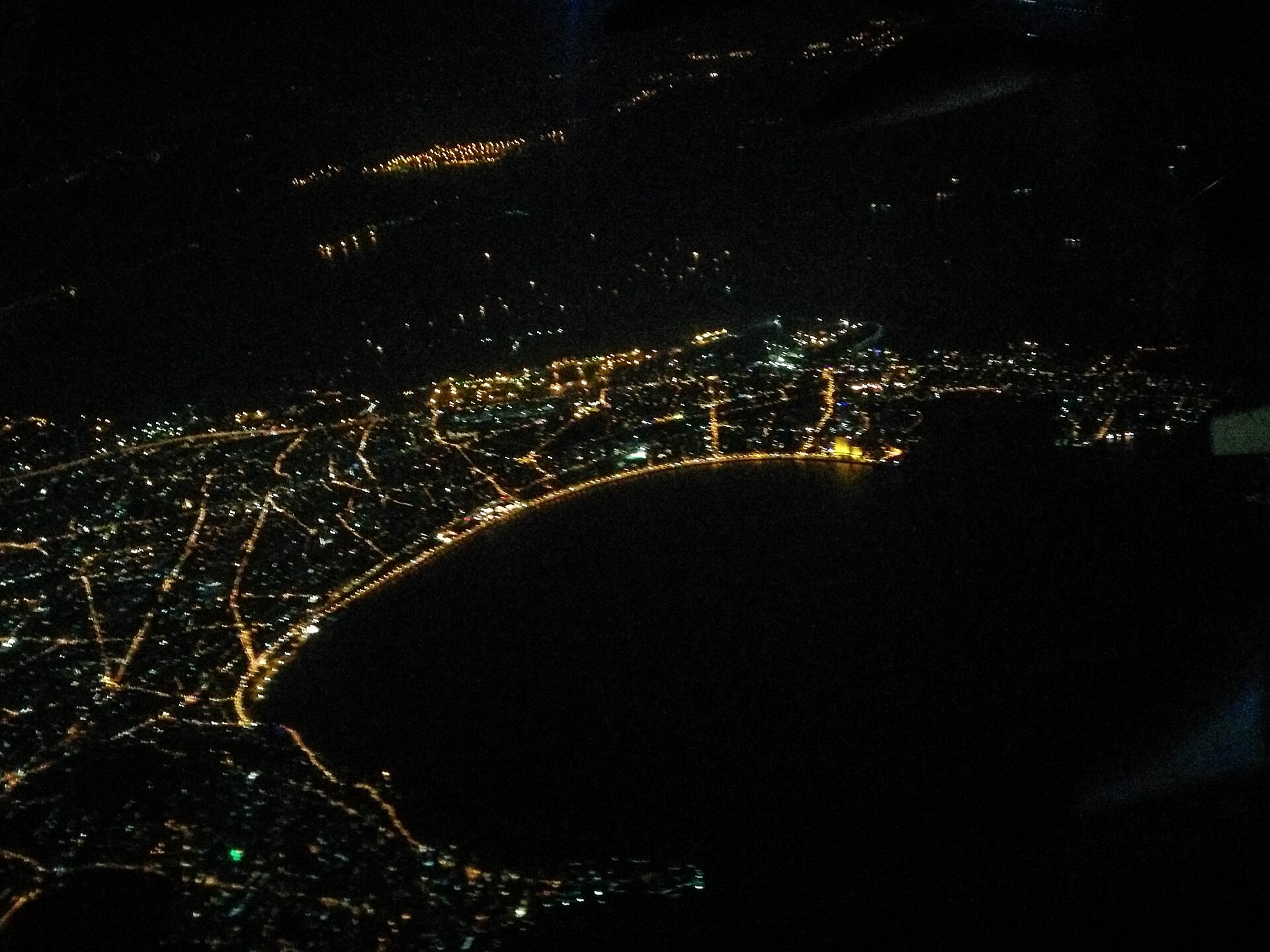
03 · The Queen’s Necklace · 2014Aerial night view of illuminated Marine Drive curving around Back Bay, Mumbai, India.
The nickname made visible. From the air, the continuous line of lights reads like jewellery laid along the dark water.
Photograph: Ashwin Kumar · Wikimedia Commons · CC BY-SA 2.0
View source and licence ↗

One drink became a sequence

First the sea. Then the skyline. Then the lights.

The view did not arrive all at once. Each photograph caught a different version of the same table: beer still cold, sky turning warmer, candles beginning to glow, and the far side of the bay slowly separating itself from the haze.
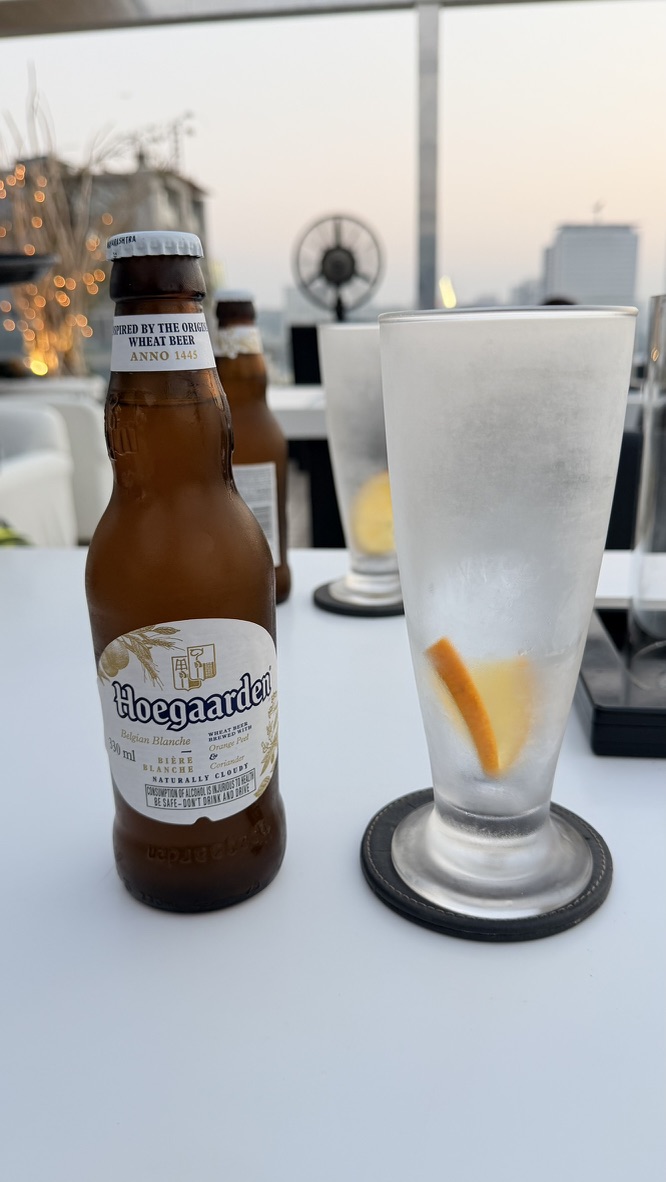
Hoegaarden beer and chilled glass at Dome rooftop bar, Mumbai, India.
Cold against warm light. The chilled glass and amber bottle held the foreground while the city softened behind them.
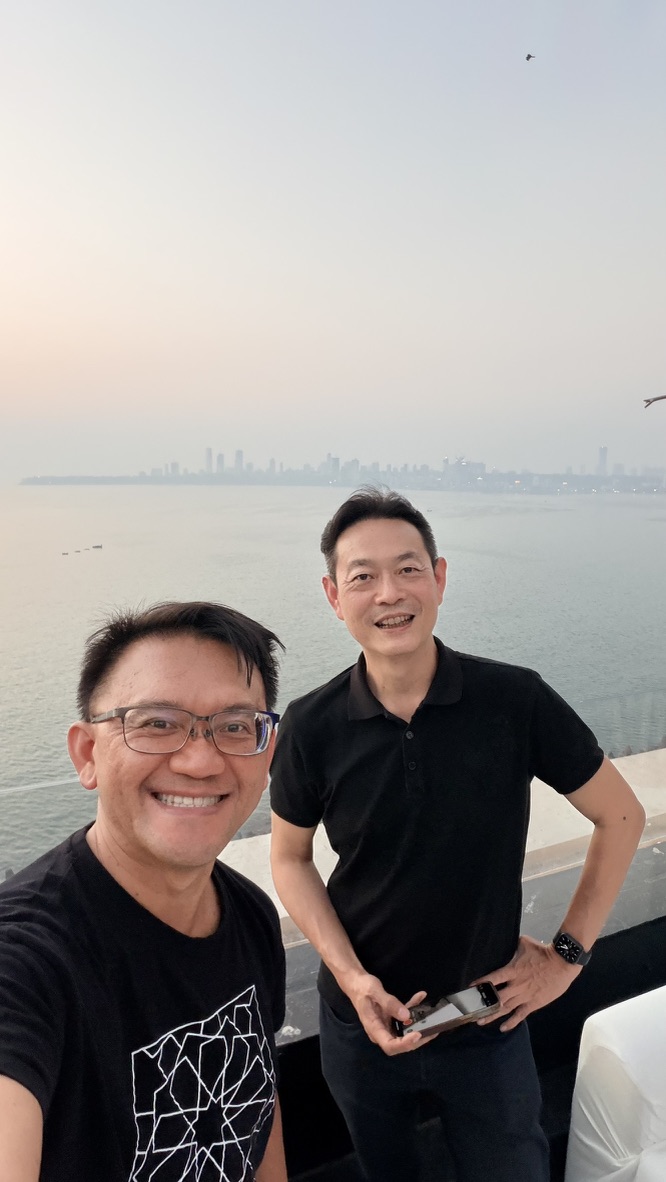
Two travellers above Back Bay at Dome rooftop bar, Mumbai, India.
The view behind us. Sea, haze, and the distant skyline turned a simple portrait into a record of the hour.
Two travellers raising beers at Dome rooftop bar, Mumbai, India.
Before dinner. This was the pause between the afternoon’s landmarks and the evening still ahead.

Blue hour → night

The crescent finally switched on.

When darkness settled, the traffic below stopped reading as congestion and became a stream of light. Marine Drive traced the bay in gold, and the nickname made immediate sense: the Queen’s Necklace was not a monument to visit, but a city-scale image that appeared only after sunset.

From the rooftop, Mumbai seemed briefly legible—the sea on one side, the dense city on the other, and that luminous curve holding them together.
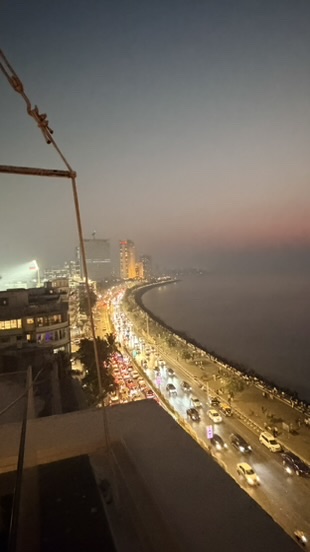
Marine Drive traffic and the Queen's Necklace illuminated at night, Mumbai, India.
The final frame. A road we had seen in daylight became a necklace of headlights and streetlamps around the dark bay.

Temporary-local note

For this view, timing is part of the reservation.

Dome is an open-air rooftop, so sunset, weather, seating, and dress requirements can shape the experience. The hotel currently lists the bar on rooftop Level 8 and describes age and dress restrictions; confirm the latest details directly before going.

Arrive before sunset if the full visual sequence matters. Daylight reveals the geometry of Back Bay; dusk softens the skyline; darkness turns Marine Drive into the Queen’s Necklace. Traffic can reshape the schedule, so leave more travel margin than the map suggests.

Next day · Holiday Inn Mumbai International Airport

The hotel stopped being somewhere to leave our bags. It became headquarters.

The next morning, we did not go sightseeing. We worked: meetings around the hotel, conversations over breakfast, and online Zoom calls from the room as we prepared a new product portfolio for the India market.
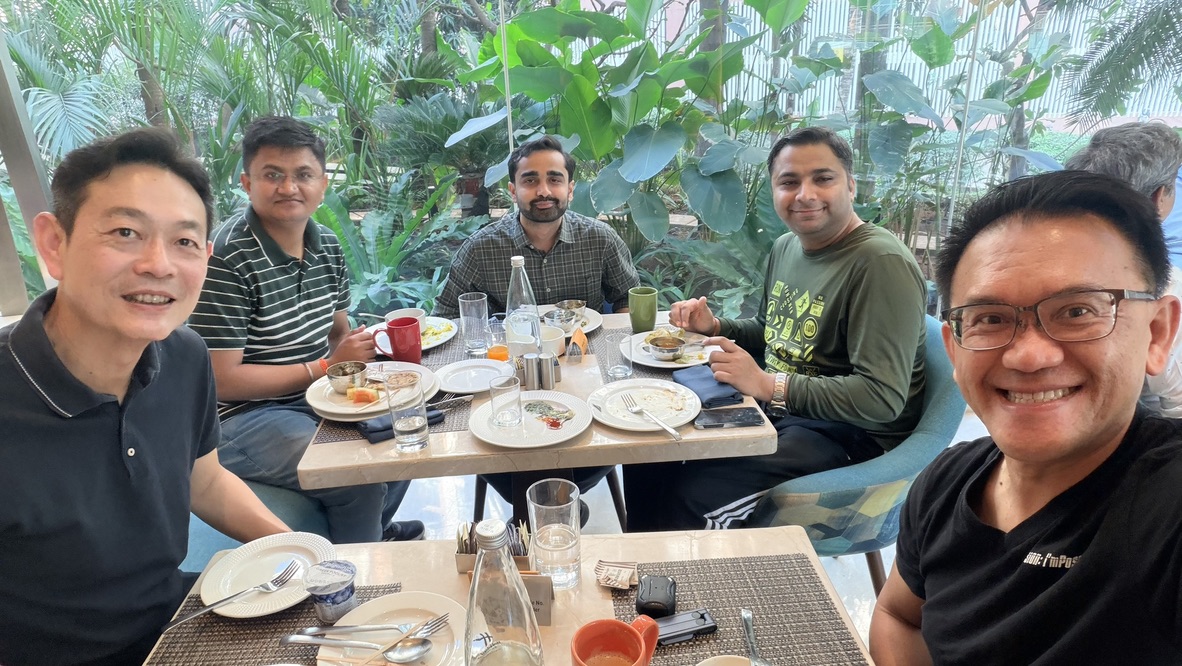
Five colleagues meeting over breakfast at Holiday Inn Mumbai International Airport, India.
Breakfast became a meeting room. A table beside the garden held food, introductions, questions, and the first working conversations of the day.

Room desk · hotel meetings · Zoom

Launching a portfolio is built from many small, unglamorous moments.

The India launch work did not happen as one ceremonial event. It happened through product samples arranged on a shelf, presentation slides open on a laptop, packaging unpacked from boxes, and conversations moving between people in the hotel and people joining online.

That is where the Holiday Inn proved its value. The room gave us a dependable desk and Wi-Fi; the public spaces gave us places to meet; the restaurant kept the day from breaking apart whenever one conversation ran into the next.
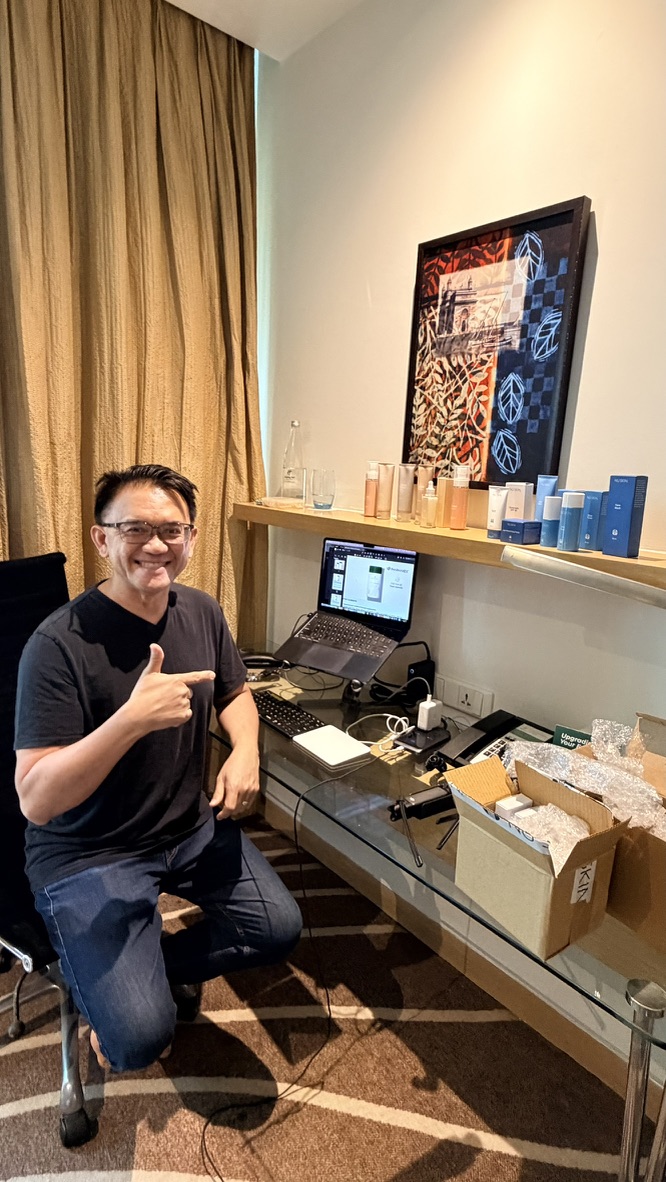

Traveller beside product samples and a laptop workstation in a Mumbai hotel room, India.
The room became a studio. The desk held the whole working system: laptop, cables, samples, packaging, and the presentation linking Mumbai to the Zoom room.
SÉRENU product samples arranged in a Mumbai hotel room, India.
Portfolio, made tangible. Seeing the line together transformed an abstract market plan into products ready to be discussed, handled, and introduced.
Traveller presenting a SÉRENU product sample in a Mumbai hotel room, India.
Ready to present. Every launch eventually comes down to one simple act: holding up the product and explaining why it belongs in the market.

Saptami · the working-day restaurant

Between calls, the hotel fed the day.

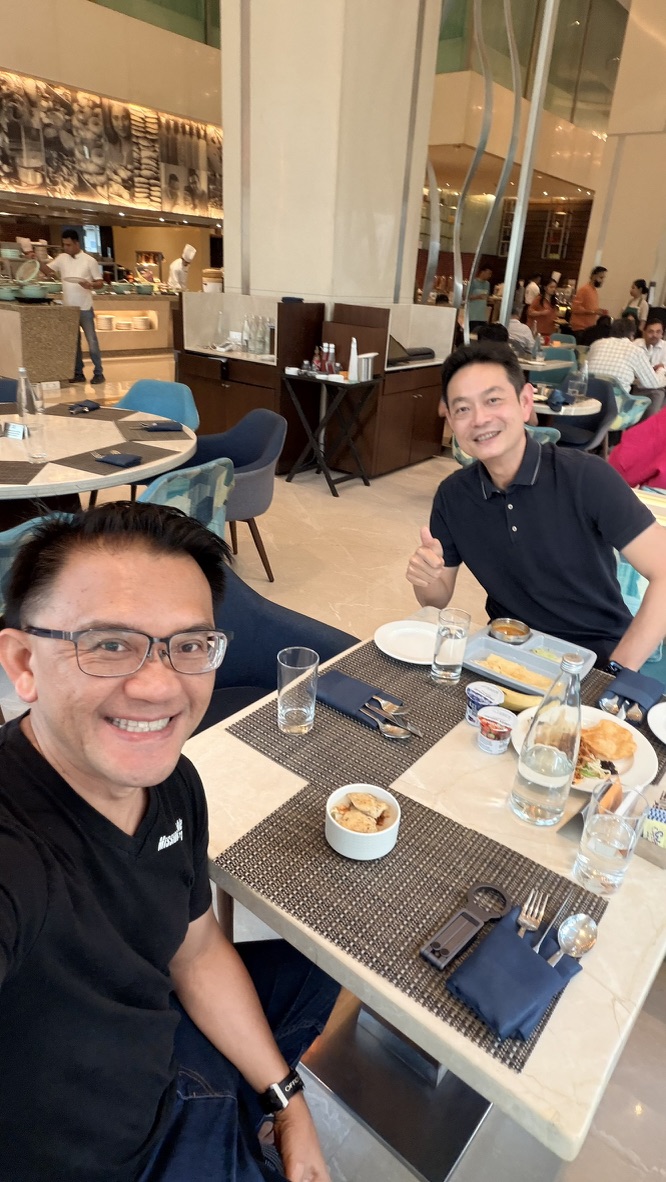
Saptami’s tall glass walls and open dining room made it useful for more than meals. We could meet people without leaving the property, return to work quickly, and find enough variety for different appetites and schedules.

The hotel describes Saptami as its all-day, multi-cuisine restaurant. For us, that translated into something more practical: breakfast before the meetings began, lunch between conversations, and a reliable table whenever the workday needed a pause.
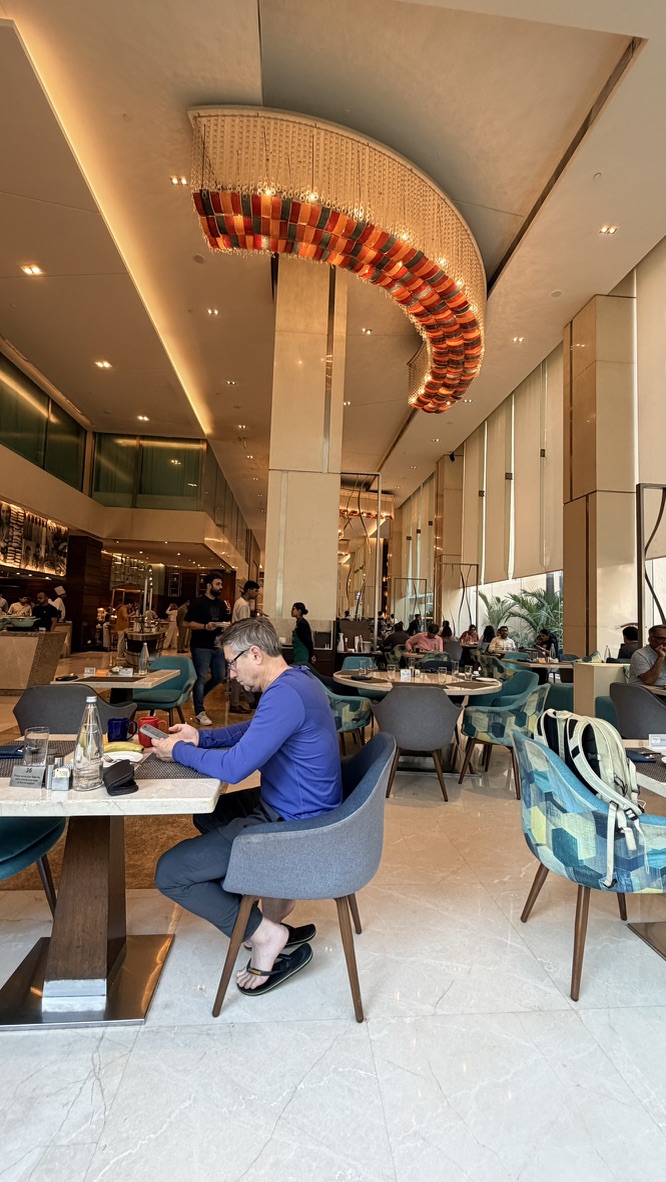
Tall glass-walled dining room at Saptami restaurant, Mumbai, India.
Light, height, and room to work. The open restaurant felt calm enough for conversation even while breakfast service moved around us.
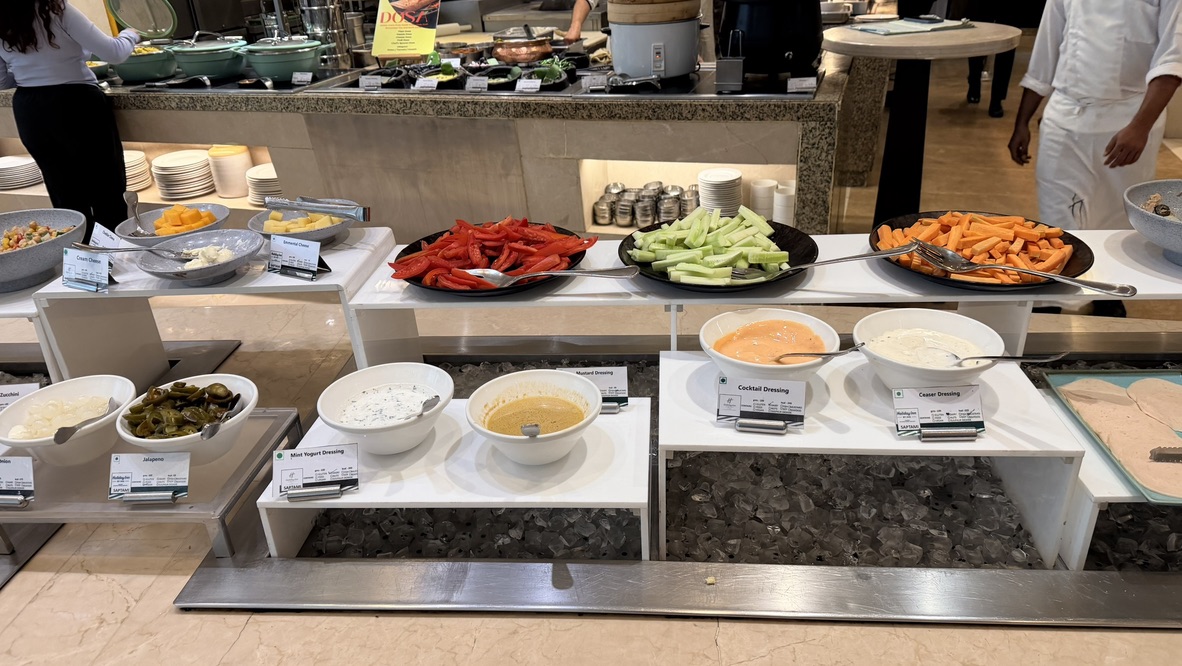
Salad vegetables and dressings on the Saptami restaurant buffet, Mumbai, India.
Choice without delay. The buffet made short breaks useful: assemble a plate, return to the table, and keep the conversation moving.
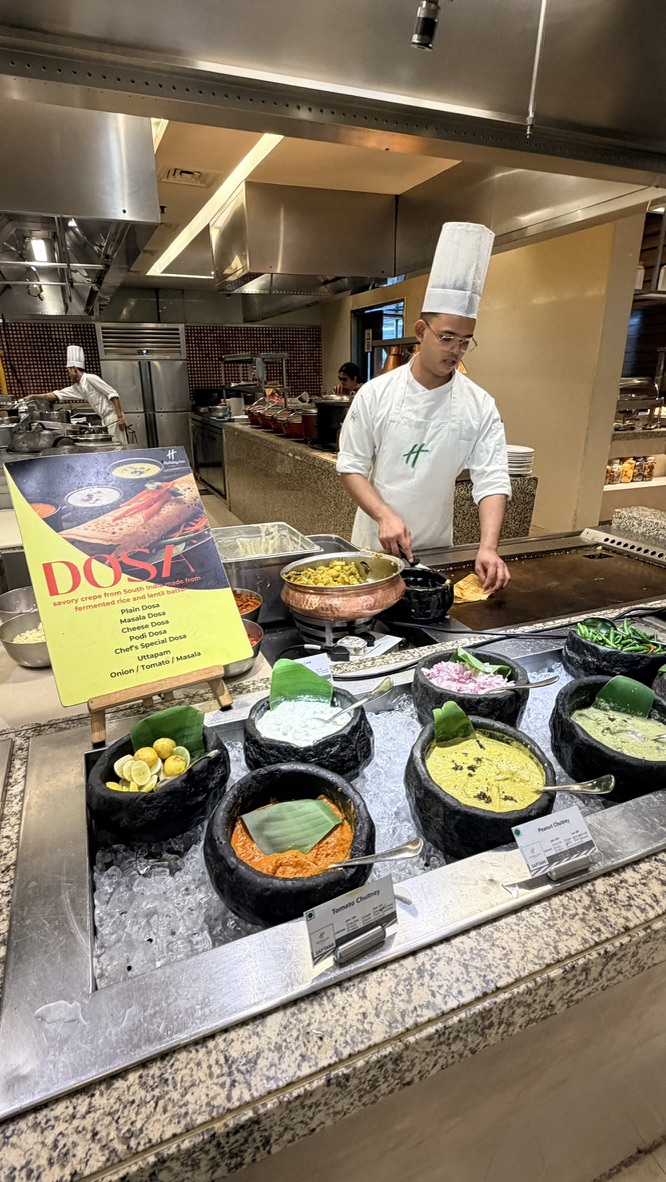
Chef preparing dosa at the Saptami restaurant live station, Mumbai, India.
Made at the counter. A live dosa station brought warmth and local flavour to a breakfast designed for many different travellers.
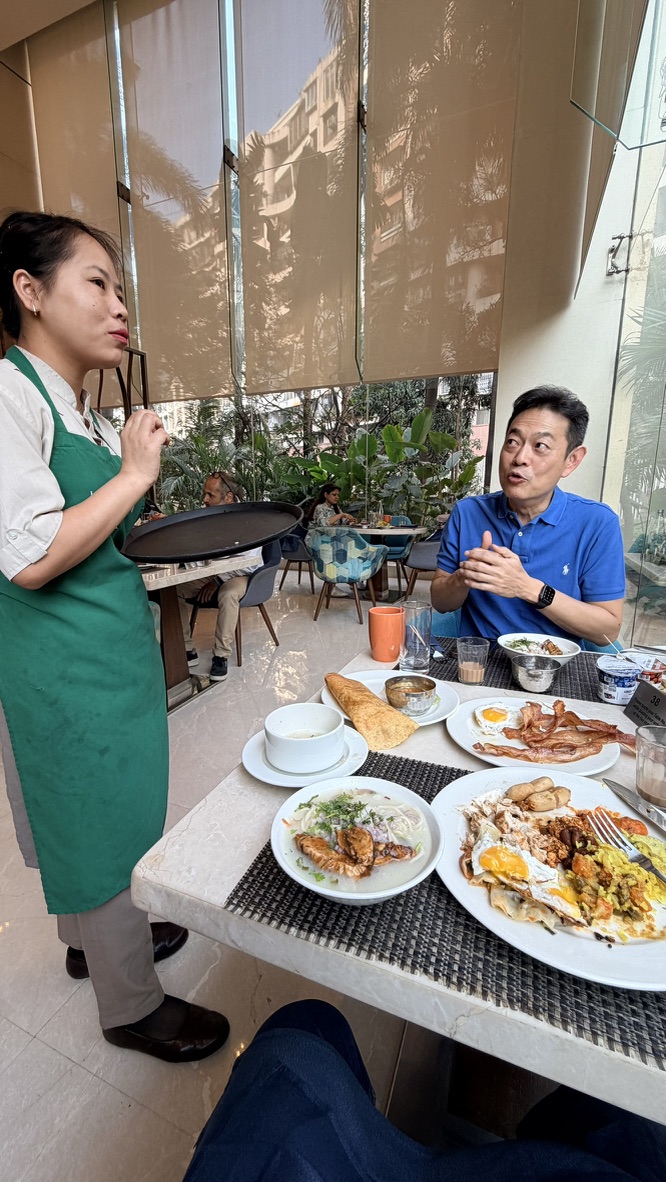
Traveller speaking with a restaurant team member during breakfast in Mumbai, India.
Hospitality in conversation. The most useful moments were often small: a recommendation, a question answered, or a plate adjusted without fuss.
Two travellers seated for a meal at Saptami restaurant, Mumbai, India.
A table between tasks. Meals gave us a place to reset together before separating again for the next call or meeting.

Included with our stay

Breakfast. Lunch. Cocktail hour. More than enough food.

The benefits attached to our stay included complimentary breakfast and lunch, followed later by cocktail hours with a generous amount of food. On a dense working day, that mattered. We did not have to search for every meal or lose time crossing the city between appointments.

By the final evening, cocktail hour was substantial enough for us. The hotel had quietly solved the practical side of the day: somewhere to work, somewhere to meet, and somewhere to eat without turning each need into another journey.
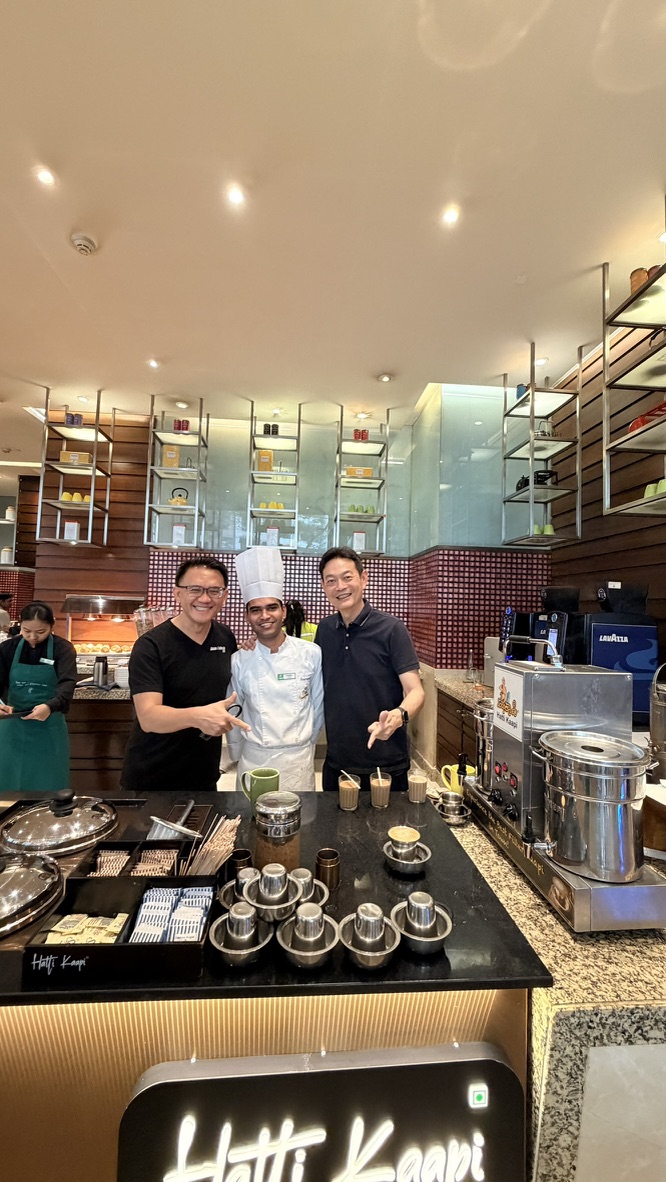
Two travellers with a chef at the Happy Kappi counter in a Mumbai hotel, India.
People made the base work. Facilities created convenience, but the restaurant team turned repeated meals into a welcome we remembered.

My last night in Mumbai

The city had been our destination. The hotel had become our launchpad.

That final night did not need another landmark. The meaningful work was already spread across the room: products introduced, conversations started, plans sharpened, and a new India chapter beginning before the Mumbai chapter had quite ended.

Departure day · Mumbai

Time to leave.
Not time to say goodbye.

This had been my first journey through India—an amazing introduction to a country that already felt larger than one visit could hold. Mumbai was the final city on this chapter, but not the final chapter itself. I will be back in India in September 2026.
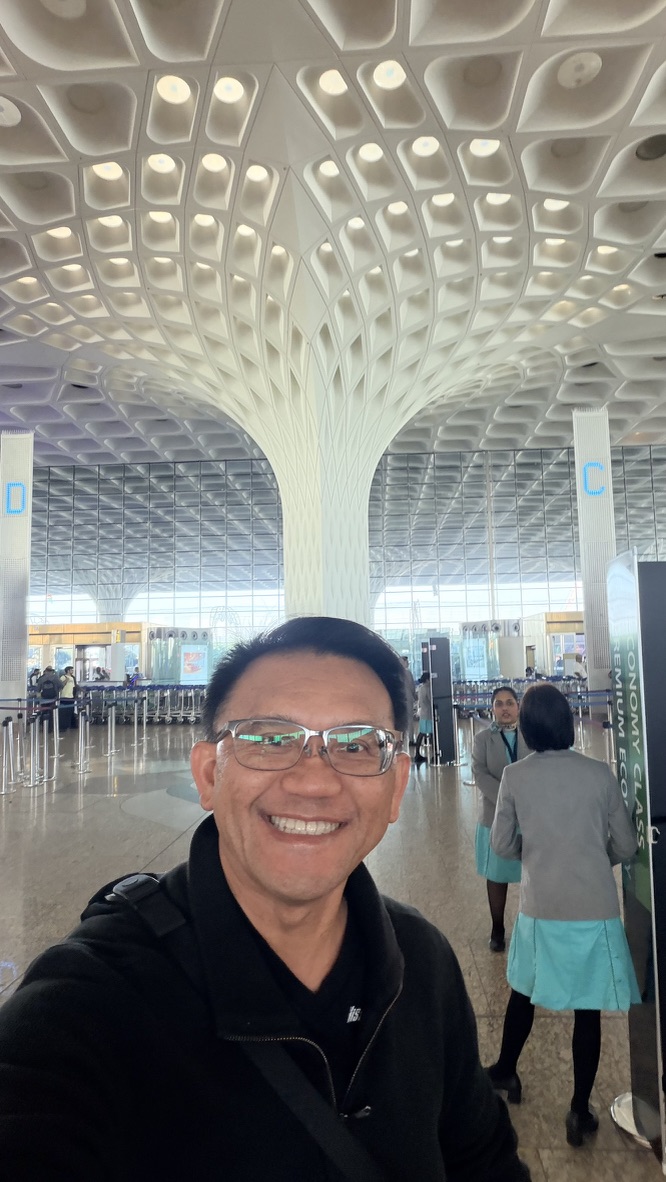
Traveller departing through the sculptural terminal at Mumbai airport, India.
One more Mumbai portrait. Bags packed, work completed, and the return journey beginning beneath the airport’s branching white columns.

Mumbai airport · lounge pause

A softer transition between India and the long flight ahead.

Lounge access in Mumbai gave us what a long travel day needed most: a quieter place to sit, enough food for an unhurried meal, and time to settle before boarding. It did not shorten the journey, but it made the journey feel more manageable.
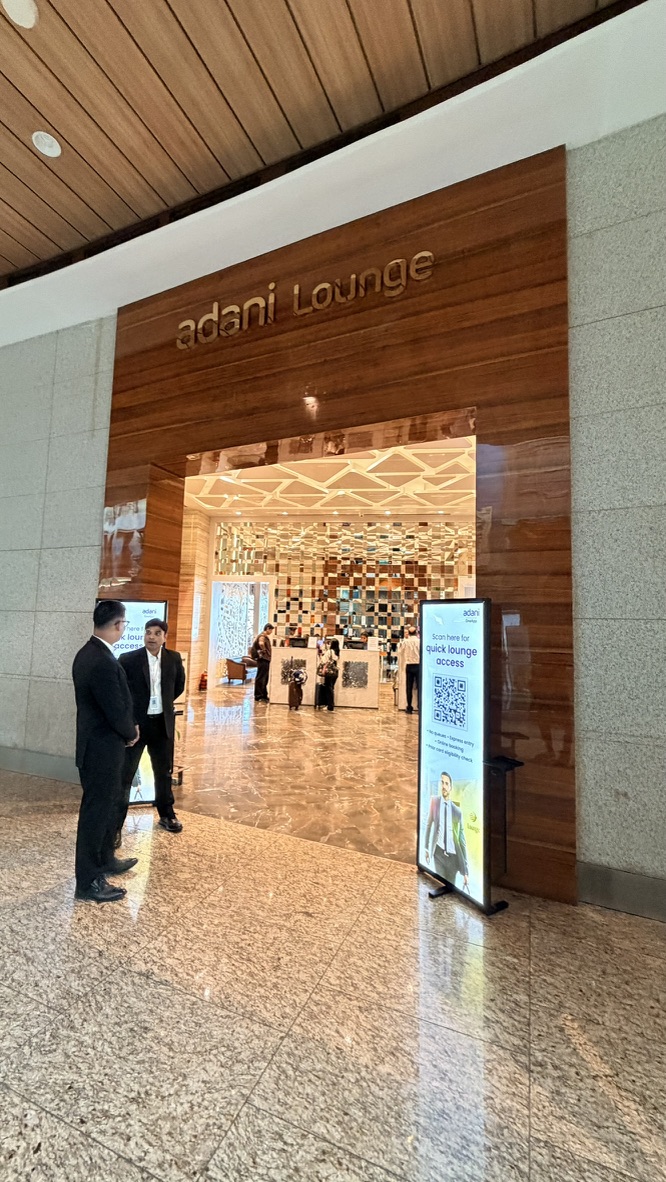
Entrance to the Adani Lounge at Mumbai airport, India.
Through the lounge doors. The airport’s pace stayed outside long enough for us to reset before the flight.
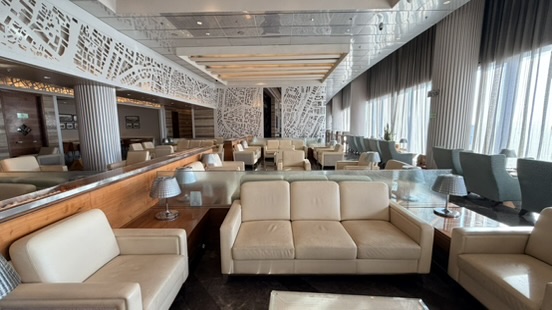
Quiet seating area inside the Adani Lounge at Mumbai airport, India.
Space before takeoff. Sofas, daylight, and a little distance from the gate turned waiting into an actual pause.
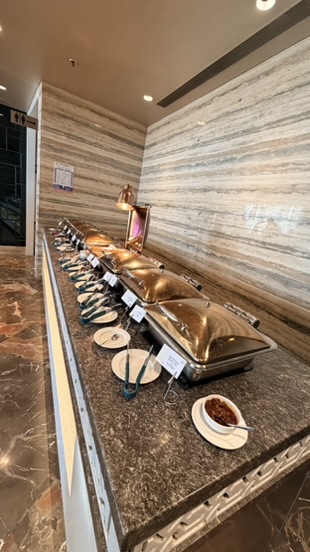
Hot buffet dishes inside an airport lounge in Mumbai, India.
A final warm meal in Mumbai. The buffet offered time to eat properly before the overnight rhythm of flying began.
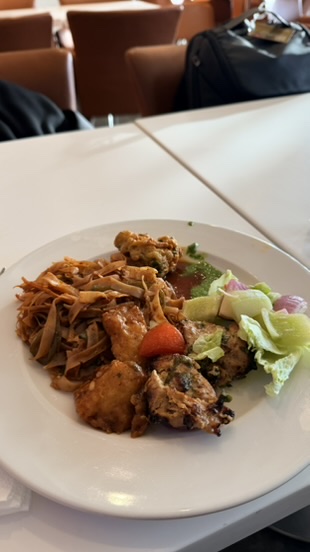
Plate of food prepared from the Mumbai airport lounge buffet.
Ready for the gate. One full plate, no rush, and a calmer start to the journey home.
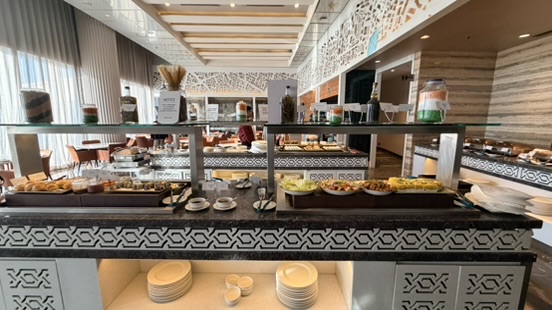
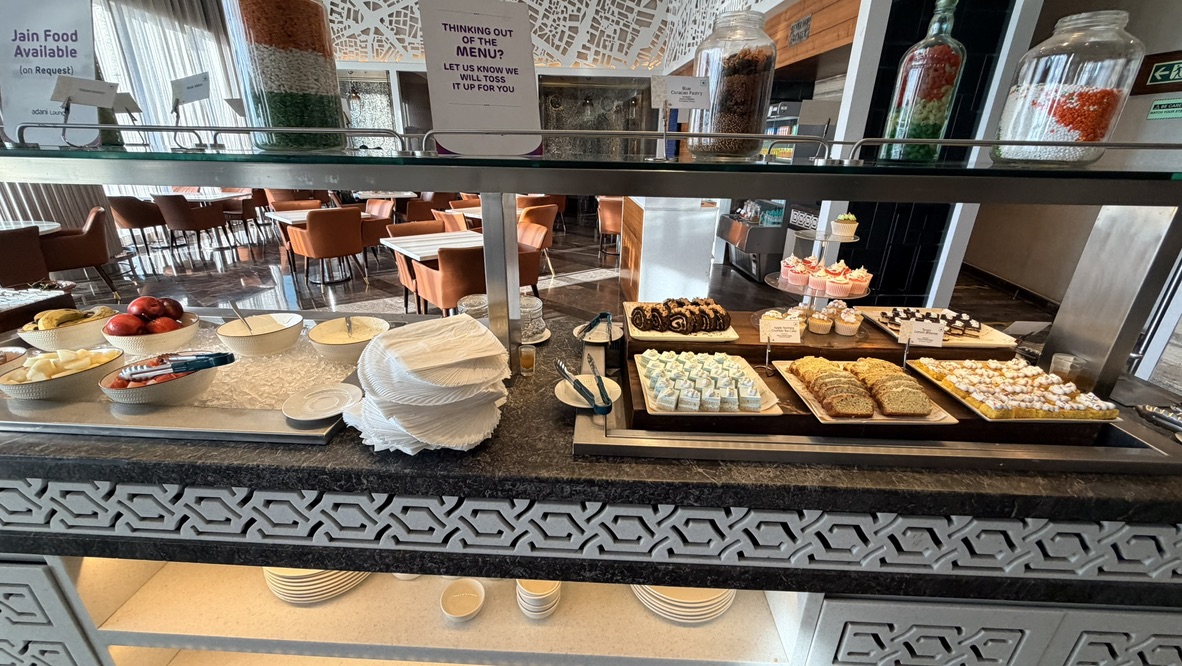
Fresh food buffet inside the Adani Lounge at Mumbai airport, India.
Choice for a long travel day. Fruit, salads, breads, and hot dishes made the stop practical as well as comfortable.
Dessert selection inside the Adani Lounge at Mumbai airport, India.
A sweet final note. The dessert counter felt like a small closing celebration for an unforgettable first trip.

ANA · Mumbai to Tokyo Haneda

Homeward, with Japan between chapters.

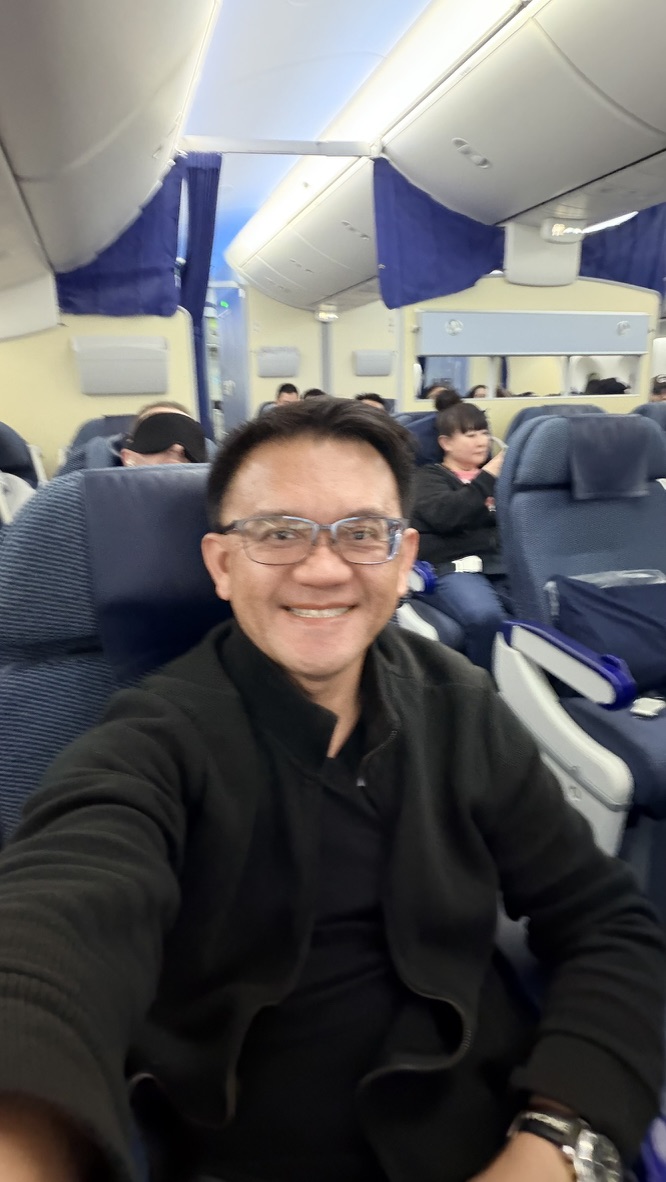
We flew with ANA through Tokyo Haneda. Once aboard, the wide seat, meal service, and quiet cabin created another kind of breathing room—the welcome feeling that the logistics were now carrying us, and we could simply follow the journey home.
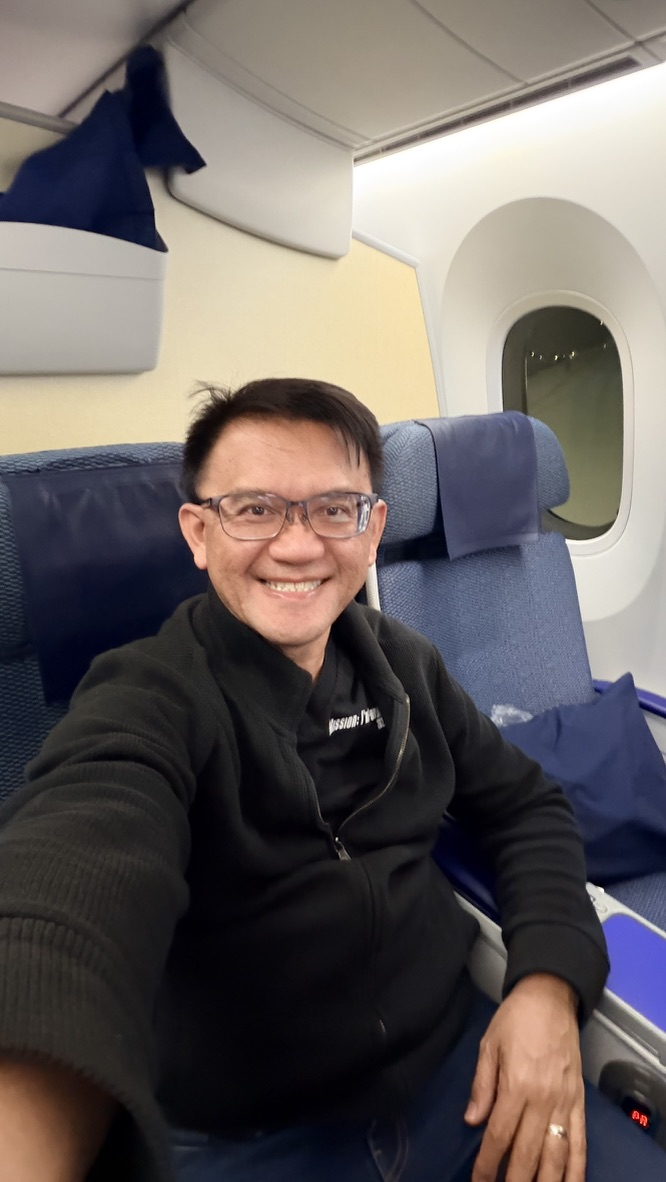
Traveller seated aboard an ANA flight departing Mumbai for Tokyo.
Settled for the long sector. A comfortable seat made it easier to let Mumbai recede slowly rather than disappear all at once.
Traveller inside the ANA aircraft cabin on the journey through Japan.
India behind us, Japan ahead. The cabin became the bridge between an extraordinary first visit and the familiar direction of home.
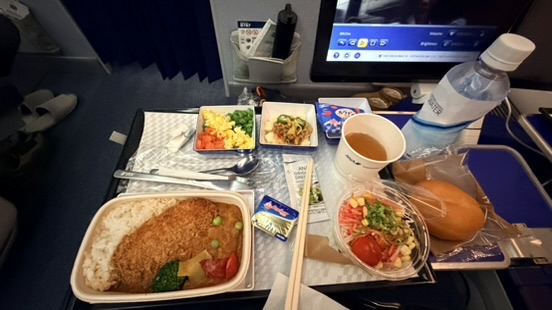
Meal served aboard an ANA flight on the journey from Mumbai through Tokyo.
The journey finds its rhythm. Dinner, a screen, and the small routines of a long flight carried the night forward.
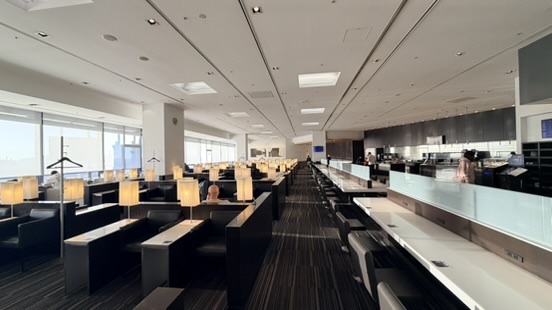
Quiet airport lounge seating during a connection at Tokyo Haneda Airport, Japan.
Tokyo, in transit. Haneda offered another quiet interval before the final flight home.

HND · Japan in between

Another lounge. Another chance to arrive at the next flight rested.

During the Haneda connection, lounge access made the layover feel less like dead time and more like part of the journey. There was space to sit, something to eat, and enough calm to gather ourselves before the last sector home.

Mumbai and Haneda offered very different surroundings, but the value was the same: fewer hurried decisions, more room to breathe, and a noticeably more pleasurable long-haul trip.
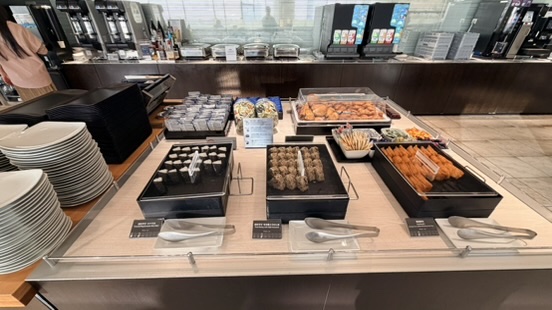
Japanese snacks and refreshments in an airport lounge at Tokyo Haneda Airport.
A taste of the connection. Japanese snacks made even a short transit feel rooted in place.

The promise

This was not goodbye.
India, I’ll see you again in September 2026.

My first visit gave me landmarks, meals, work, friendships, and more questions than answers—in the best possible way. I left grateful for what we experienced and excited that the next India chapter already had a date.

Mumbai → Tokyo Haneda → home

First journey complete.
The next one is already calling.

We arrived in India as first-time visitors and left with experiences that had already begun to shape what comes next. The flight home closed the itinerary, but the promise to return kept the story open.