Day 01 · Arrival from Bengaluru
A city introduced itself through the place we stayed.
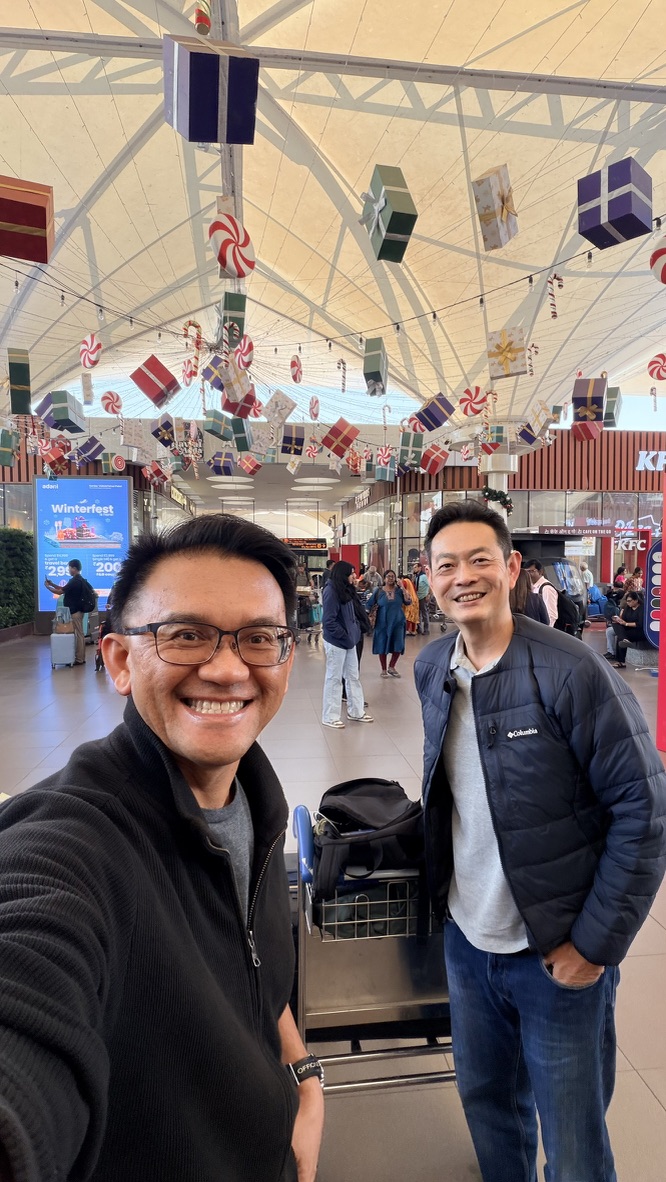
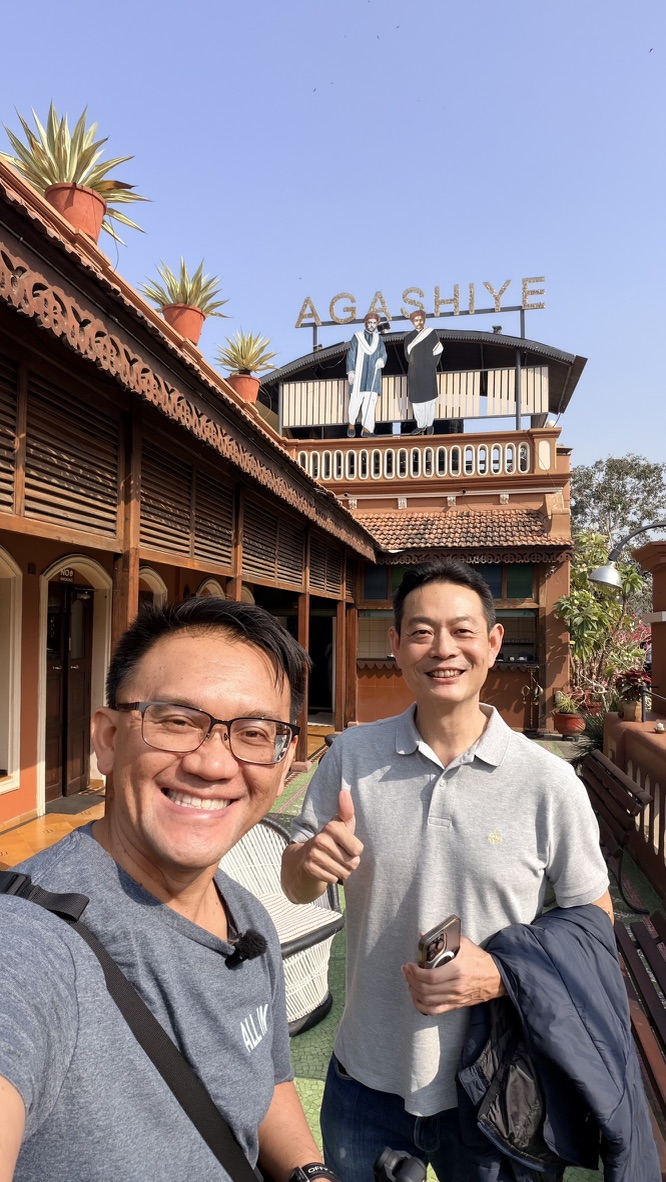
Ahmedabad was the second city in my first journey through India. We arrived from Bengaluru and checked into The House of MG in the old city—not simply to sleep near the historic center, but to begin inside one of its stories.
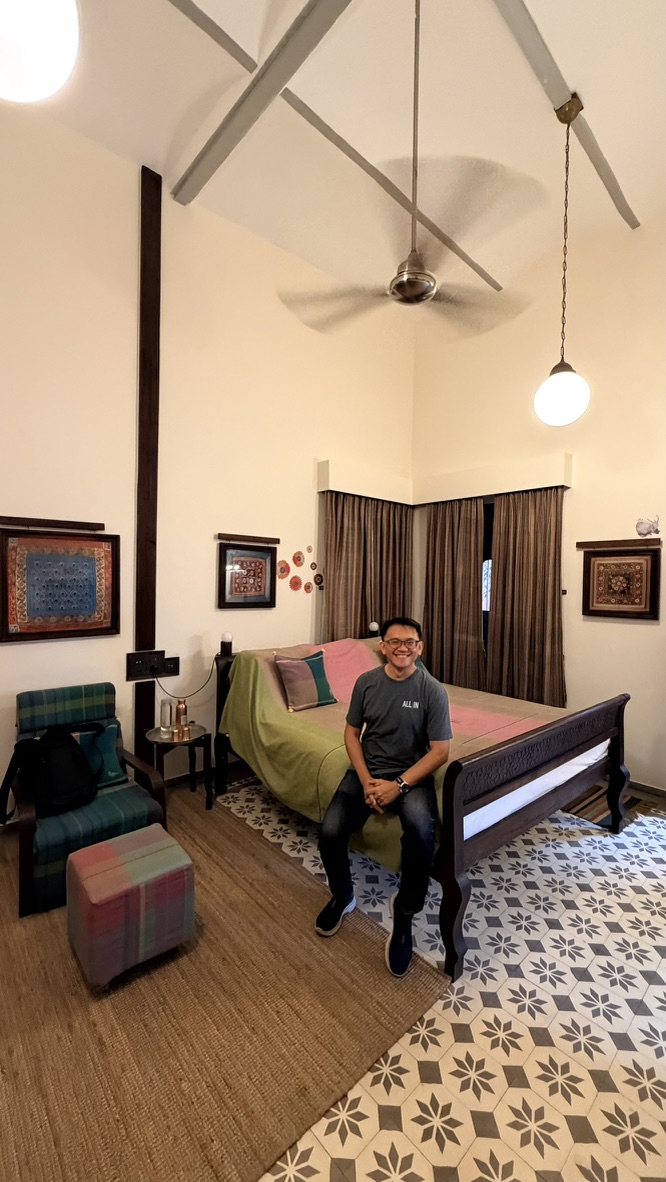
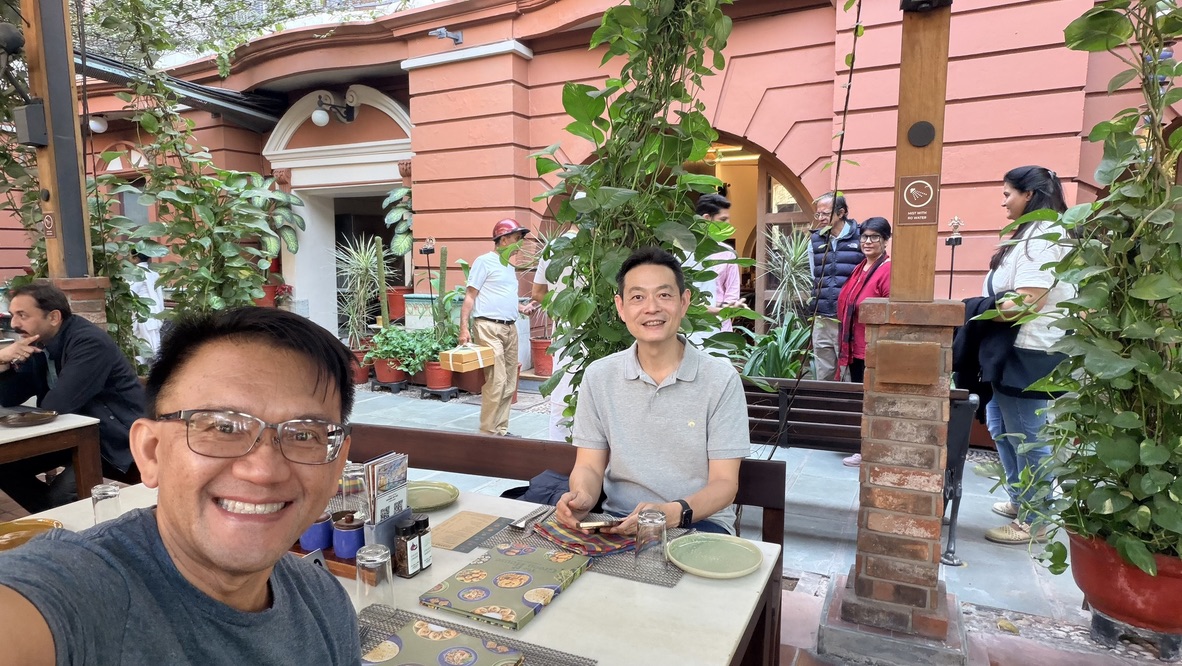
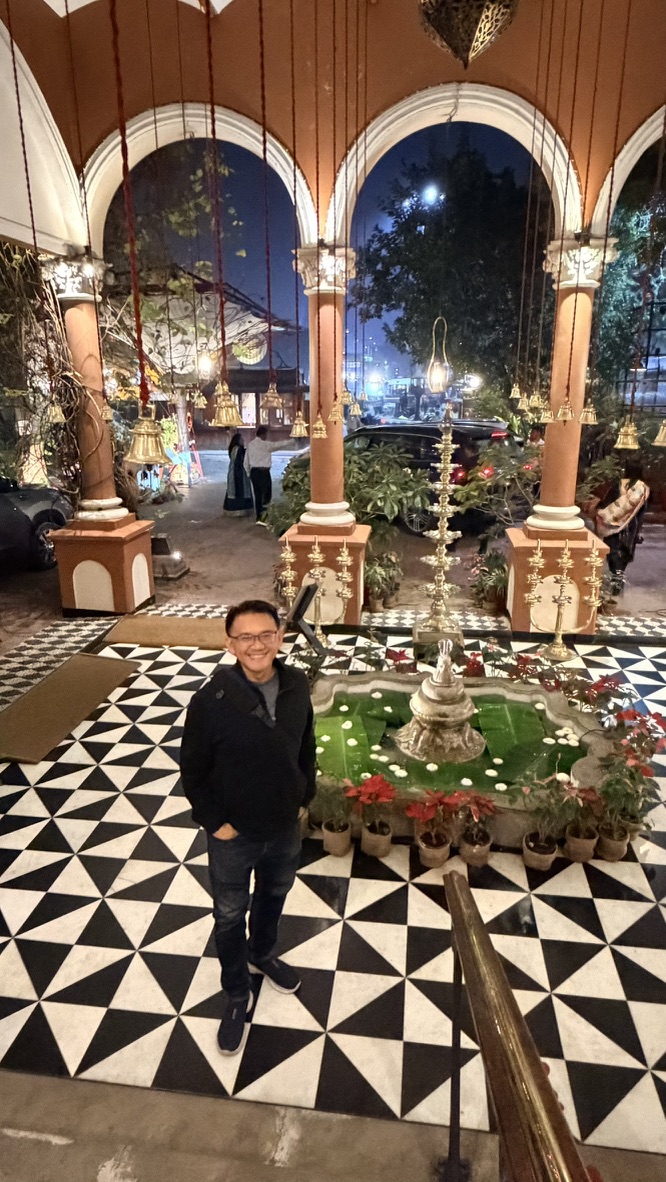
The setting changed the pace immediately. This was a century-old family mansion with courtyards, verandahs, tall rooms, patterned floors, and the feeling that every surface had already lived several lives.
Stay · The House of MG
Not a hotel styled as history.
A house carrying it.
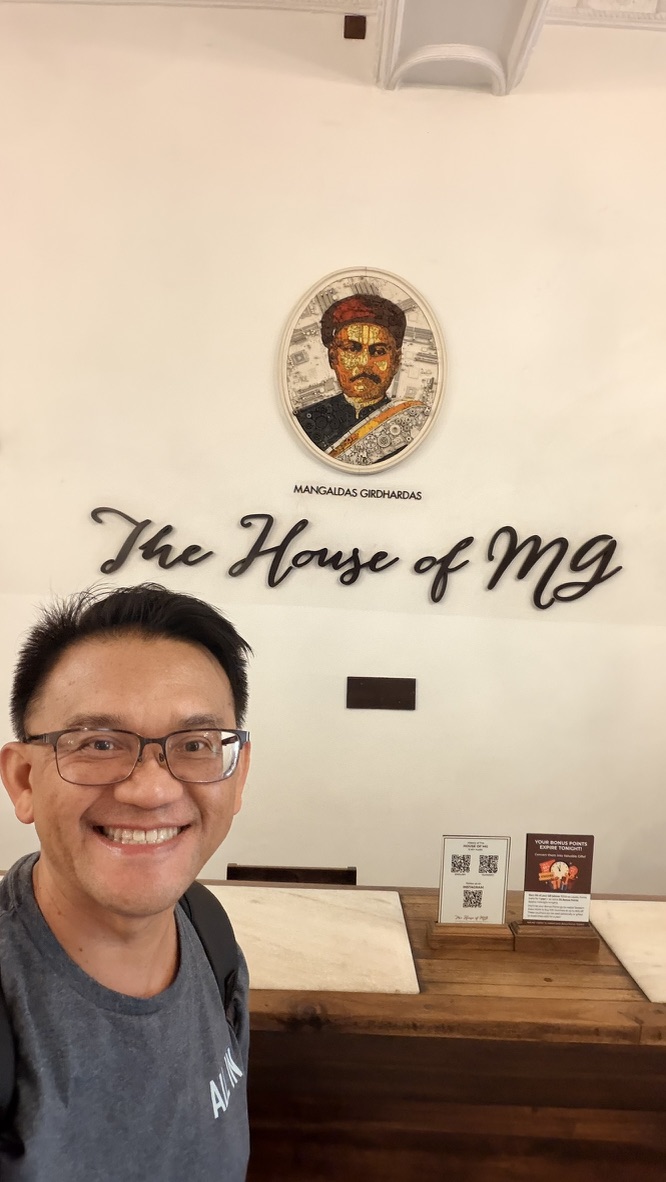
Built in 1924 as the home of Mangaldas Girdhardas, the mansion gradually became a full-service heritage hotel after restoration work that unfolded from the late 1990s through 2014. Today, its 38 rooms preserve the scale and character of a family residence while placing guests at Lal Darwaja, directly opposite the Sidi Saiyyed Mosque.
My first impression was personal rather than polished: a reception desk beneath the family name, a room with handcrafted details and patterned tile, and courtyards that made the property feel connected to the city outside. This is the beginning of the hotel review; breakfast and the guided heritage walk will complete it on Day Two.
Culture · A brief history of Ahmedabad
Founded in 1411.
Lived in every day.
Sultan Ahmad Shah founded the walled city on the eastern bank of the Sabarmati River in 1411. Across six centuries, Ahmedabad developed a distinctive urban fabric: Sultanate monuments, Hindu and Jain temples, carved timber houses, gated residential pols, inner khadkis, wells, courtyards, and places of worship sharing the same dense city.
UNESCO inscribed the Historic City of Ahmadabad in 2017, making it India’s first World Heritage City. What makes that recognition powerful is that the old city is not a frozen monument. Its houses, markets, religious traditions, craftsmanship, and community spaces remain part of daily life.
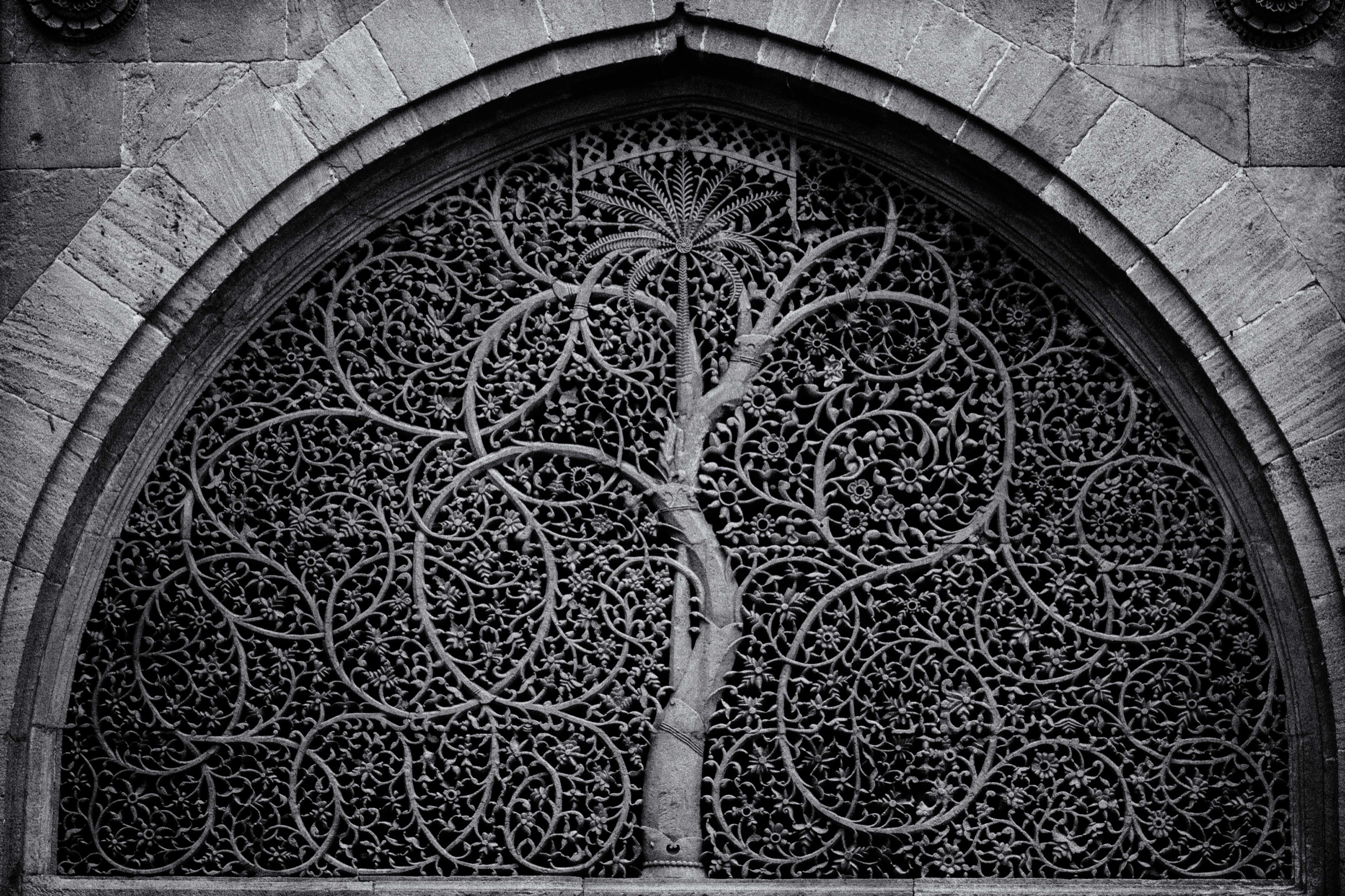
The Sidi Saiyyed ni Jali on this page’s cover is one of Ahmedabad’s enduring symbols. Its carved “Tree of Life” window dates to the final year of the Gujarat Sultanate. Directly across the road, The House of MG gave us an unusually intimate place from which to begin.
Taste · Agashiye
Our first night,
served on the terrace.
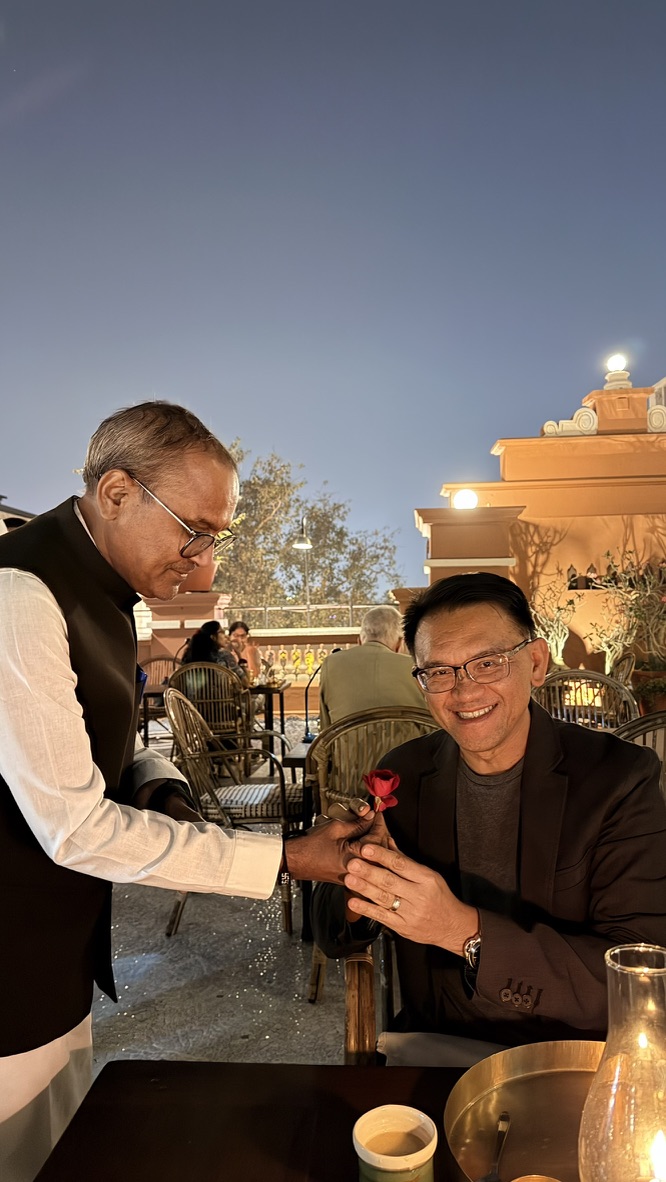
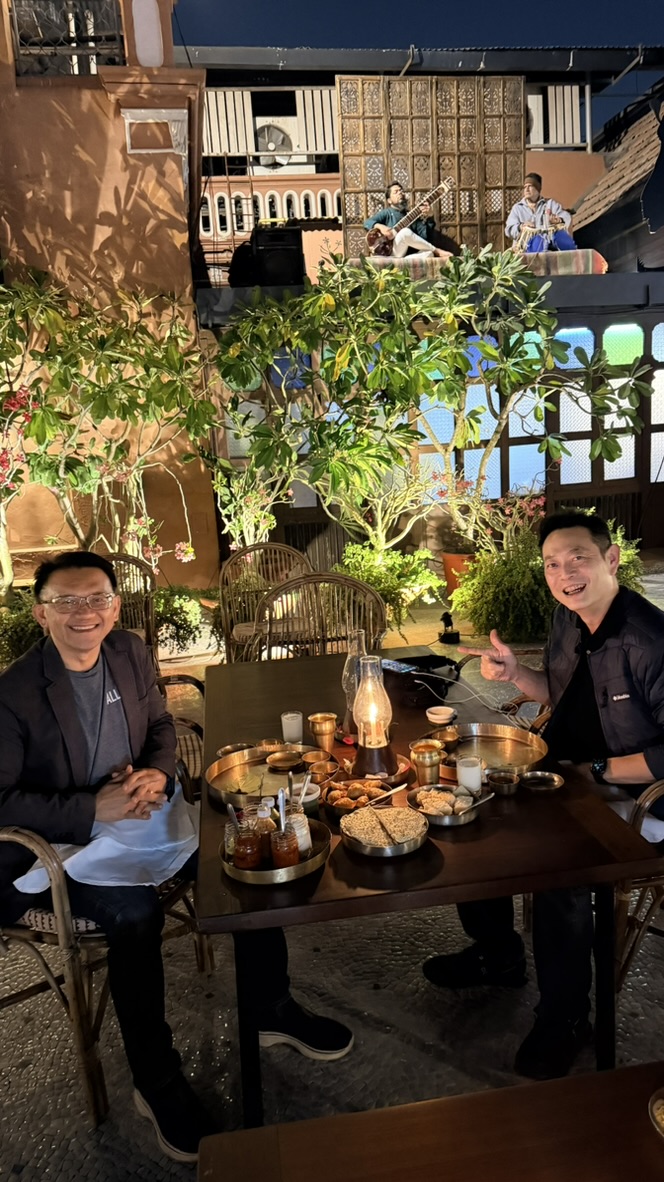
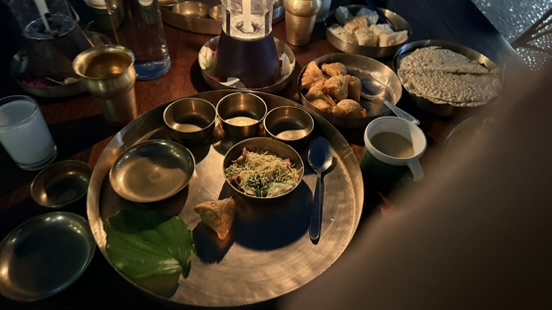
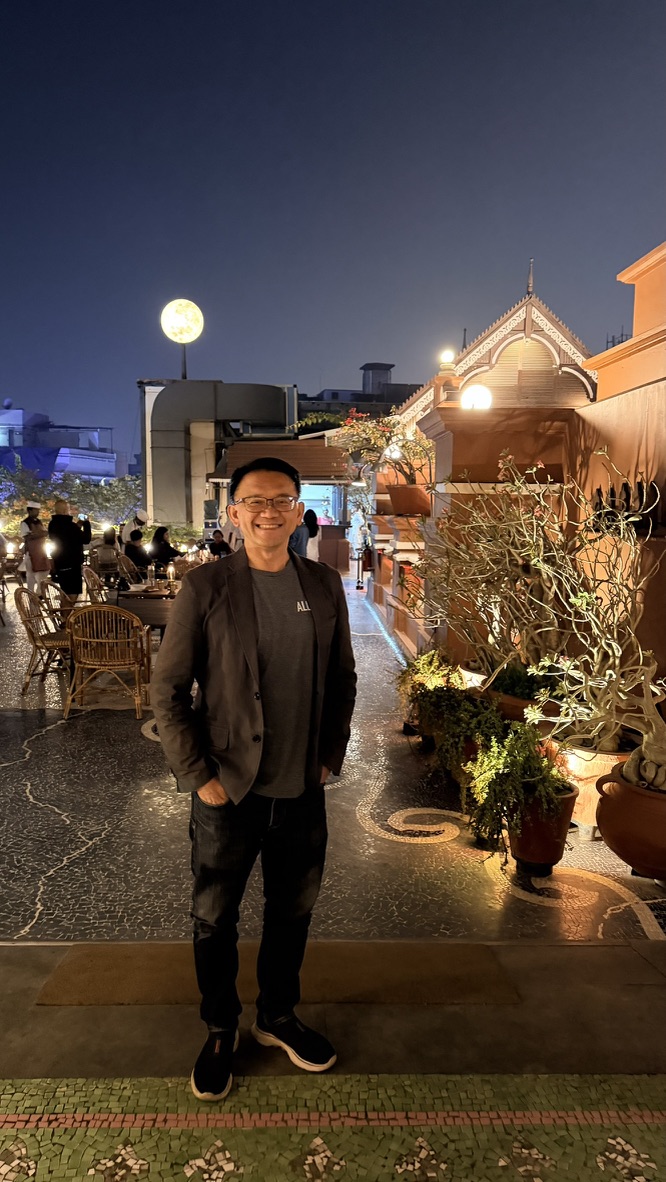
Our first evening was reserved especially for us at Agashiye, the rooftop restaurant at The House of MG. Its name means “on the terrace” in Gujarati. Since opening in 1999, the restaurant has centered its experience on a changing fixed menu of seasonal, home-style Gujarati dishes, served as a thali in silver or kansa bronzeware.
The meal
Many small dishes.
One generous idea.
The pleasure of the thali was not a single signature plate. It was the rhythm of abundance: breads, vegetables, pulses, rice, sweets, chutneys, and accompaniments arriving together, then returning as the staff noticed what we enjoyed.
Under the night sky, with musicians above the terrace and the old house illuminated around us, dinner became more than the first meal in a new city. It was Ahmedabad introducing itself through care, craft, and hospitality.
Everyday street life · The old city after dark
One square.
Three lives.
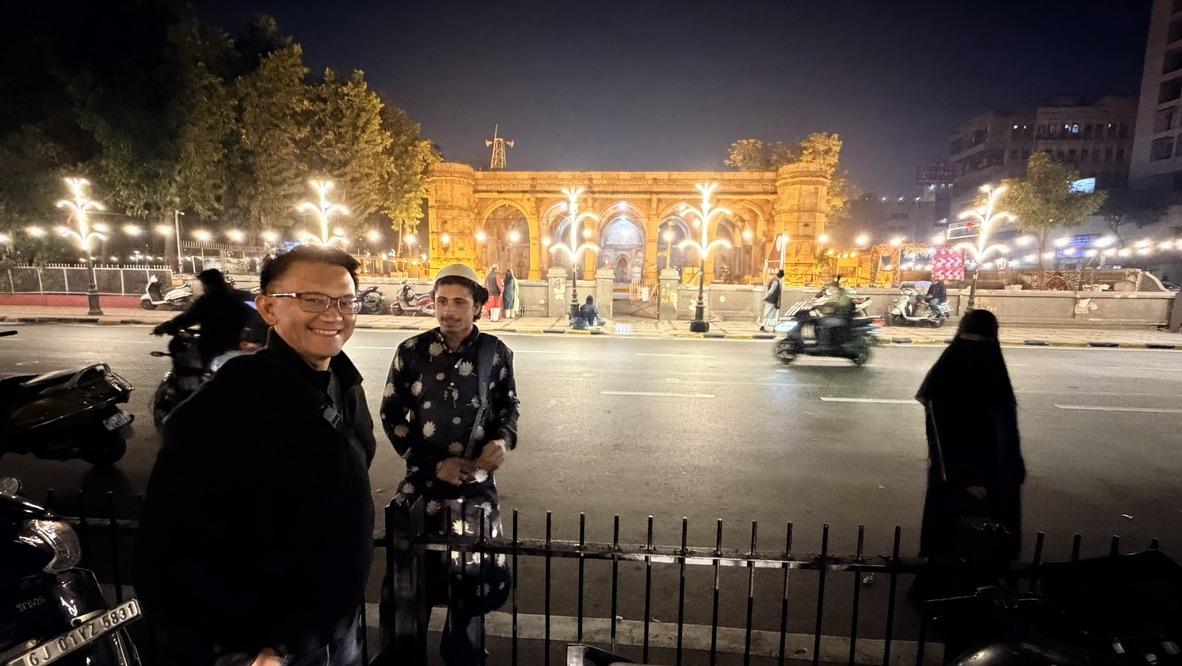
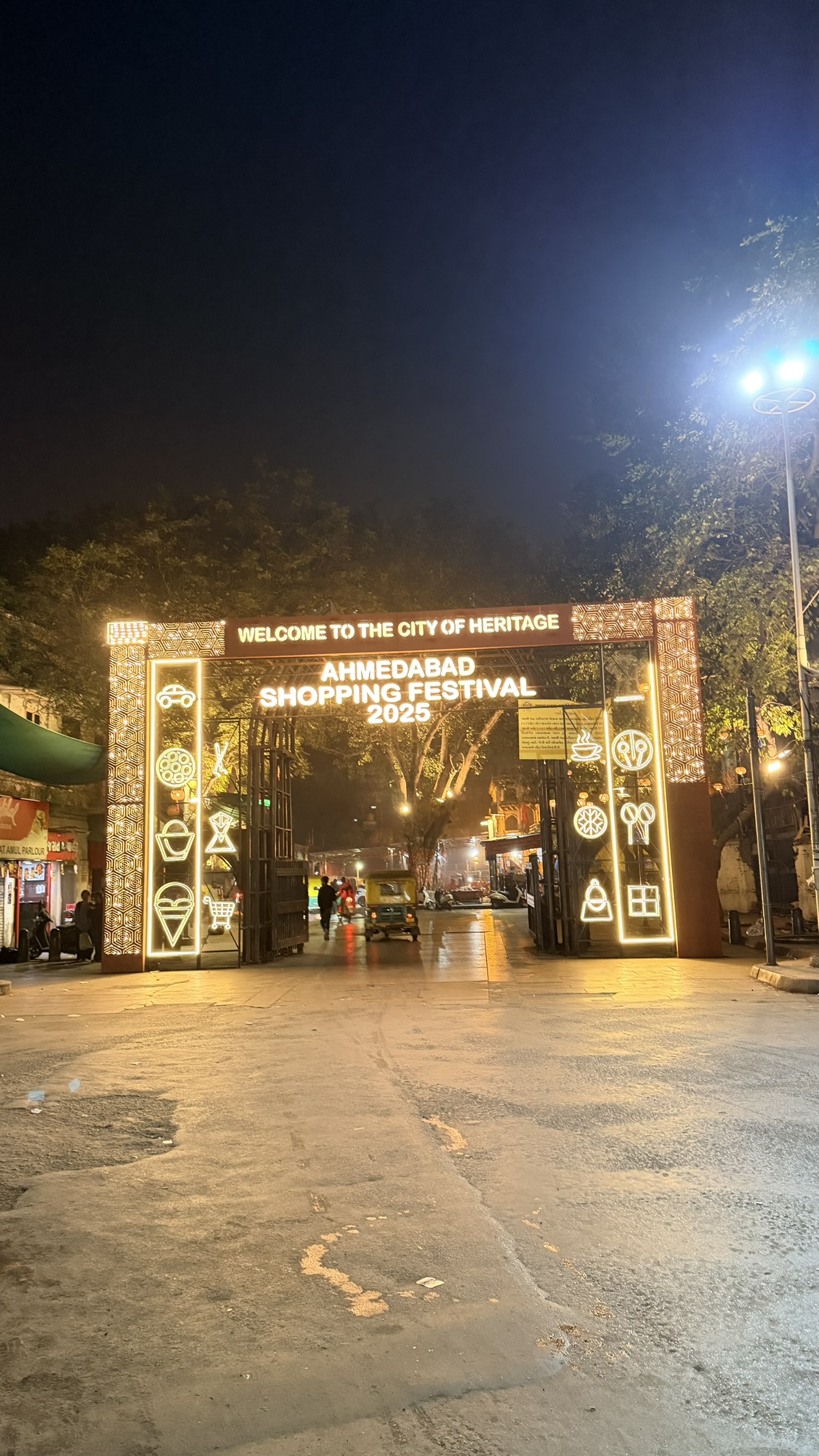
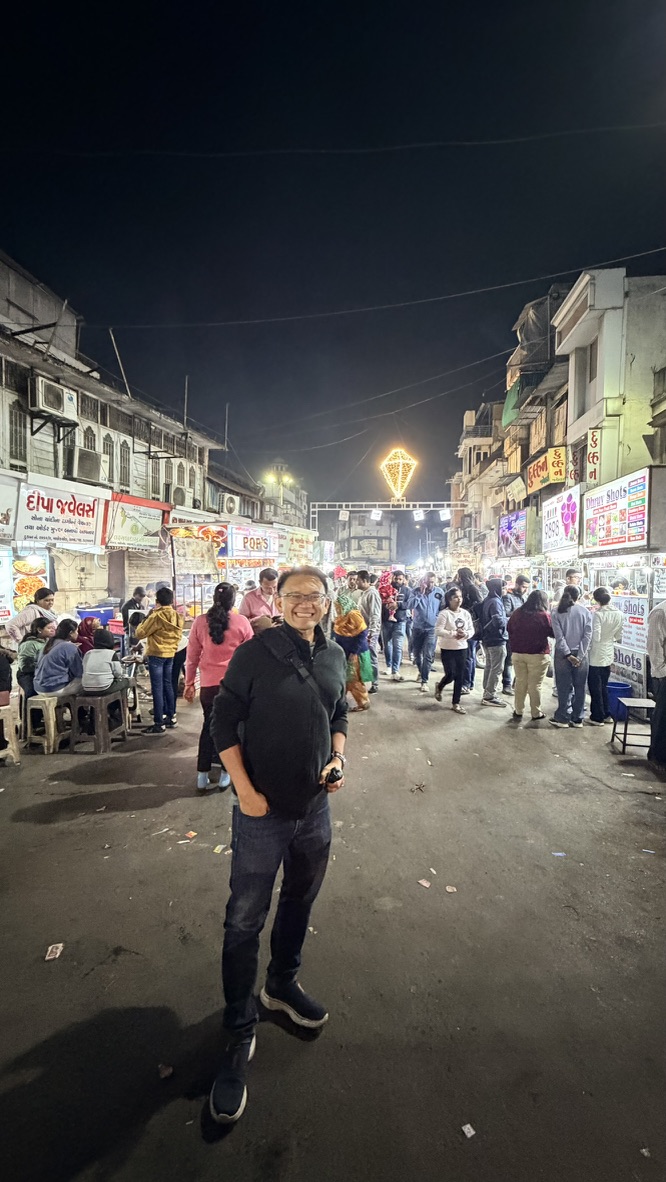
After the calm of the rooftop, we stepped into another Ahmedabad. Teen Darwaza glowed across the moving traffic, its three arches still marking a royal gateway more than six centuries after the city’s foundation. Beyond it, the old city stayed fully awake.
Manek Chowk is known for changing character with the hour. In the morning it is a vegetable market. By midday, the surrounding district becomes a center for bullion and jewellery. After sunset, tables and food stalls move in and the square turns into one of Ahmedabad’s best-known night markets.
That transformation felt like the city in miniature: commerce, appetite, history, and community continually taking turns in the same shared space. The buildings were old, but nothing around them felt still.
First-night reflection
Ahmedabad did not ask me to choose between history and the present. It showed me how gracefully they can share the same table.
Tomorrow we step outside the hotel and into the old city itself. But the first night already gave me the frame for what follows: heritage here is not only something to look at. It is something people continue to inhabit, serve, restore, and pass forward.
Day 02 · Breakfast & the guided old-city walk
The city opened
one doorway at a time.
On our second morning, Ahmedabad moved from backdrop to conversation. We began with breakfast at The House of MG, then followed a guide into the walled city—through monumental gateways, pol lanes, religious spaces, carved homes, and the everyday life held between them.
Morning · The House of MG
Breakfast before
six centuries of streets.
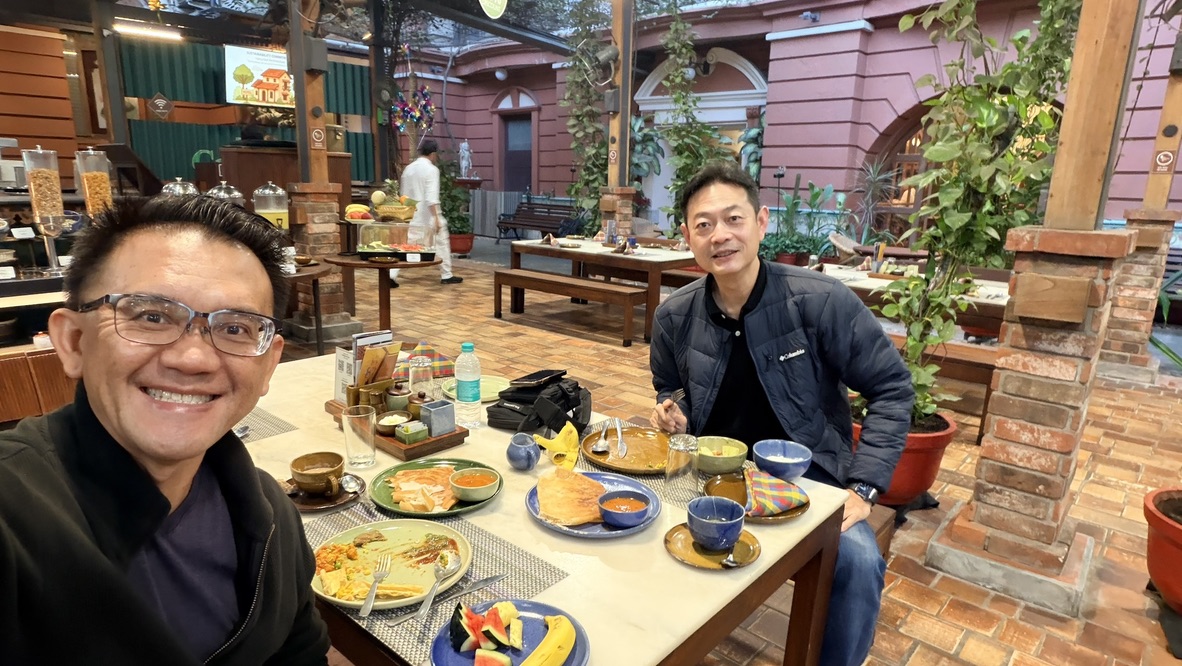
The courtyard had already become familiar: terracotta walls, plants climbing between brick columns, and a table spacious enough to let the morning unfold slowly. Breakfast was complimentary with our stay, but it felt less like a hotel benefit and more like the opening ritual for the day ahead.
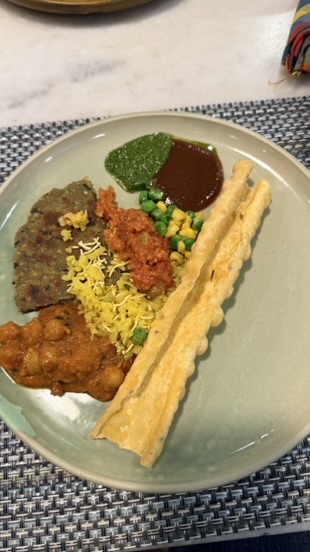
Instead of naming dishes I cannot verify from the photograph, I remember the plate as a composition of warm Indian preparations, vegetables, chutneys, fruit, and crisp breads—colorful, generous, and grounding before we stepped into the old city.
Culture · The walled city on foot
Not a museum.
A living pattern.
The House of MG describes its heritage walks as a passage through six hundred years of living history: Islamic monuments, Jain temples, vernacular wooden architecture, local culture, and daily life. That description made sense as soon as we started walking.
The old city revealed itself by compression and release. A broad historic façade would lead into a narrow lane; a dark timber elevation would open to a luminous courtyard; a sacred threshold would sit only steps from scooters, shops, neighbors, and conversation.
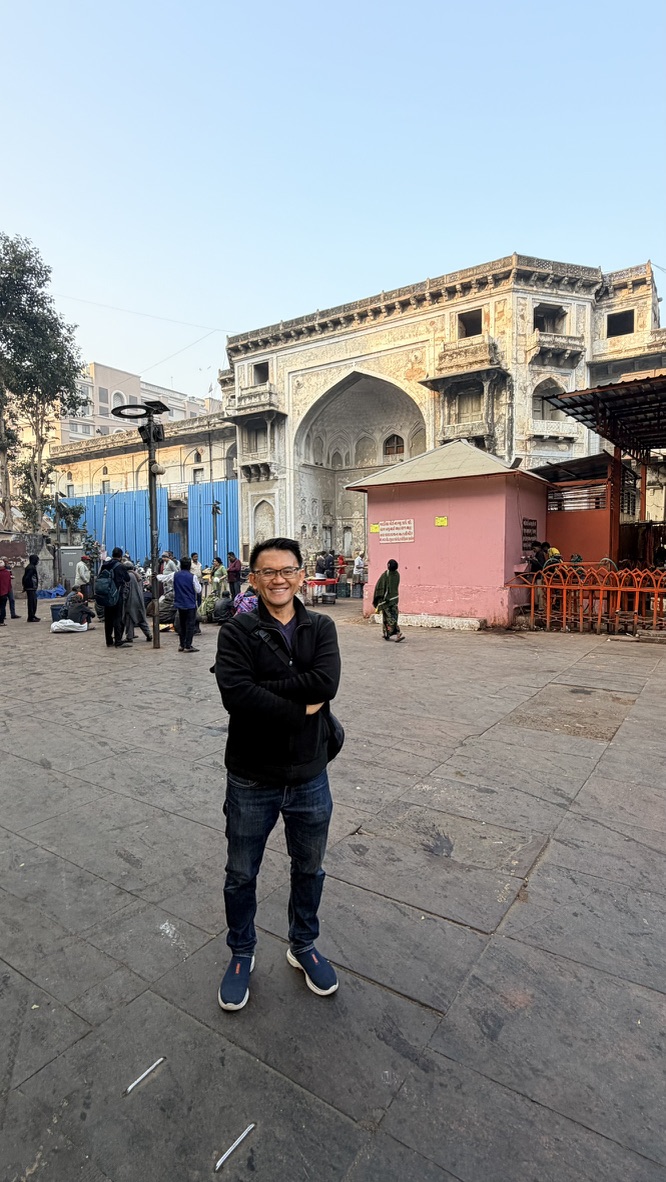
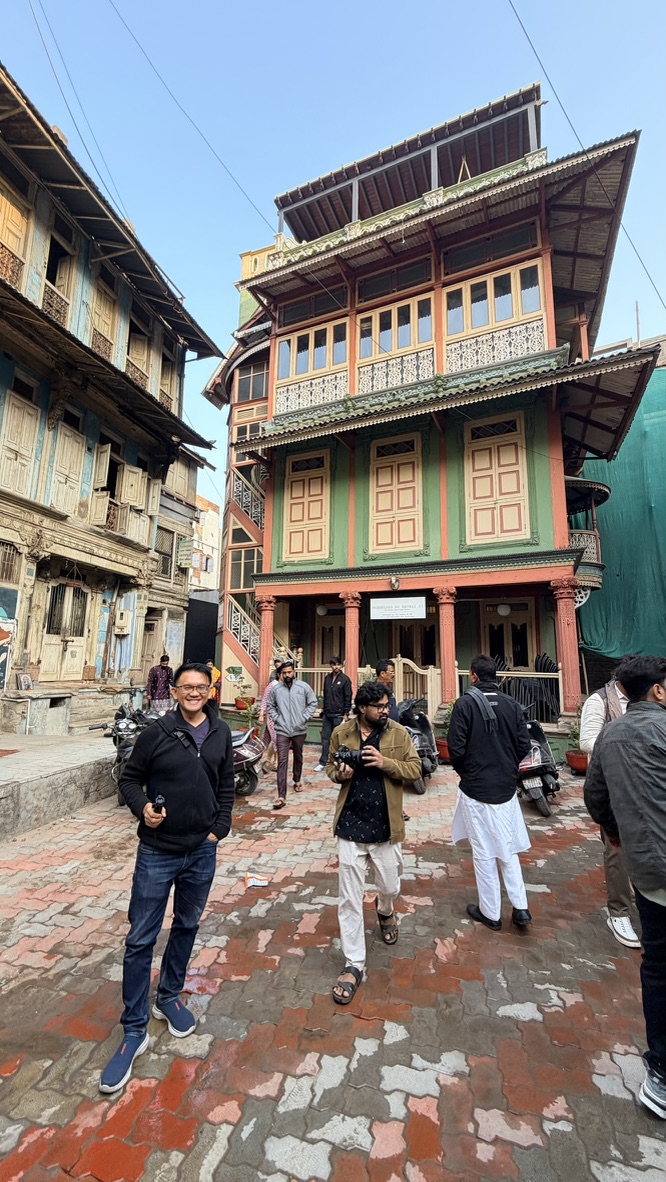
Pols · Architecture as community
The street is
part of the house.
UNESCO describes Ahmedabad’s pols as gated residential streets within a larger neighborhood structure, often reached through an inner entrance called a khadki. Closely packed homes share walls, shade one another, and create walkable lanes where the public realm feels almost domestic.
The timber architecture is one of the historic city’s defining achievements. Carved columns, brackets, balconies, screens, and deep overhangs are beautiful, but they are not ornament alone. Together with interior courtyards, they shape light, airflow, privacy, and the rhythm of family life.
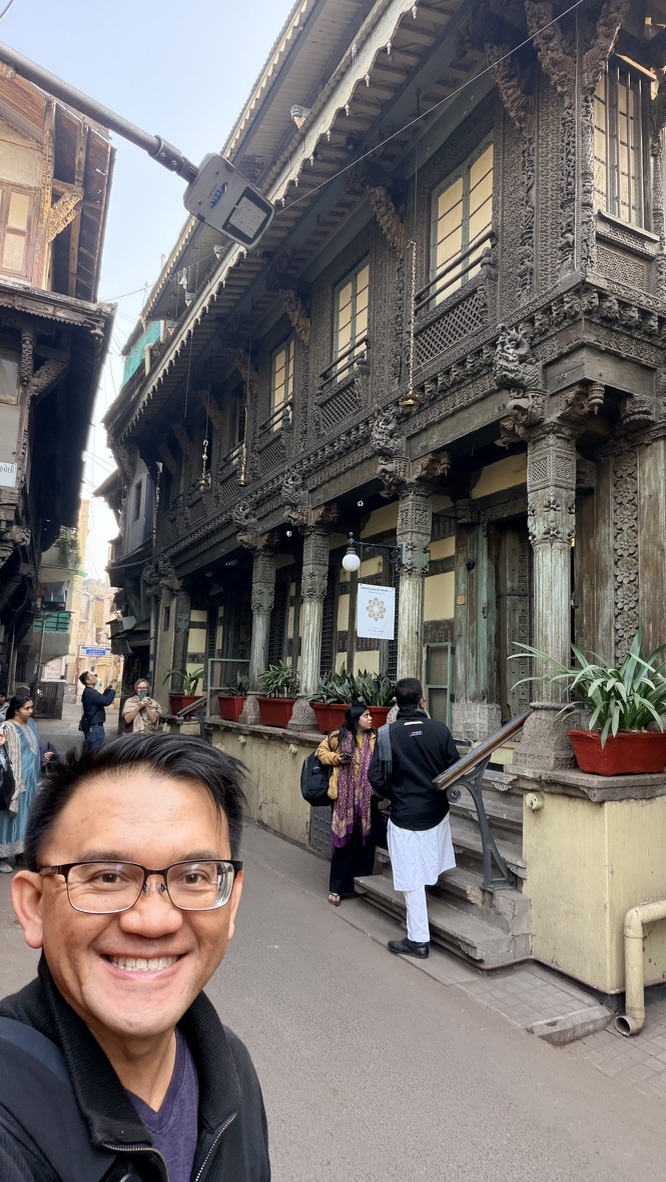
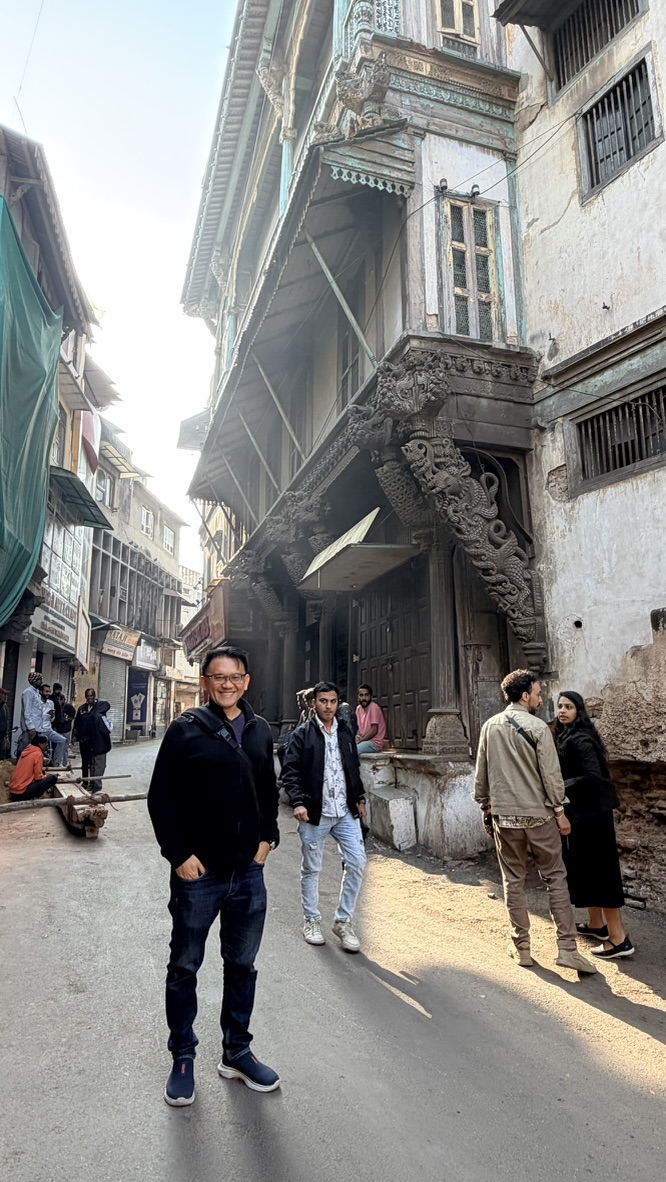
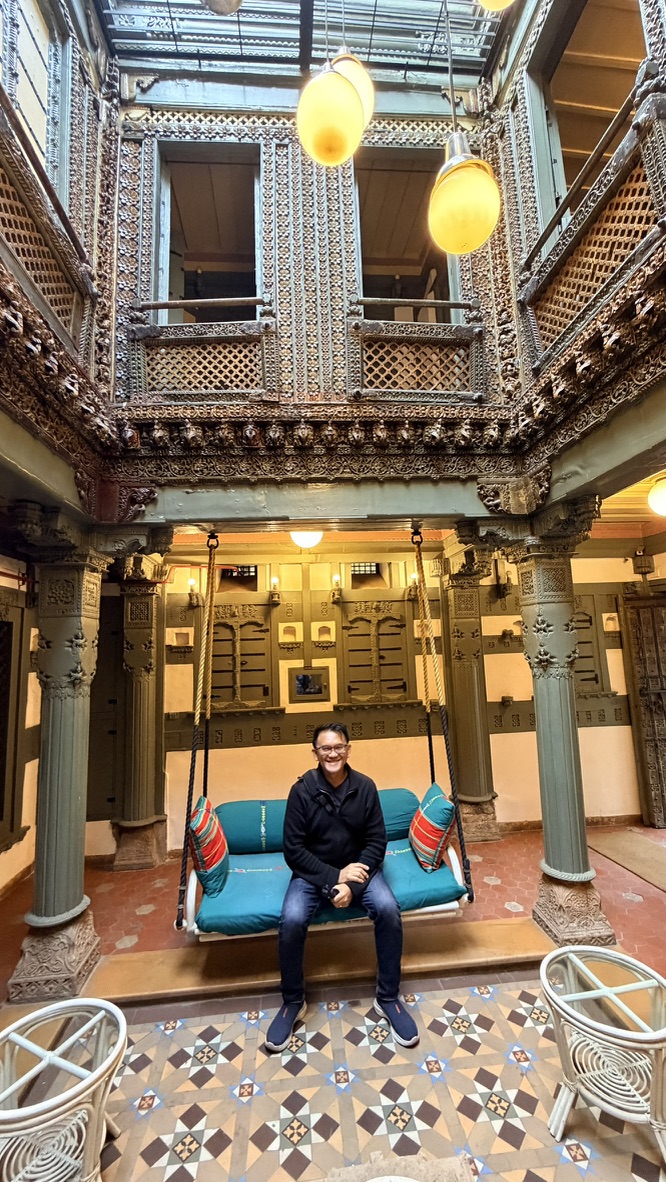
Inside the courtyard
History became
human scale.
From the lane, the carved façade carried the drama. Inside, the courtyard changed the emotion completely. Light dropped through the open center, the rooms gathered around it, and the swing made the space feel less like an exhibit than the heart of a home.
This was the detail that stayed with me: Ahmedabad’s heritage is strongest when architecture and life remain together. You do not understand the city only by looking upward. You understand it by noticing how people sit, gather, welcome, and make room for one another.
People · An unexpected welcome
The most memorable room
was the one shared with us.
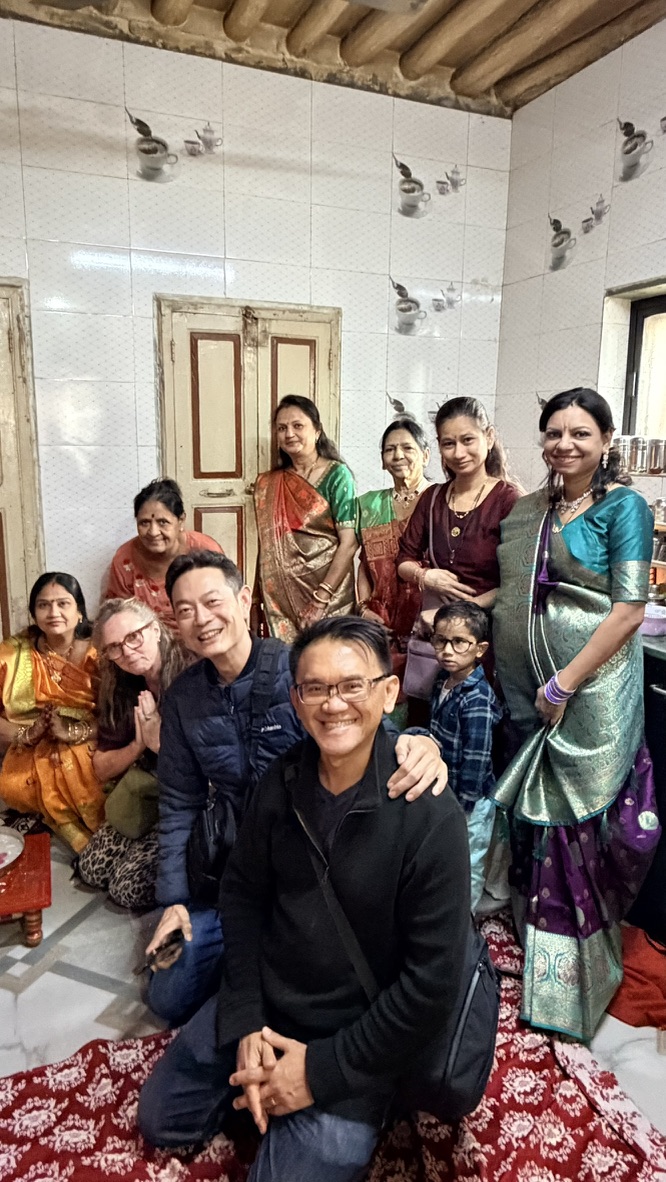
We were welcomed inside by women and children from the neighborhood. I am intentionally leaving their names unpublished until they can be confirmed, but the warmth of the moment belongs in this journal. It transformed the walk from an architectural tour into a personal encounter.
The old city is often introduced through dates and monuments. Here, its continuity felt much simpler: people opening a door, gathering close, and allowing two visitors to feel—briefly—less like strangers.
Faith in the city fabric
Different traditions.
Shared streets.
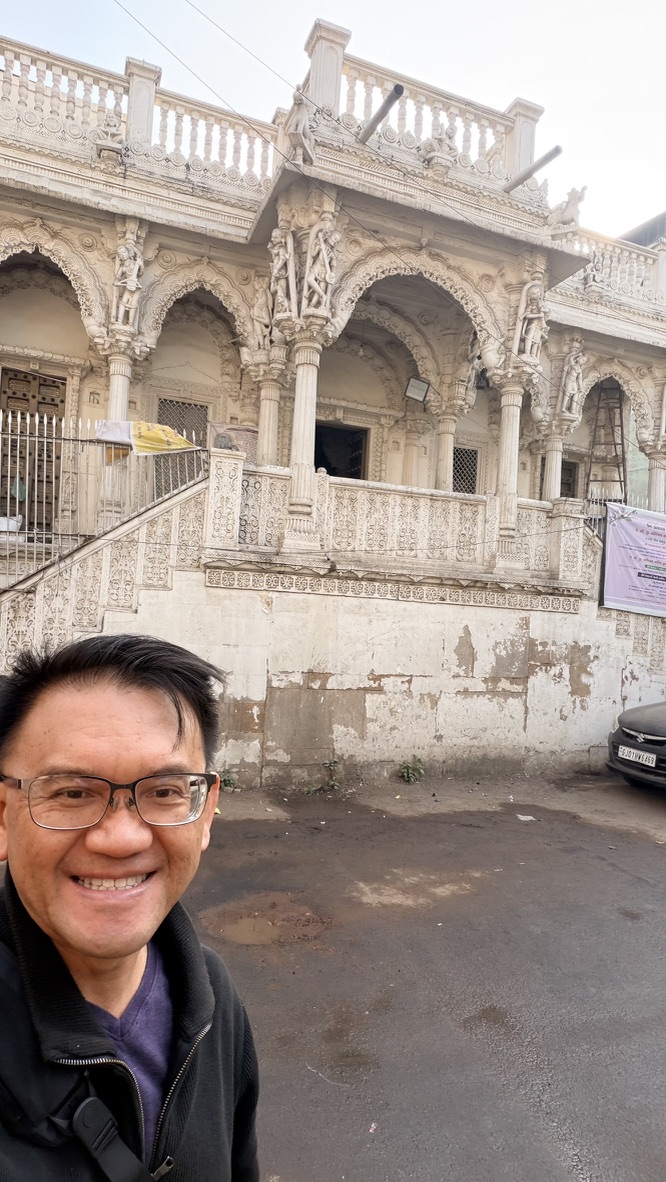
Temples, shrines, mosques, and homes sit close together inside the historic city. UNESCO recognizes this coexistence as central to Ahmedabad’s cultural character. On foot, that idea was not abstract: belief appeared through carved stone, timber, thresholds, rituals, and the daily movement of neighbors through the same compact streets.
I have kept this particular façade unnamed until its exact identity is confirmed. Its place in the story is what the photograph can safely show—the extraordinary level of craft carried into a neighborhood place of worship.
Landmark · Jama Masjid
After the lanes,
the sky opened.
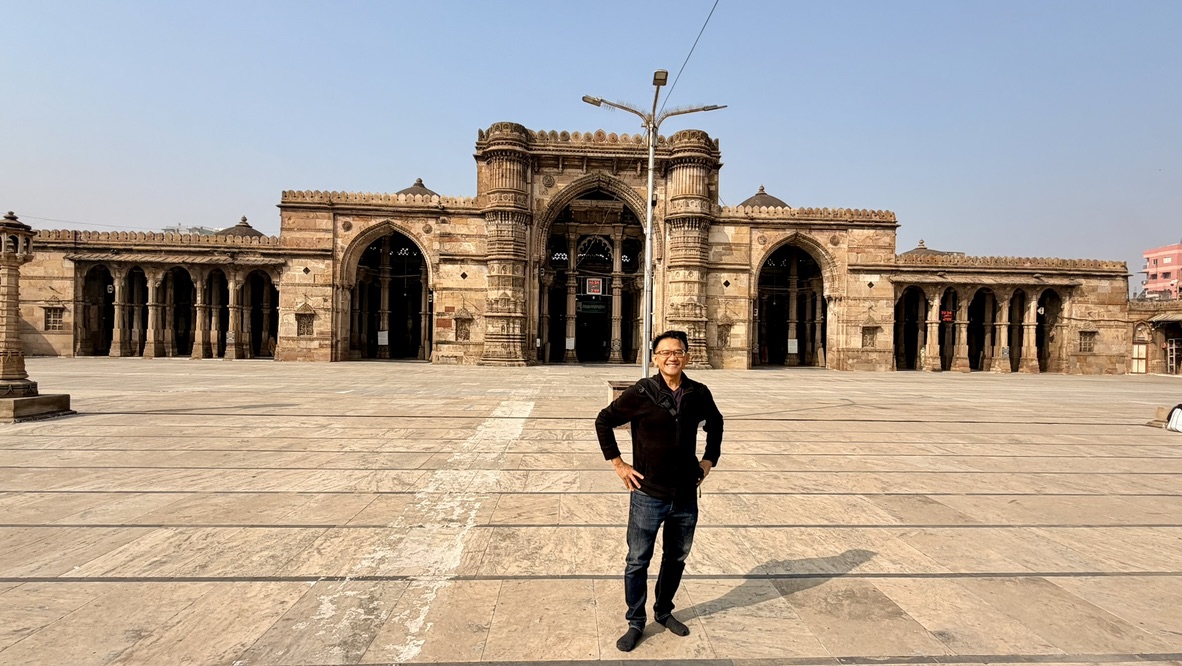
Jama Masjid was built in 1423–24 during the reign of Sultan Ahmad Shah. Its marble-paved courtyard, central ablution basin, colonnaded galleries, and vast prayer hall made it one of the defining early monuments of the new city.
Ending here gave the morning a sense of arrival. The close pol streets had trained my eye on details—wood grain, brackets, balconies, doorways. Then the mosque replaced intimacy with breadth. Stone, sunlight, and shadow held the city’s history at a completely different scale.
Day-two reflection
A city becomes unforgettable when its doors reveal not only beauty, but belonging.
Ahmedabad’s old city gave me both. The guided walk moved through architecture, faith, and history, but the memory I carried forward was relationship: breakfast across a table, a guide helping us see, and a family making space for us inside their day.
Hotel review · Day 02 · Late afternoon
ITC Narmada.
Is the scale worth the stay?
Ahmedabad · A Luxury Collection HotelArrival · From old Ahmedabad to Vastrapur
One city.
A completely different hotel.
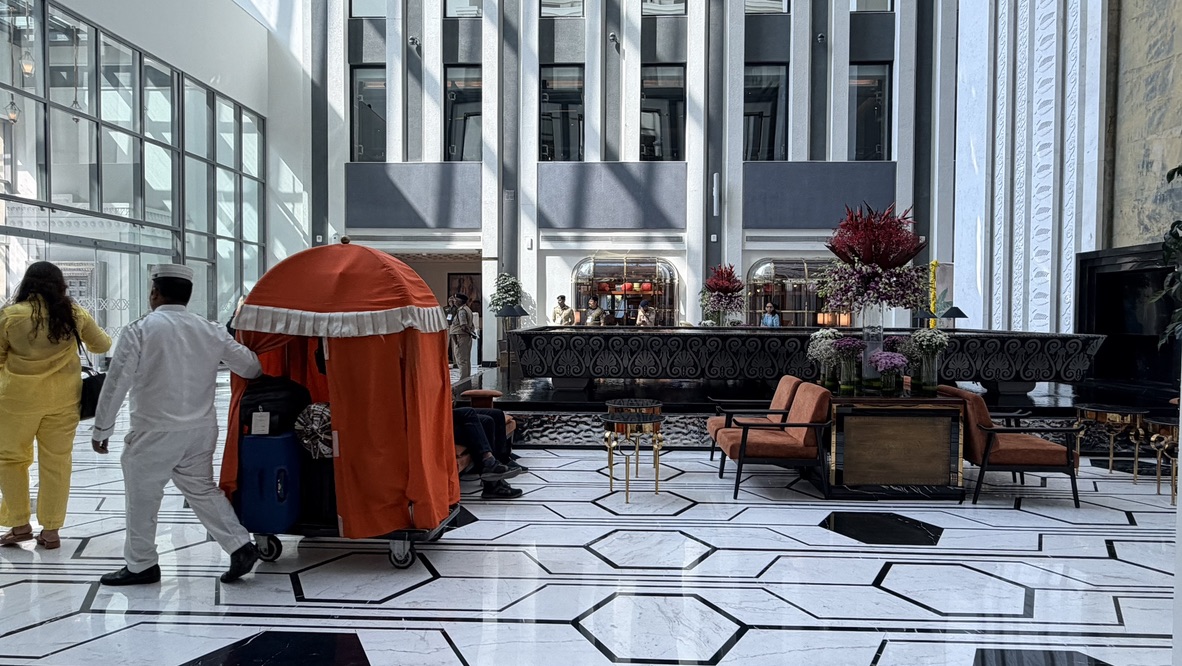
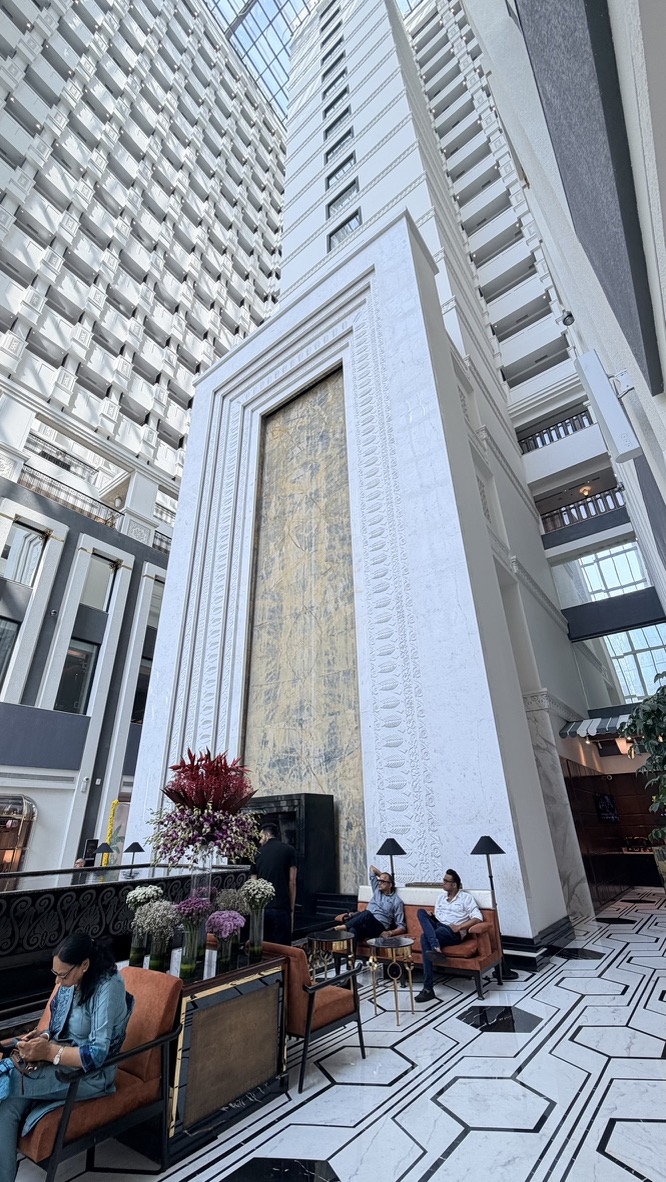
After breakfast and the guided walk, we checked out of The House of MG and arrived at ITC Narmada in the late afternoon. The contrast was immediate. We had moved from courtyards and carved timber to a 291-room contemporary hotel with a soaring central atrium, polished geometric floors, and the scale of a major city property.
ITC Narmada is part of Marriott’s Luxury Collection and sits on Judges Bungalow Road in Vastrapur. The hotel says its architecture draws from Gujarat’s toran gateways, the geometry of the Adalaj stepwell, the Narmada River, and regional crafts. That sense of place is visible, although interpreted through a large, bright, modern interior rather than a historic building.
First impression · The atrium
Designed to make
arrival feel ceremonial.
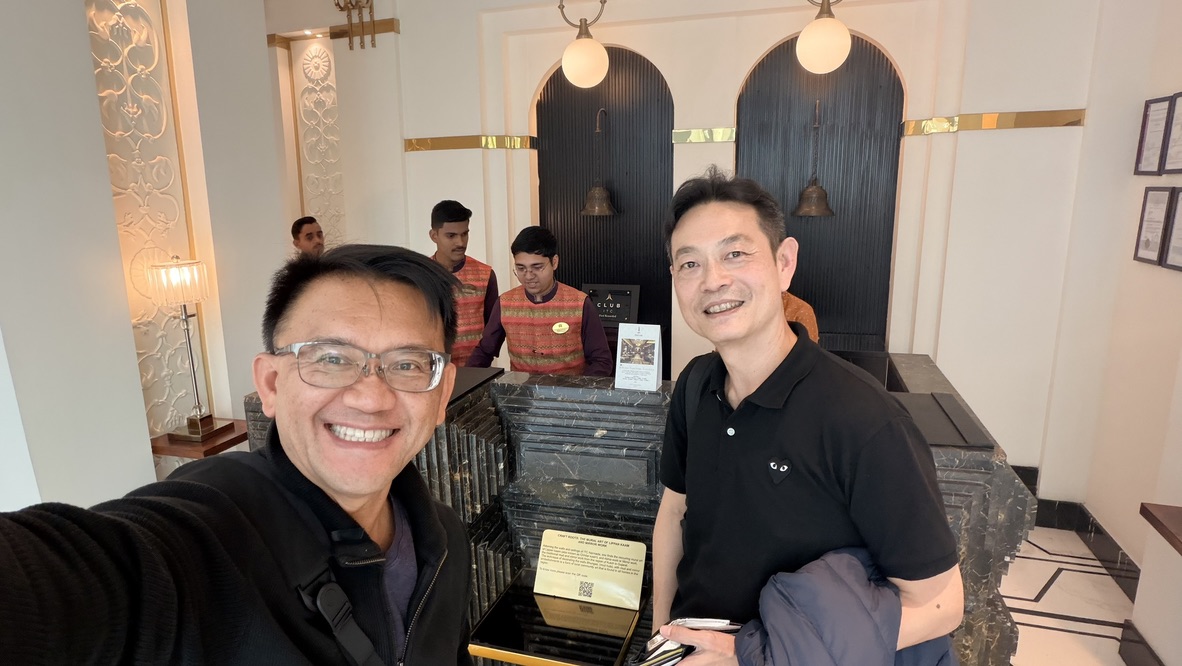
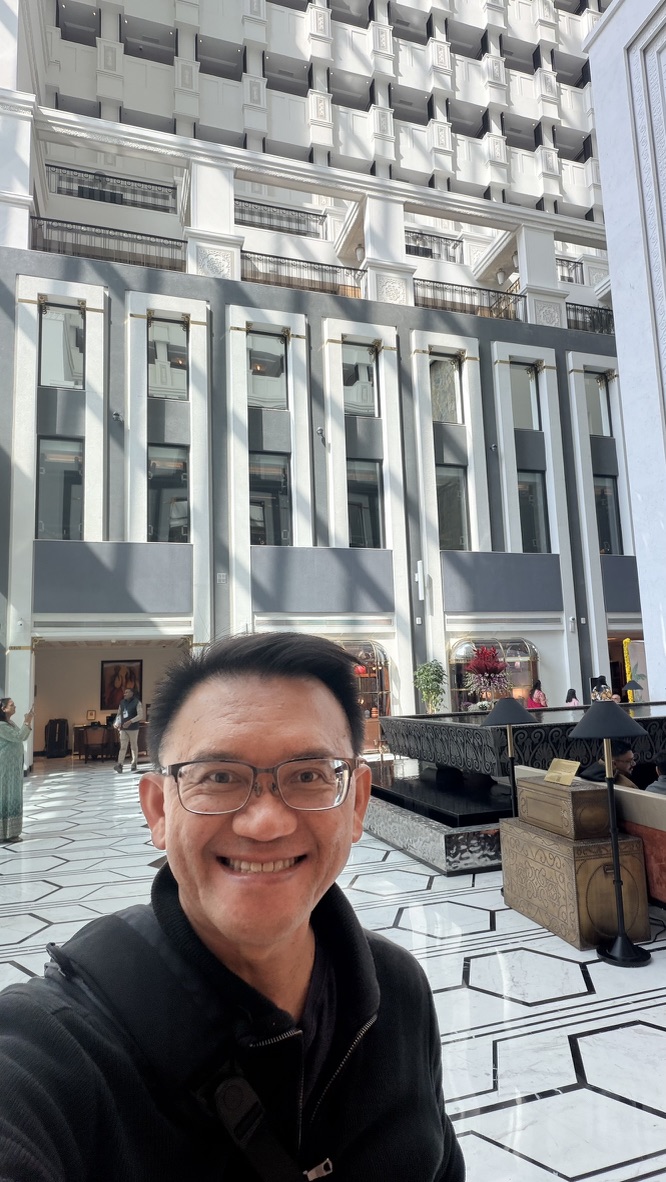
The lobby is the hotel’s clearest statement. As you can see in the photographs, the eye is pulled upward through repeating balconies, tall white surfaces, dark vertical lines, and patterned marble below. The effect is bright and theatrical without relying on a conventional chandelier-and-marble formula.
For travelers who want a strong sense of arrival, this works. For those who prefer the quiet intimacy of a smaller hotel, the scale may feel less personal. We had experienced both versions of hospitality within the same day—and I appreciated the contrast.
The room
Calm, practical,
and easy to settle into.
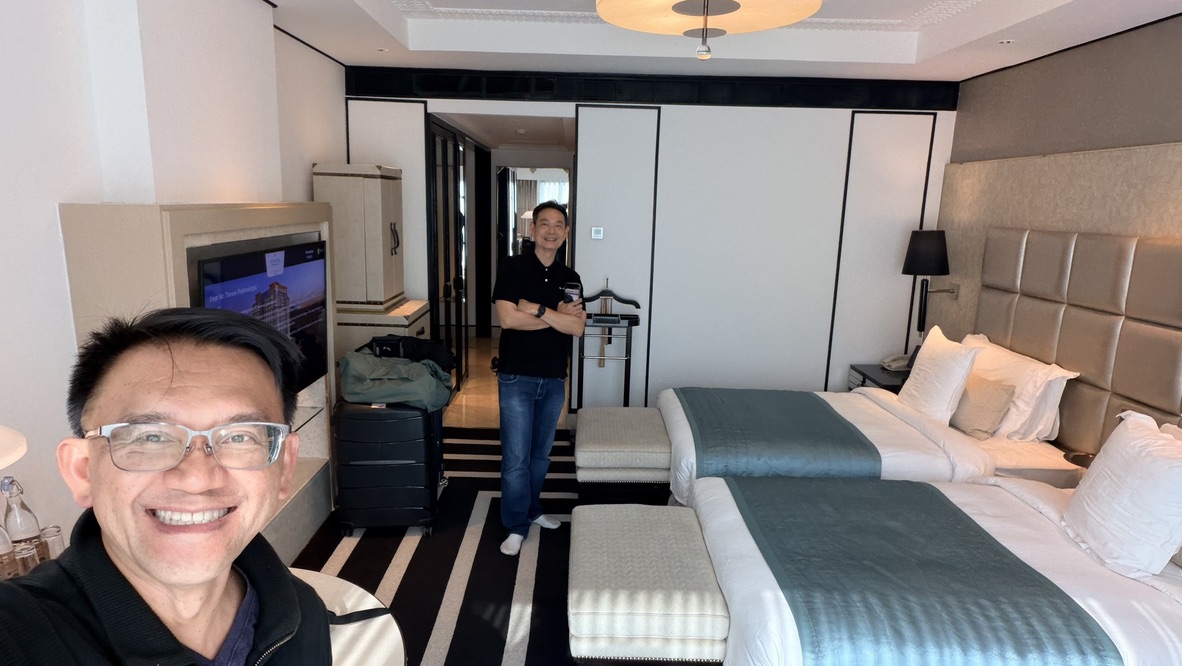
Our room had two beds, upholstered headboards, individual reading lights, long luggage benches, a television console, and a restrained palette of cream, black, and muted blue-green. After a full morning on foot, the room felt orderly and comfortable rather than overdesigned.
The generous open area at the foot of the beds made handling our luggage straightforward. What I cannot confirm from the photograph alone is the exact room category, size, view, or whether this was an upgrade. Those details matter for a fair value comparison and should be checked against the reservation before publication.
Traveler tip If lounge access matters to your stay, confirm the eligible room category and evening-service terms in writing. ITC’s current room information ties Residents Lounge access to selected premium categories rather than every booking.
Residents Lounge · Evening service
We arrived
just in time.
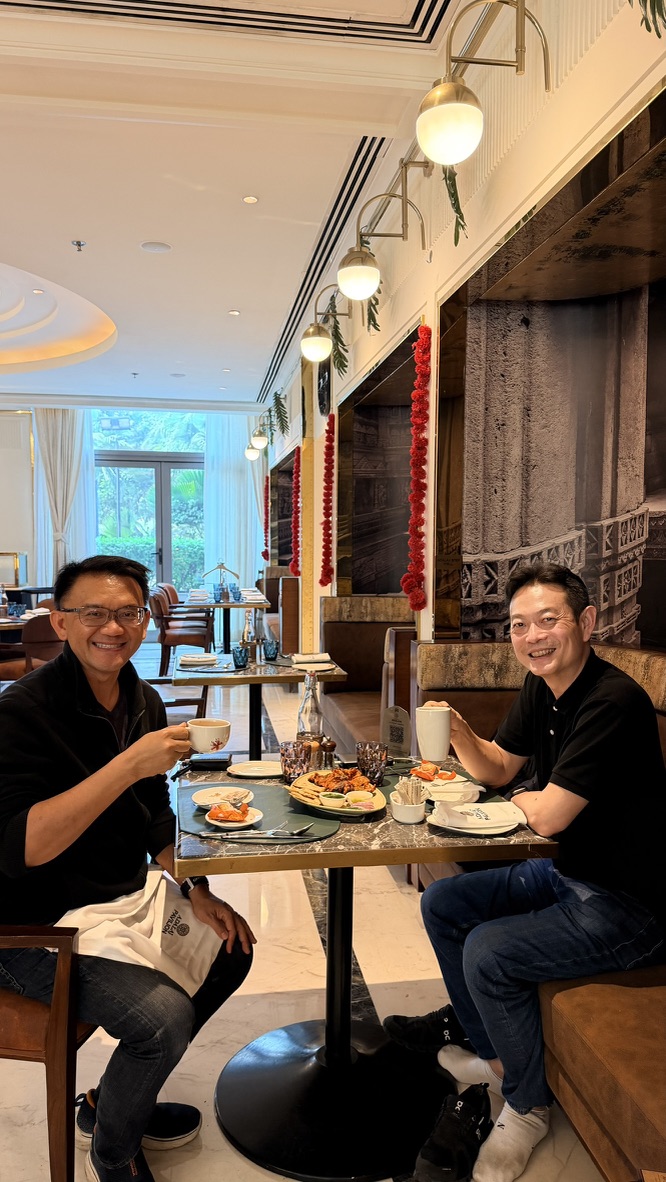
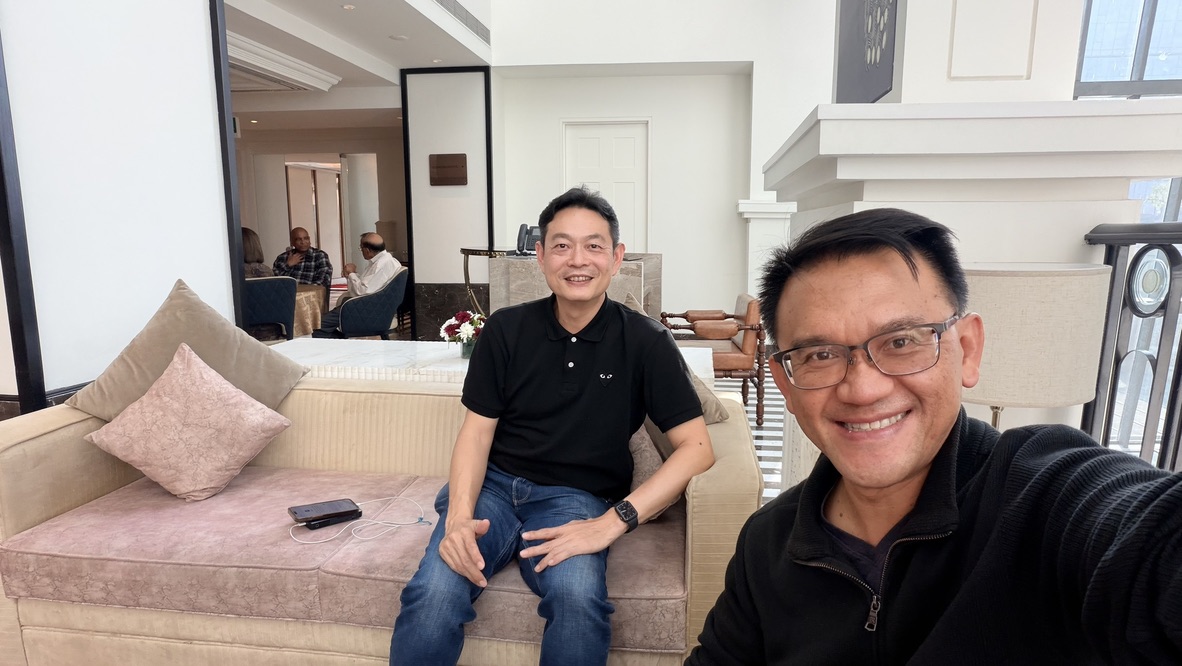
Our timing worked perfectly: shortly after check-in, we made it to the evening lounge service. This was not a token plate of canapés. We found drinks, hot dishes, accompaniments, and enough choice to make the benefit genuinely useful after a day of travel and walking.
The current official room page describes a 6–8 p.m. “mocktail hour” for premium room categories and suites. We personally experienced an evening drinks-and-food service, but the exact access basis, alcohol policy, and eligible categories should be reconfirmed for each reservation.
What made the benefit valuable
Not exclusivity.
Usefulness.
What I valued was not the idea of a private lounge by itself. It was having a calm place to sit and a substantial evening spread available immediately after check-in. The service filled the awkward space between arrival and dinner without making us plan another outing.
That practical value will matter most to business travelers, Marriott Bonvoy members, or anyone booking a room category that explicitly includes lounge access. If the access requires a meaningful premium, compare that difference with what you would otherwise spend on evening drinks and food.
Food · More than light snacks
A lounge spread
that could carry the evening.
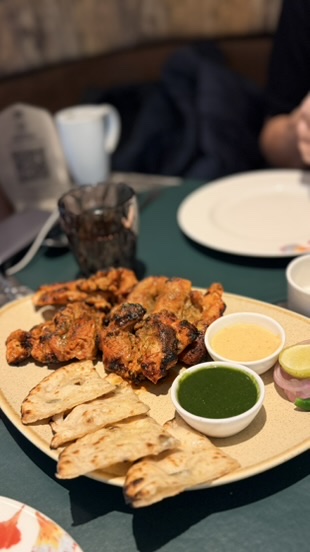
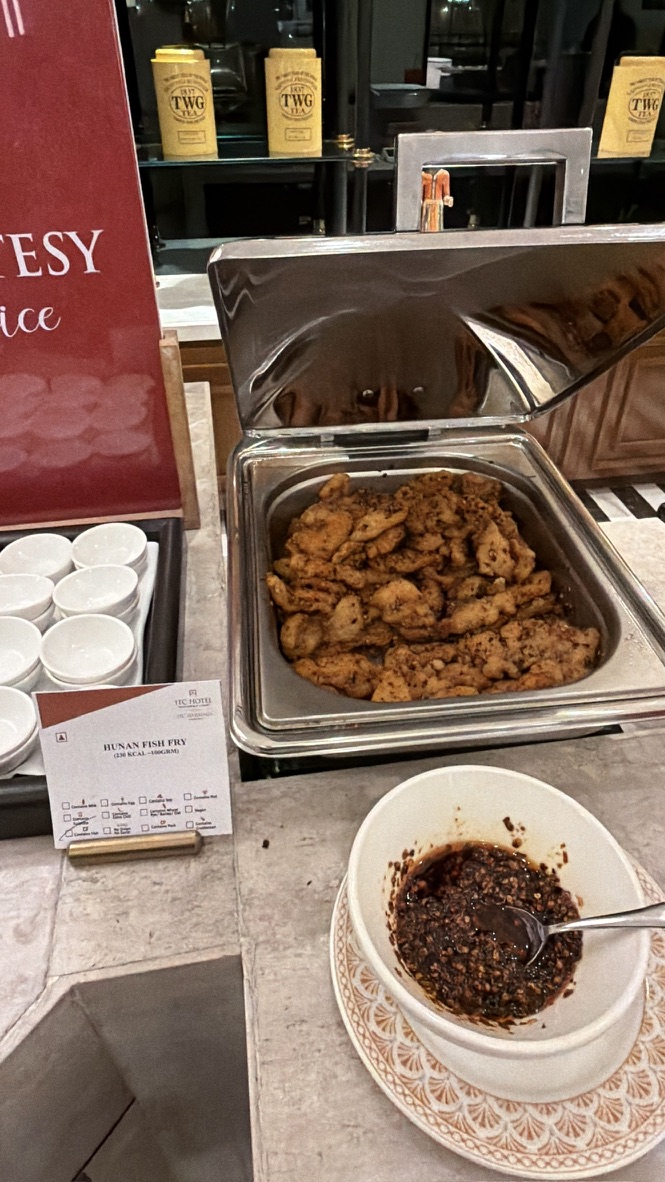
The photographs support the strongest part of the review: the food selection had real substance. We had a hot grilled platter with flatbread, chutneys, onion, and lime; the buffet also included clearly labelled Hunan fish fry with a condiment alongside it.
I would still avoid calling the service a full dinner for every guest—the selection can change, and appetite is personal. For us, however, it was generous enough to feel like a meaningful inclusion rather than a decorative perk.
Dining choice · Royal Vega
A signature restaurant
for another evening.
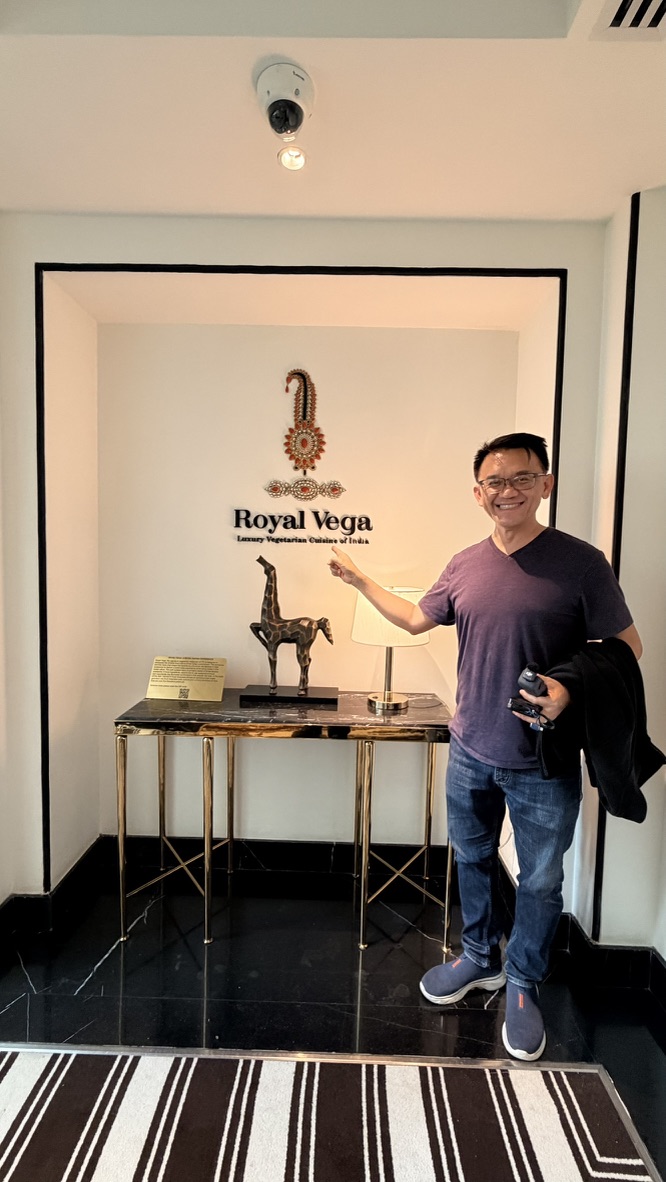
ITC Narmada officially lists five food-and-beverage outlets. Royal Vega is its signature vegetarian restaurant, built around seasonal Indian cooking and recipes informed by regional traditions. We photographed the entrance, but I do not have enough firsthand detail to present a separate Royal Vega meal review from this stay.
Other official options include the all-day Adalaj Pavilion, Peshawri for North-West Frontier cooking, Yi Jing for Chinese cuisine, and Fabelle, the chocolate boutique. That range is useful when the hotel itself is the evening destination.
The verdict
Worth it for the right traveler—
but value depends on the booking.
01 · What worked
A genuine sense of arrival
The atrium gives the hotel a recognizable identity, the room was functional and comfortable, and the evening service offered enough food to become one of the stay’s most practical benefits.
02 · What to consider
Scale changes the experience
This is a large contemporary luxury hotel, not an intimate heritage stay. Travelers focused mainly on the old city should also allow for the transfer from Vastrapur rather than expect to step directly into the pols.
03 · Who will value it
Comfort-led city travelers
It makes the most sense for guests who value a full-service hotel, Marriott Bonvoy participation, multiple restaurants, and an eligible room with Residents Lounge access.
Would we return? Based on this first afternoon, yes—especially when the rate or points price includes the room and lounge benefits we actually used.
Bottom line ITC Narmada gave us a comfortable room, memorable architecture, and a useful evening food-and-drink service at exactly the right moment in the journey. The experience was convincing; the final points-versus-cash verdict remains open until the booking cost and room category are confirmed.
Day Three · Breakfast, Gandhi & a sky waiting for kites
A morning grounded
in history. An afternoon ready to rise.
Our third day in Ahmedabad was a day of transition. We began with a generous complimentary breakfast at ITC Narmada, returned to the city’s story through Sabarmati Ashram, came back to pack and have lunch, and then set out for Hyatt Regency to prepare for the International Kite Festival.
By now Ahmedabad had revealed several identities: the carved intimacy of the old city, the ceremonial scale of a contemporary luxury hotel, and the moral weight of the place where Mahatma Gandhi lived and organized. The kite festival would add one more—Gujarat at its most public, playful, and sky-filled.
ITC Narmada · Complimentary breakfast
A generous start
before another move.
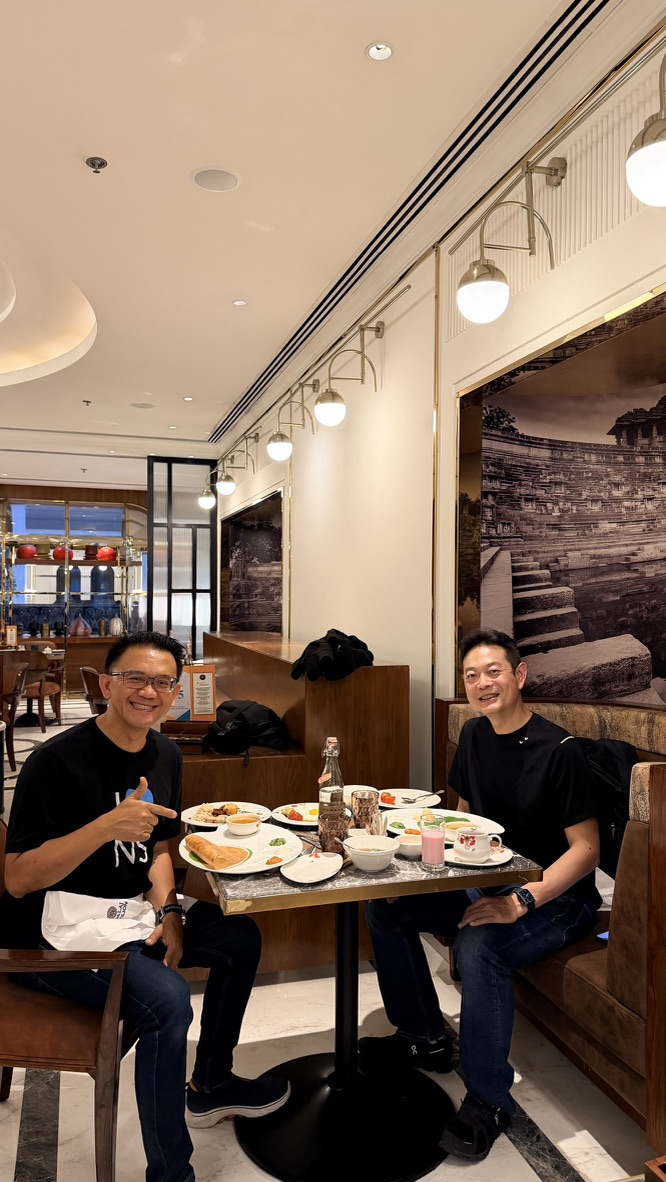
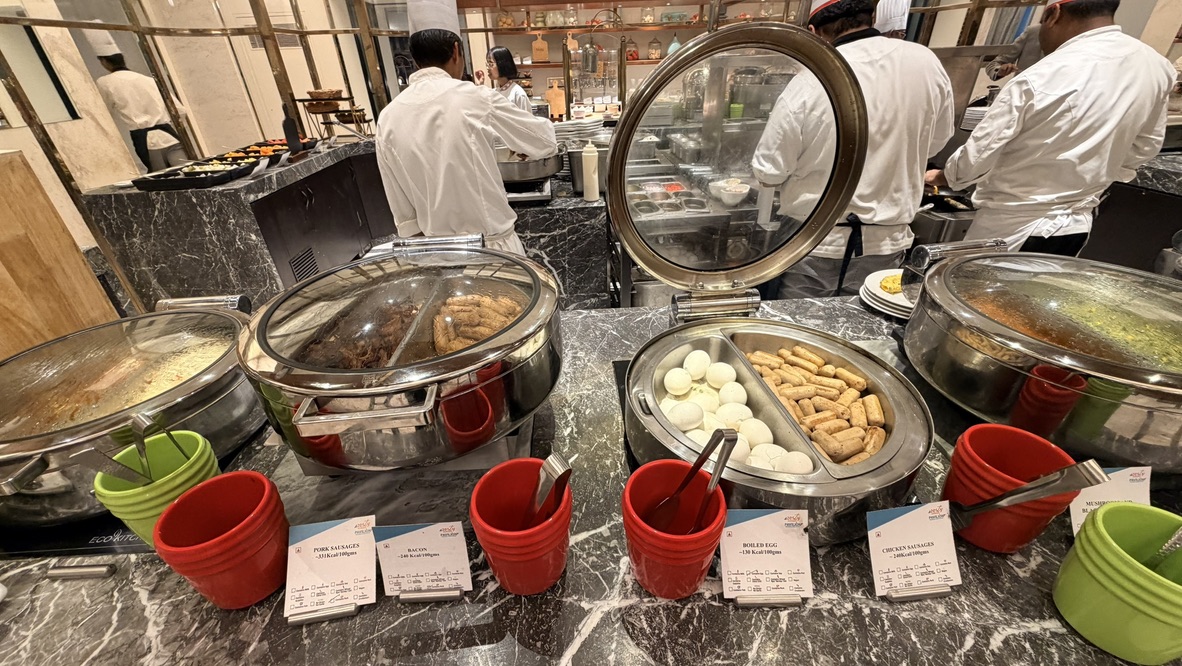
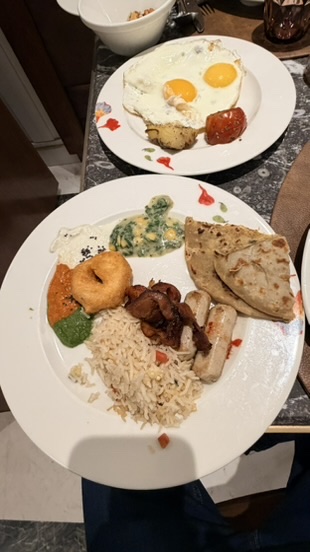
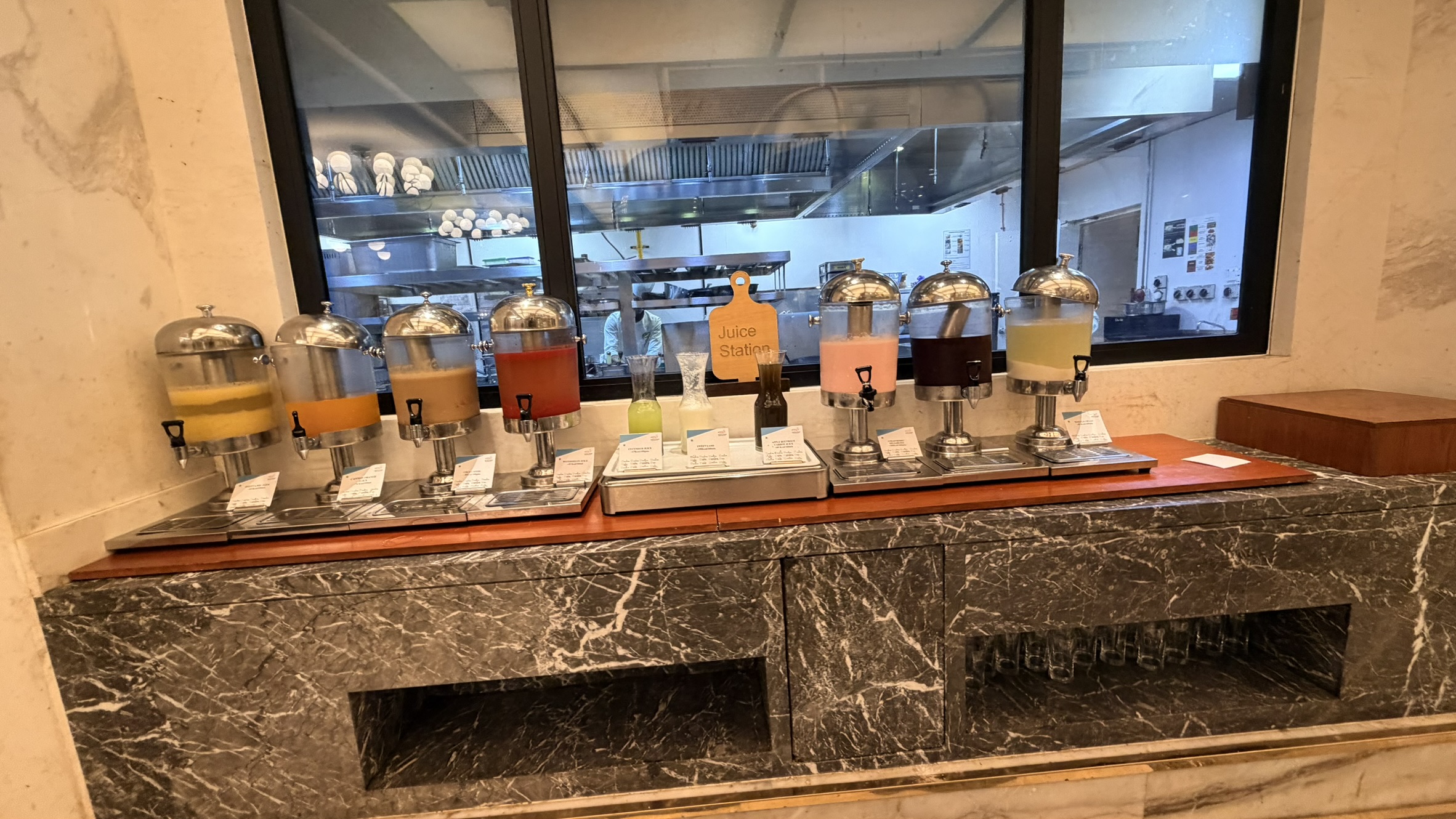
Breakfast was complimentary for us during this stay, although future guests should confirm whether that inclusion comes from the booked rate, room category, or loyalty status. What we can describe confidently is the spread in front of us: staffed hot stations, eggs, Indian dishes, breads, rice, vegetables, juices, and enough familiar choices to make breakfast easy for different tastes.
I liked that the buffet supported both curiosity and comfort. We could add local and Indian flavors to the plate without giving up the simple breakfast foods that work well before sightseeing, packing, and another hotel check-in.
Traveler tip On a hotel-change day, eat before you pack the final bags. A substantial included breakfast gave us the flexibility to keep exploring without organizing another meal immediately.
Ahmedabad history · Sabarmati Ashram
The city that helped
turn an idea into a movement.
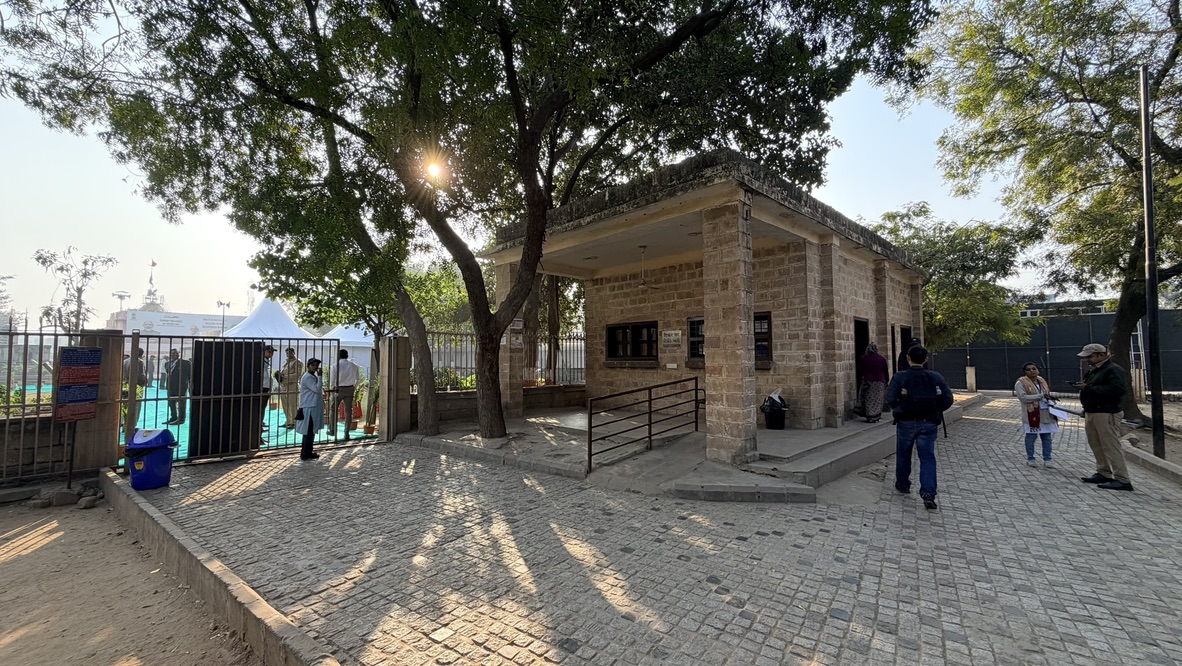
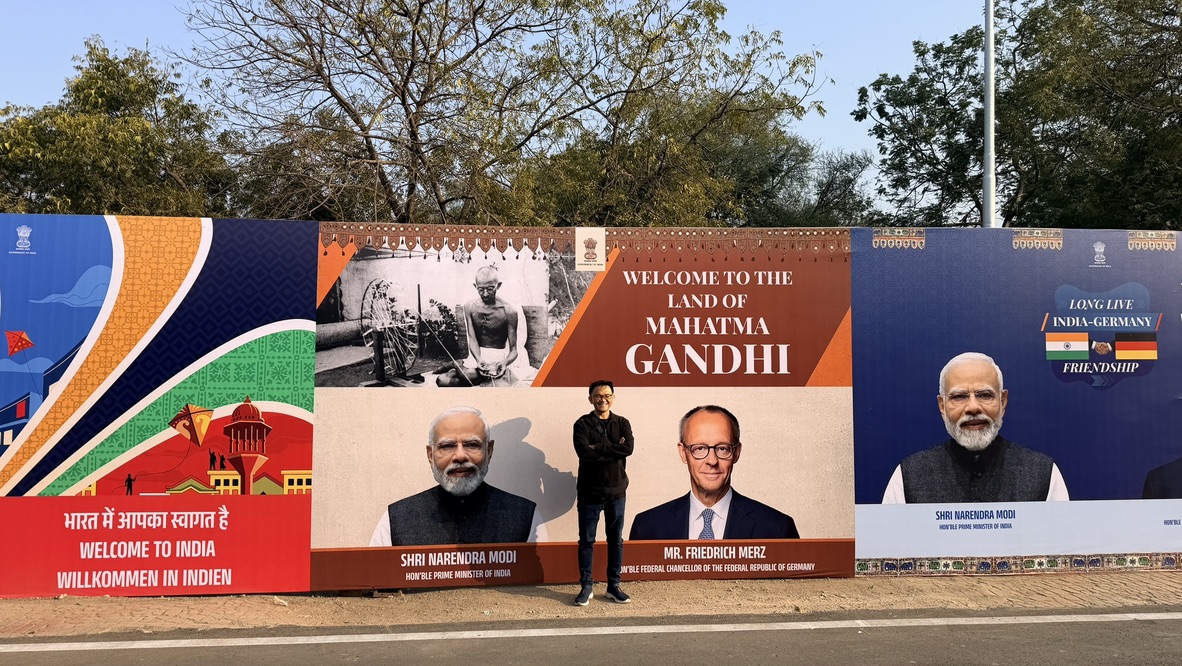
Ahmedabad’s impact on modern India cannot be understood only through its mosques, pol houses, textile wealth, or UNESCO status. Mahatma Gandhi lived at Sabarmati Ashram from 1917 until 1930, and the ashram became one of the principal centers of India’s freedom struggle.
From here, Gandhi developed a disciplined community around truth, nonviolence, labor, self-reliance, and public service. On March 12, 1930, he left Sabarmati with a small group of followers to begin the Dandi Salt March—transforming a protest against colonial salt laws into an international symbol of civil resistance.
Standing in this quieter part of Ahmedabad changed the scale of the story. The influence did not come from grandeur. It came from modest rooms, daily practice, and the conviction that political change could begin with how people chose to live.
Landmark & museum · Gandhi Smarak Sangrahalaya
Architecture that
does not overpower memory.
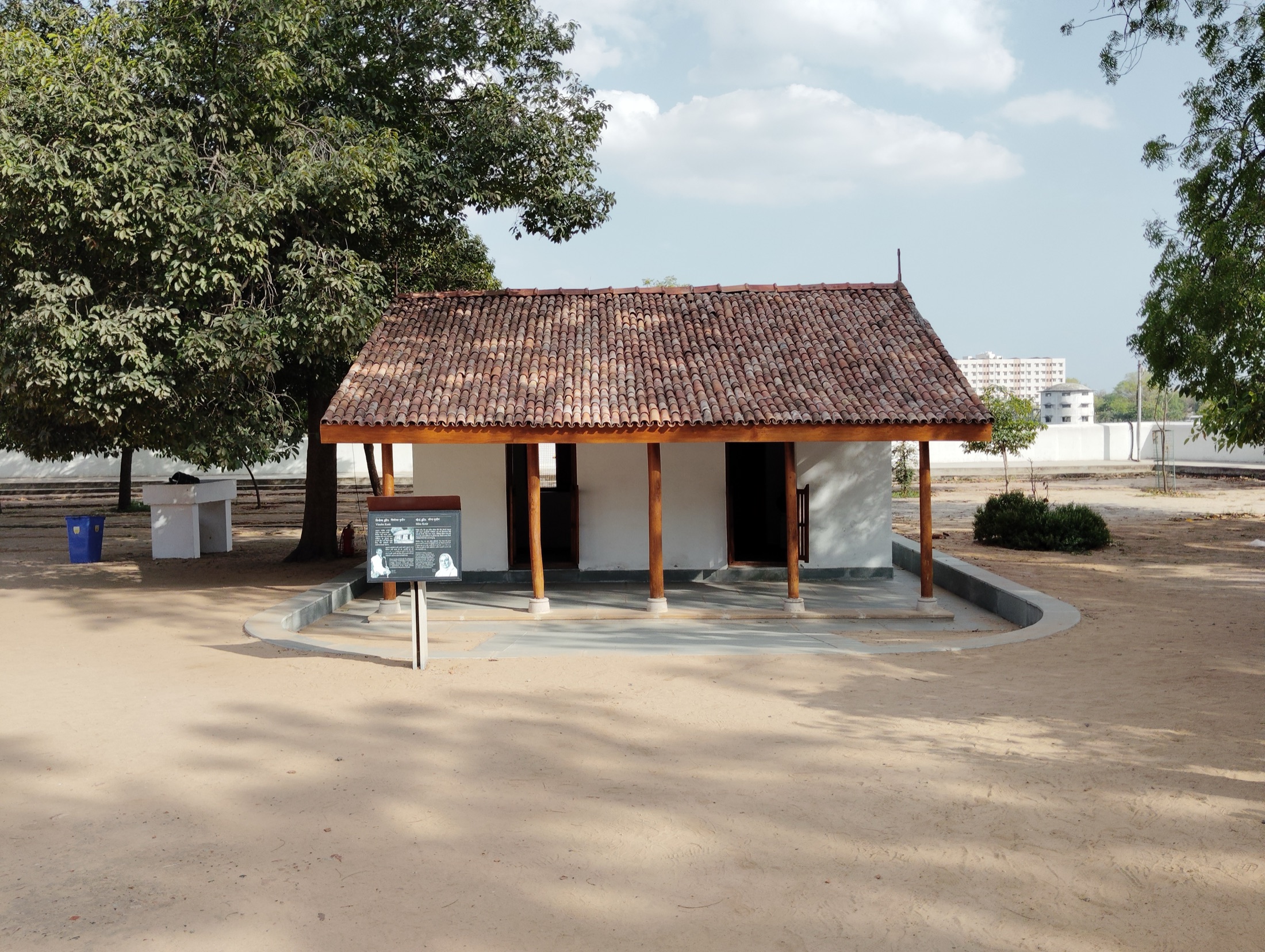
Hriday Kunj, Gandhi’s former residence, is one of the ashram’s defining landmarks. Nearby, the Gandhi Smarak Sangrahalaya gathers letters, photographs, and documents connected with Gandhi and the independence movement.
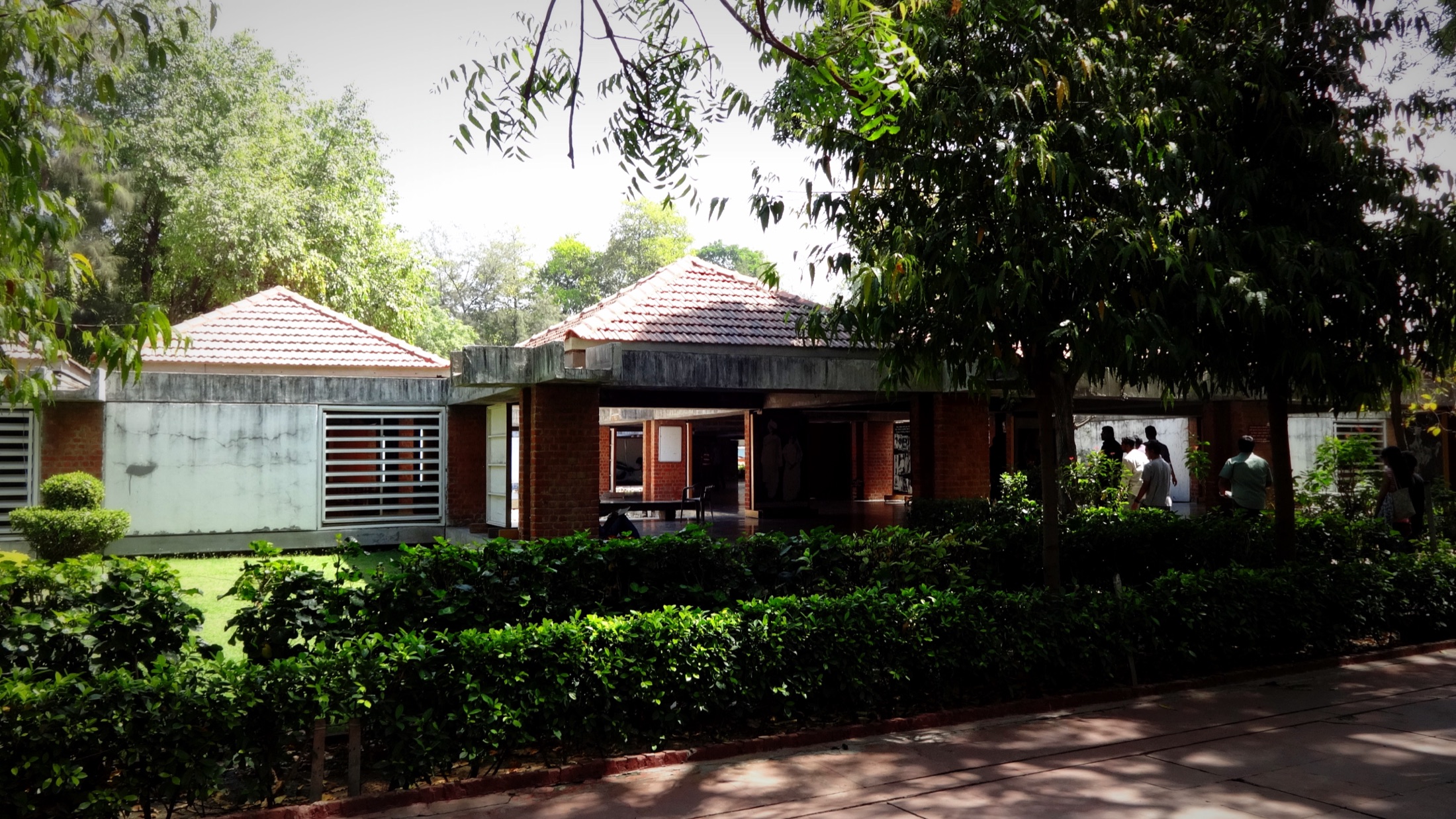
The museum was designed by Charles Correa and built between 1958 and 1963. Its low, open pavilions, brick columns, tiled roofs, and shaded courts speak in a deliberately restrained language. The architecture frames the archive without competing with it—an approach that feels especially appropriate in a place where simplicity carried such political meaning.
The two photographs below are credited public editorial images added to complete the landmark and museum context. All other Day Three photographs are from our visit.
What Ahmedabad left with me
The old city showed us how Ahmedabad was built. Sabarmati showed us what the city helped set in motion.
That combination is Ahmedabad’s deeper impact. It is a city of merchants, makers, worship, hospitality, and remarkable architecture—but also a city where the practices of satyagraha and self-reliance took institutional form. History here is not confined to one museum. It moves between a carved doorway, a mosque courtyard, a textile story, an ashram path, and the public imagination of modern India.
One last meal · ITC Narmada
Butter chicken
before the next chapter.
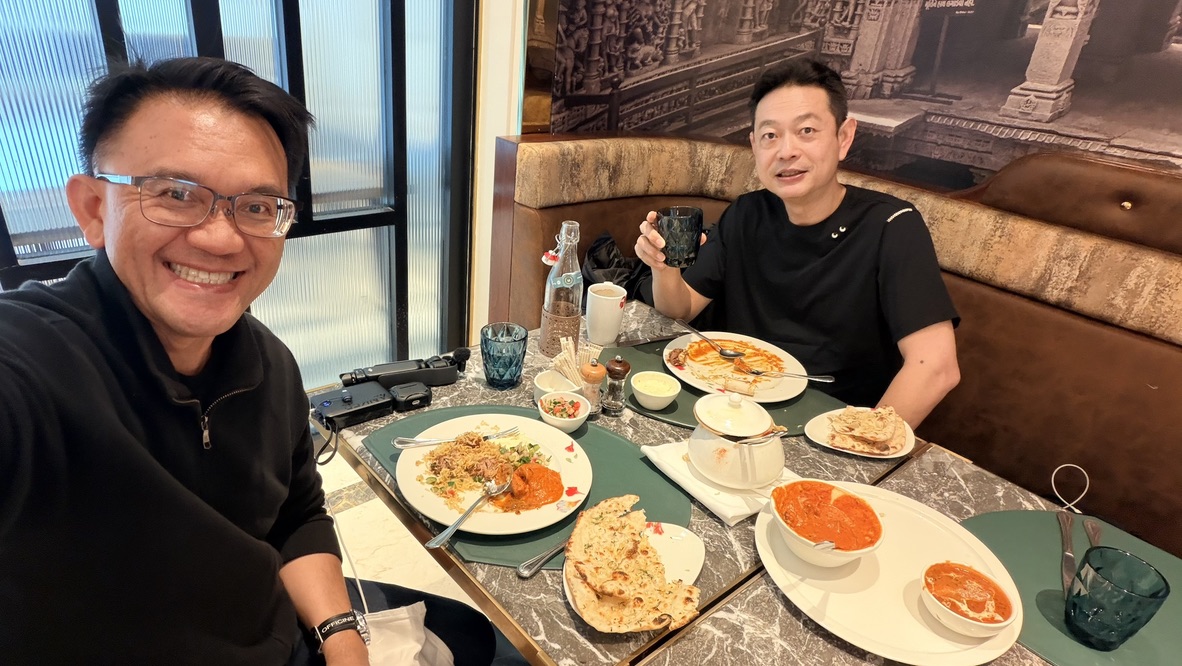
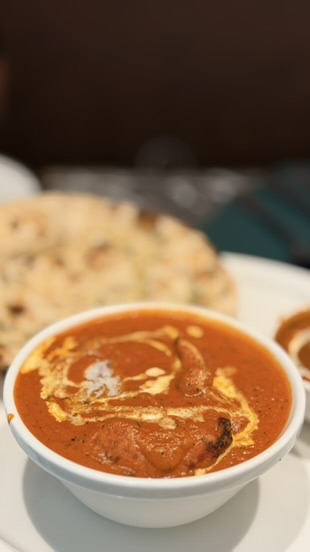
Back at the hotel, we packed and made time for lunch before checking out. The butter chicken was the dish I remembered most: rich, comforting, and very good with rice and Indian breads. After several days of tasting across Ahmedabad, this was less about discovery and more about enjoying a familiar classic prepared well.
It also completed the ITC Narmada review in a useful way. The hotel had carried us from evening lounge service through a substantial breakfast and one final sit-down lunch—exactly the convenience a full-service property should provide on a transfer day.
Checkout · ITC Narmada → Hyatt Regency
From reflection
to celebration.
After lunch, we checked out of ITC Narmada and headed to Hyatt Regency Ahmedabad. The purpose of the move was practical: settle into the third hotel, reset after the morning, and get ready to join the International Kite Festival that afternoon.
Gujarat’s kite tradition is closely associated with Uttarayan, the celebration of the seasonal turn marked by Makar Sankranti. The official statewide 2026 program ran from January 10–14; Ahmedabad hosted festival days from January 12–14, exactly as the signage at the venue recorded.
The practical reward of moving hotels became clear almost immediately. Hyatt Regency placed us near the Sabarmati Riverfront, close enough that we could leave the car behind and walk into the festival.

Hotel review · Day Three · Hyatt Regency Ahmedabad
Worth booking for the kite festival?
Yes—because location changed the day.
We chose Hyatt Regency Ahmedabad for the final part of our stay, and its most valuable feature was not hidden inside the building. The hotel sits on Ashram Road near the Sabarmati Riverfront. For our festival visit, it was close enough to walk—saving time, avoiding event traffic, and letting us enter the celebration at street level rather than through a car window.
This is a large, contemporary city hotel rather than an intimate heritage property. Hyatt currently lists 269 rooms, including 25 suites, along with river views, a pool, restaurants, a spa, and a Regency Club. Our short stay was about the room, the lounge, and the location; I am leaving the other facilities unrated until we actually use them.
Arrival · Calm, bright, businesslike
A hotel designed
to make the city easy.
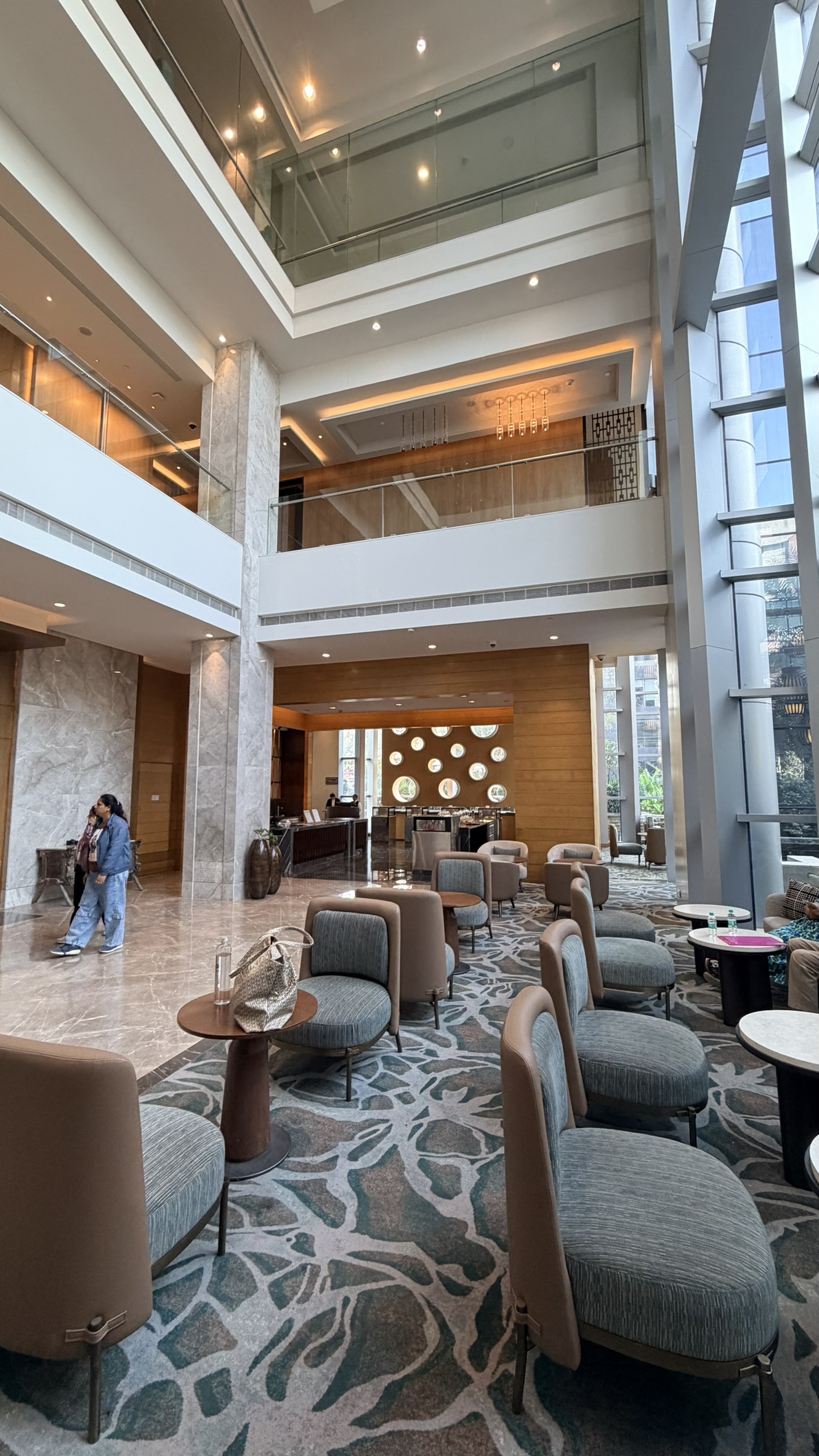
The lobby was tall and filled with natural light, with pale stone, warm wood, and low seating arranged for conversation. It did not make the same theatrical statement as ITC Narmada, and it did not try to recreate the intimacy of The House of MG. Instead, it felt straightforward: arrive, settle in, and get where you need to go.
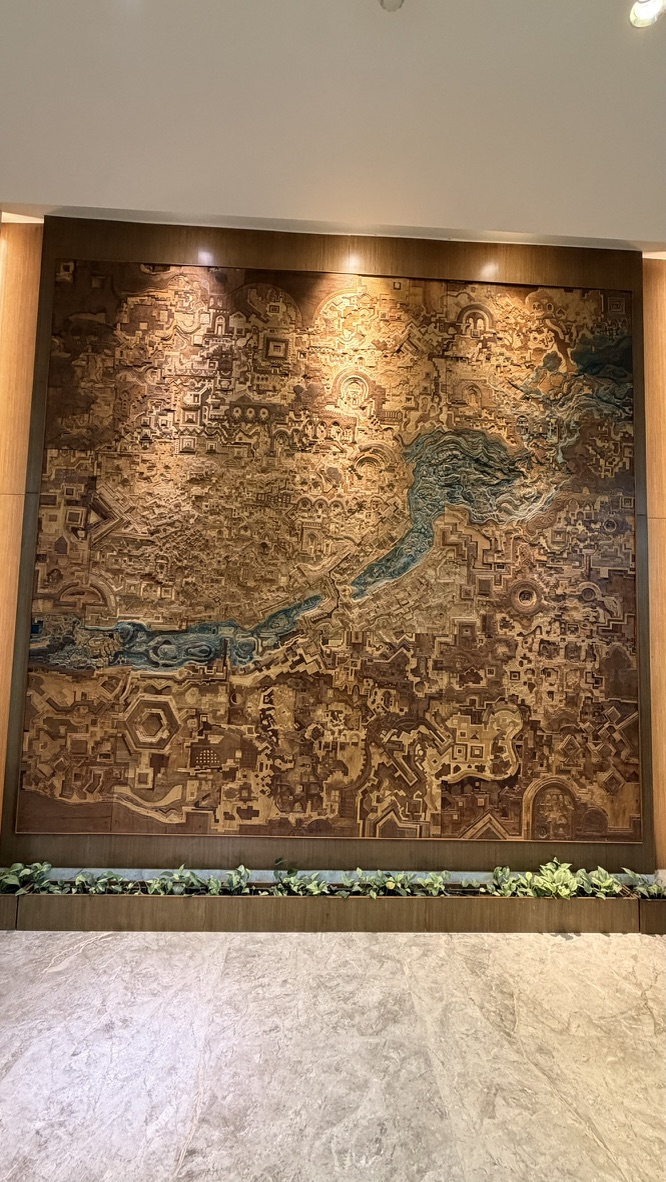
A large textured artwork was the strongest local note in the public space. Its river-like blue line and dense patterns felt like an abstract map of Ahmedabad—a useful reminder that even a modern business hotel can acknowledge the city beyond its doors.
The room · Practical space
Room to unpack,
reset, and head back out.
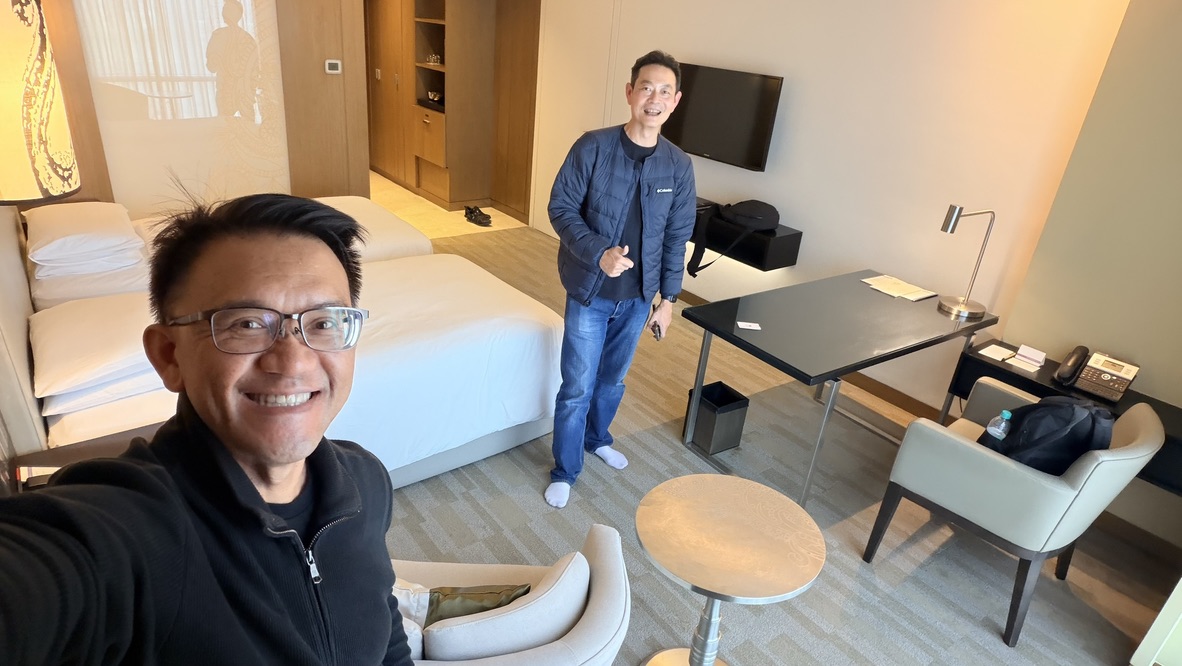
Our room had two beds, a long work desk, a separate chair, a wall-mounted television, warm wood cabinetry, and plenty of open floor area. After changing hotels and preparing for a crowded outdoor event, that usable space mattered more than decorative drama.
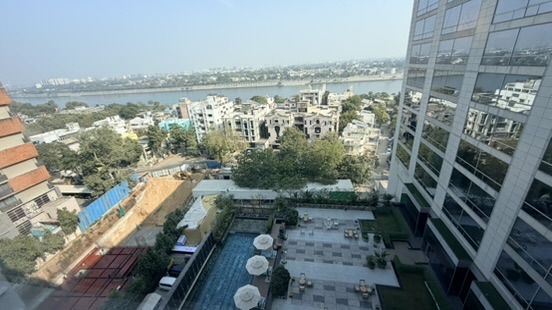
The windows looked across the pool toward the Sabarmati. Hyatt sells both river-view rooms and club-access rooms, but the photographs alone do not establish our exact booked category or whether an upgrade was involved. Those details remain important to the final points-versus-cash verdict.
Regency Club · A useful pause
Quiet above the city.
Useful between outings.
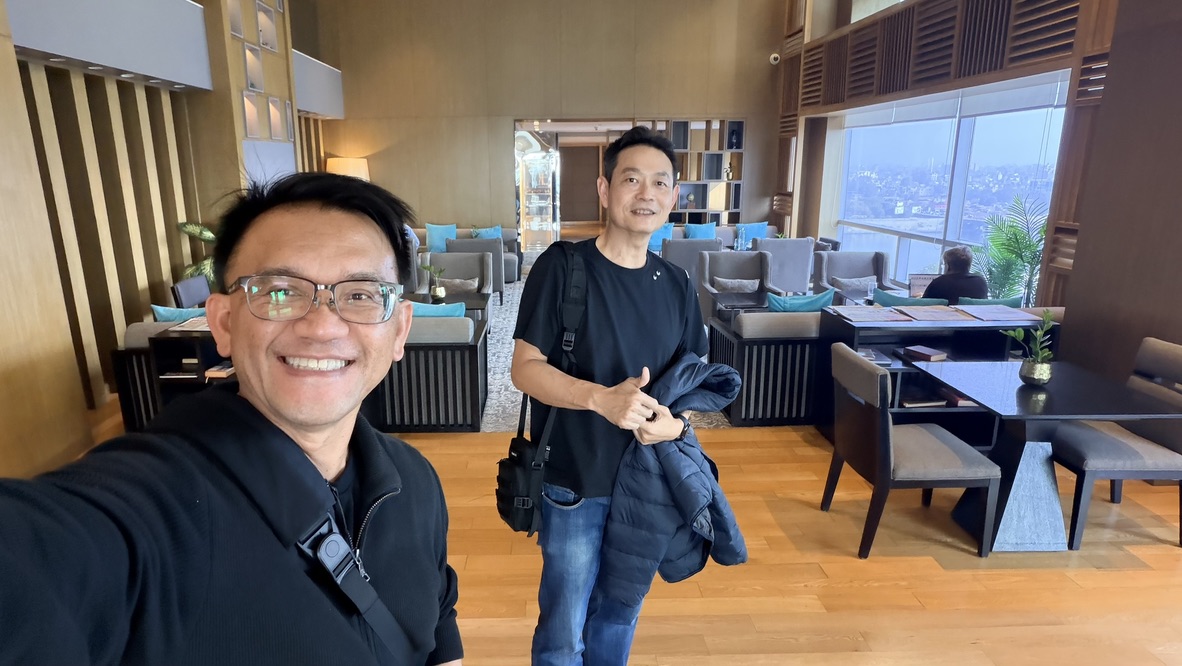
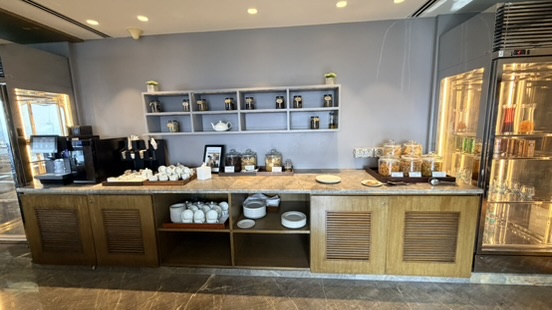
We also spent time in the Regency Club, a calmer room with seating, work tables, refreshments, and wide city views. The value was practical: somewhere to pause, have a drink, and reorganize without returning immediately to the guest room.
Hyatt’s current room descriptions associate club access with selected club rooms and suites and mention snacks, nonalcoholic drinks, evening hors d’oeuvres, and mocktails. Access, hours, and the exact offering can depend on room type, rate, status, and operating schedule, so I would confirm those details before paying a premium.
Smart booking tip Compare the cost difference between a standard room and a club-access room against what you will realistically consume. During a festival stay, location may create more value than lounge access.
The location · The reason to stay
The best amenity
was the walk outside.
Hotels are often reviewed as sealed worlds: the room, breakfast, lounge, pool, and service. In Ahmedabad, this Hyatt worked because it helped us participate in the city. We could walk to the kite festival instead of negotiating event traffic, parking, or a surge of ride requests.
That changed our relationship with the afternoon. We left as pedestrians, noticed how the crowd gathered, and approached the riverfront at the same pace as local families. It is a small example of becoming a temporary local: choose the hotel that makes the experience simpler, then spend less time inside it.
Festival tip Ask the hotel which pedestrian entrance is operating that day and allow extra time for security and temporary fencing. Event gates can be farther from the nearest point on a map.
The verdict.
Choose it for access,
then judge the room on price.
01 · Strongest reason
Walkable riverfront access
For a major event, avoiding traffic and walking from the hotel can be worth more than another elaborate hotel facility.
02 · What worked
Space and a useful lounge
The twin room gave us room to reset, while the Regency Club offered a quiet place between the hotel and festival.
03 · What to consider
More practical than memorable
The interiors felt polished and comfortable, but travelers seeking a deeply local or heritage atmosphere may prefer a smaller property.
Would we return? For another riverfront event, yes—the ability to walk made Hyatt Regency the right hotel for this particular night.
Bottom line Hyatt Regency Ahmedabad suited travelers who value a full-service hotel, a functional room, riverfront views, and easy access to events along the Sabarmati. Whether it was worth our points or cash still depends on the booking figures that need to be added.
International Kite Festival · Ahmedabad · January 12–14, 2026
Follow the crowd.
Look up.
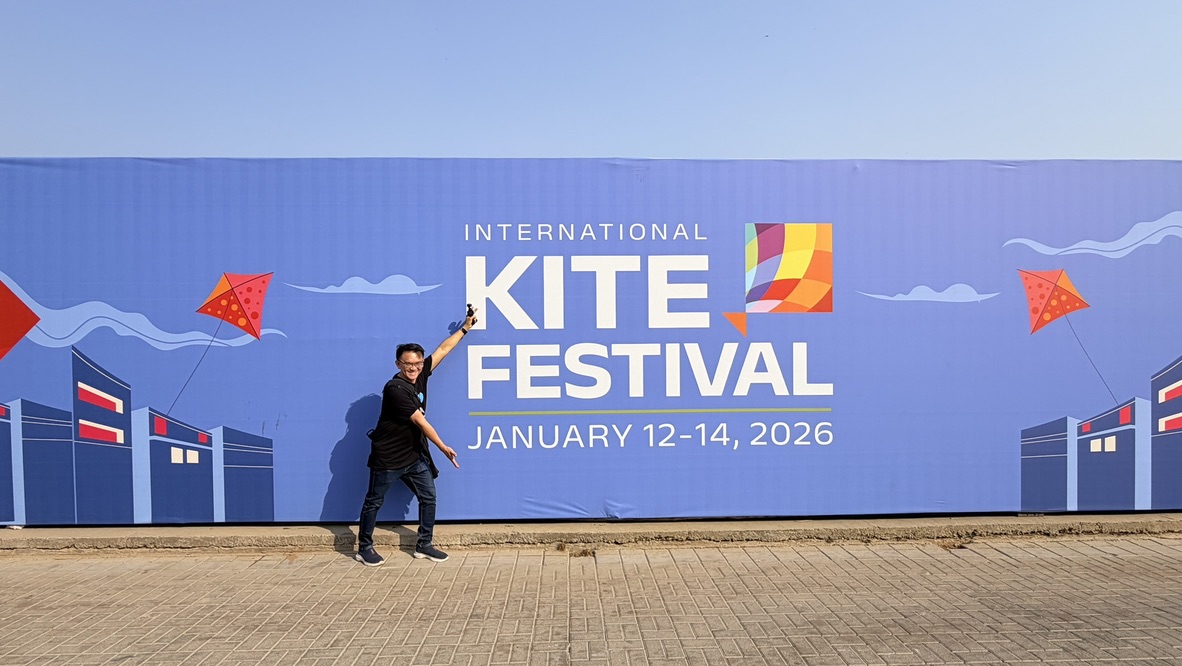
The statewide festival traveled across Gujarat from January 10–14, while Ahmedabad’s riverfront program ran January 12–14. Admission for public visitors was free, official visiting hours were 10 a.m.–5 p.m., and the public was kept outside the designated kite-flying area.
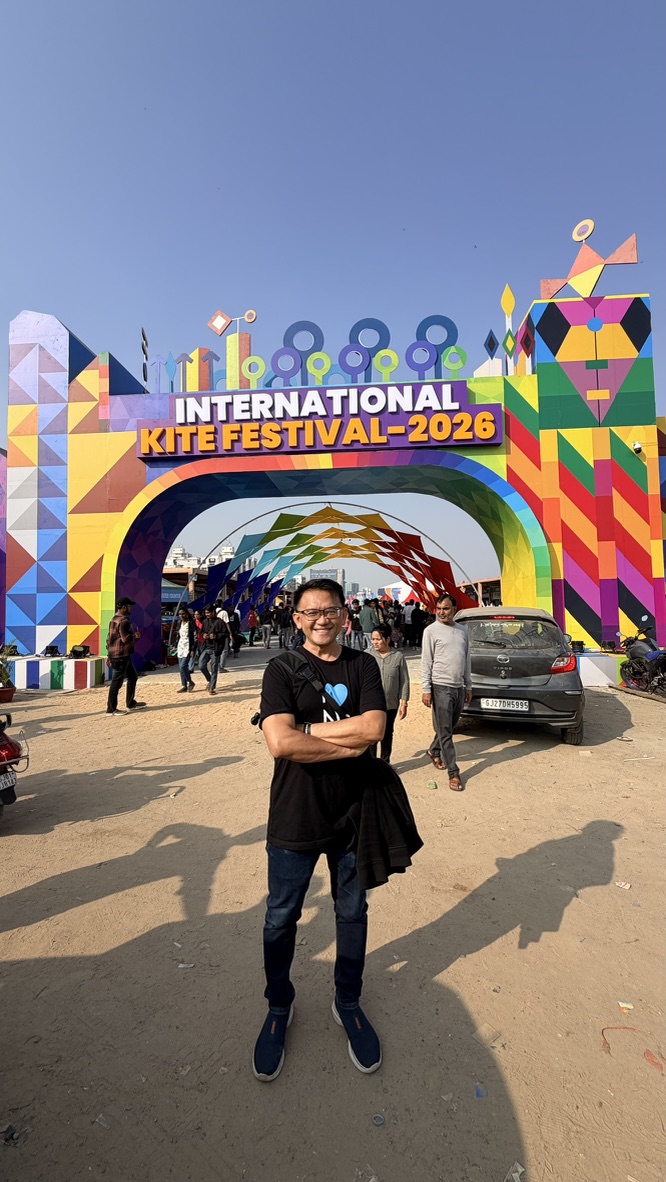
We arrived on foot from Hyatt Regency and stepped through a bright geometric entrance into music, food stalls, families, flags, and kite makers from beyond Gujarat. The first impression was not only the sky. It was the scale of the welcome.
Temporary-local approach
Let the festival
set your pace.
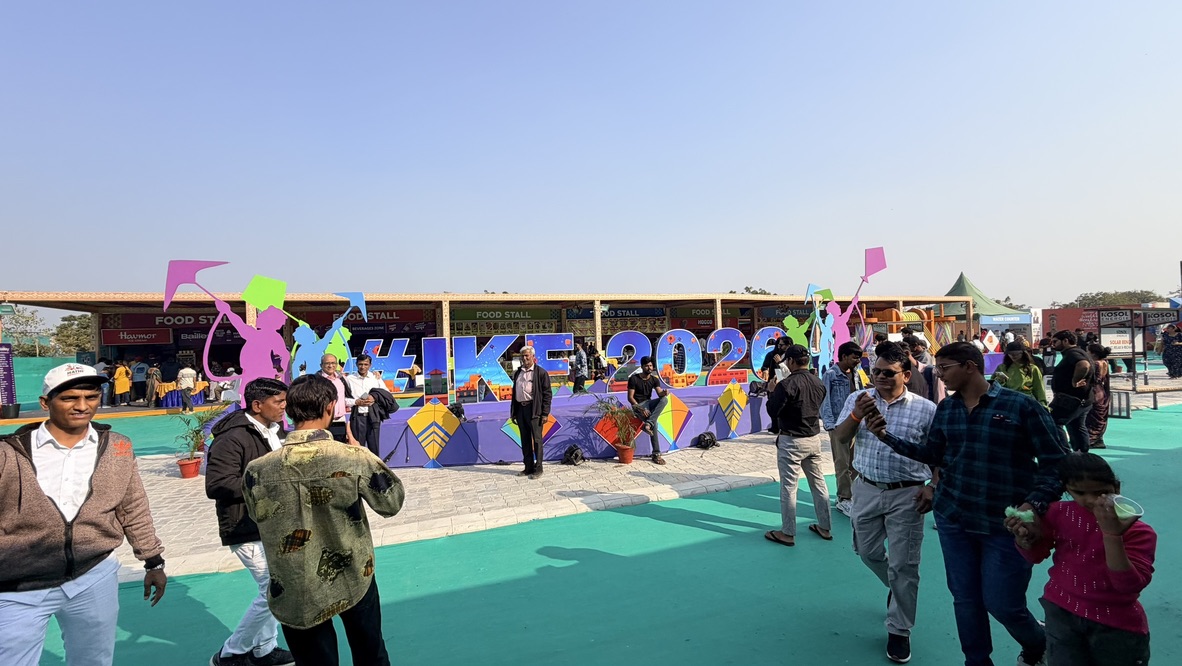
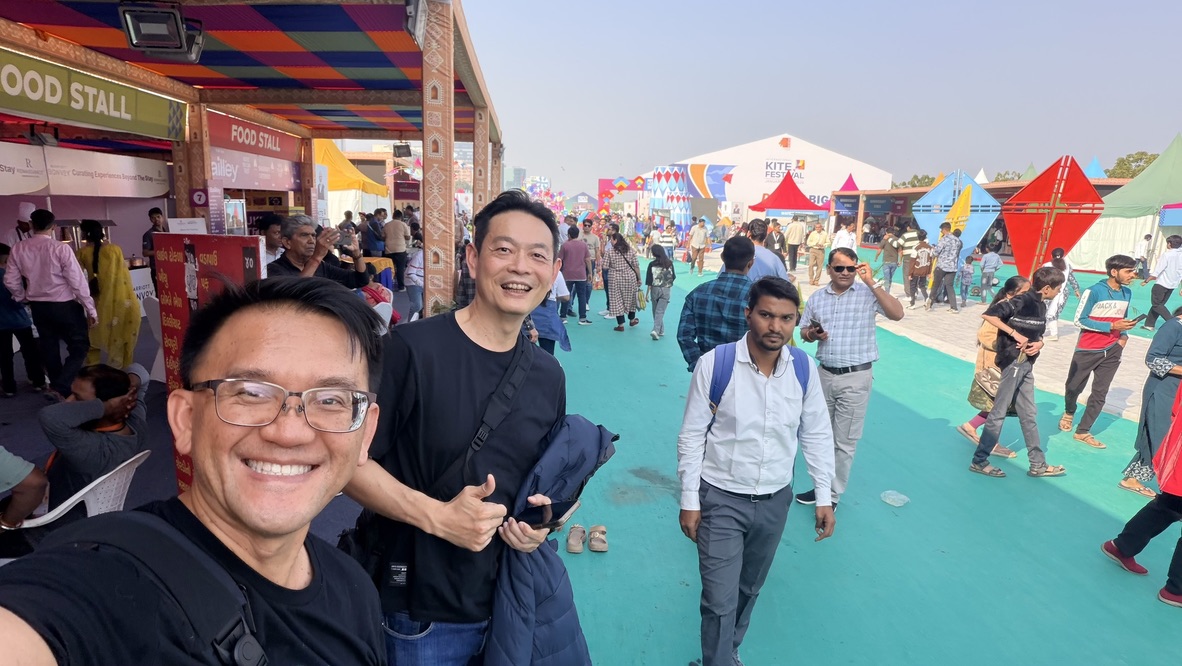
There is no need to rush straight toward the largest kite. Pause at the entrance, understand the layout, notice where families gather, and let the event reveal itself. Food stalls and colorful displays are part of the experience, not obstacles between you and the main attraction.
The simplest budget win is also the best one: public entry was free in 2026, and walking from a nearby hotel eliminated another transportation cost. Bring water, sun protection, and only what you are comfortable carrying through a crowd.
The sky over Sabarmati
A local tradition
with a global guest list.
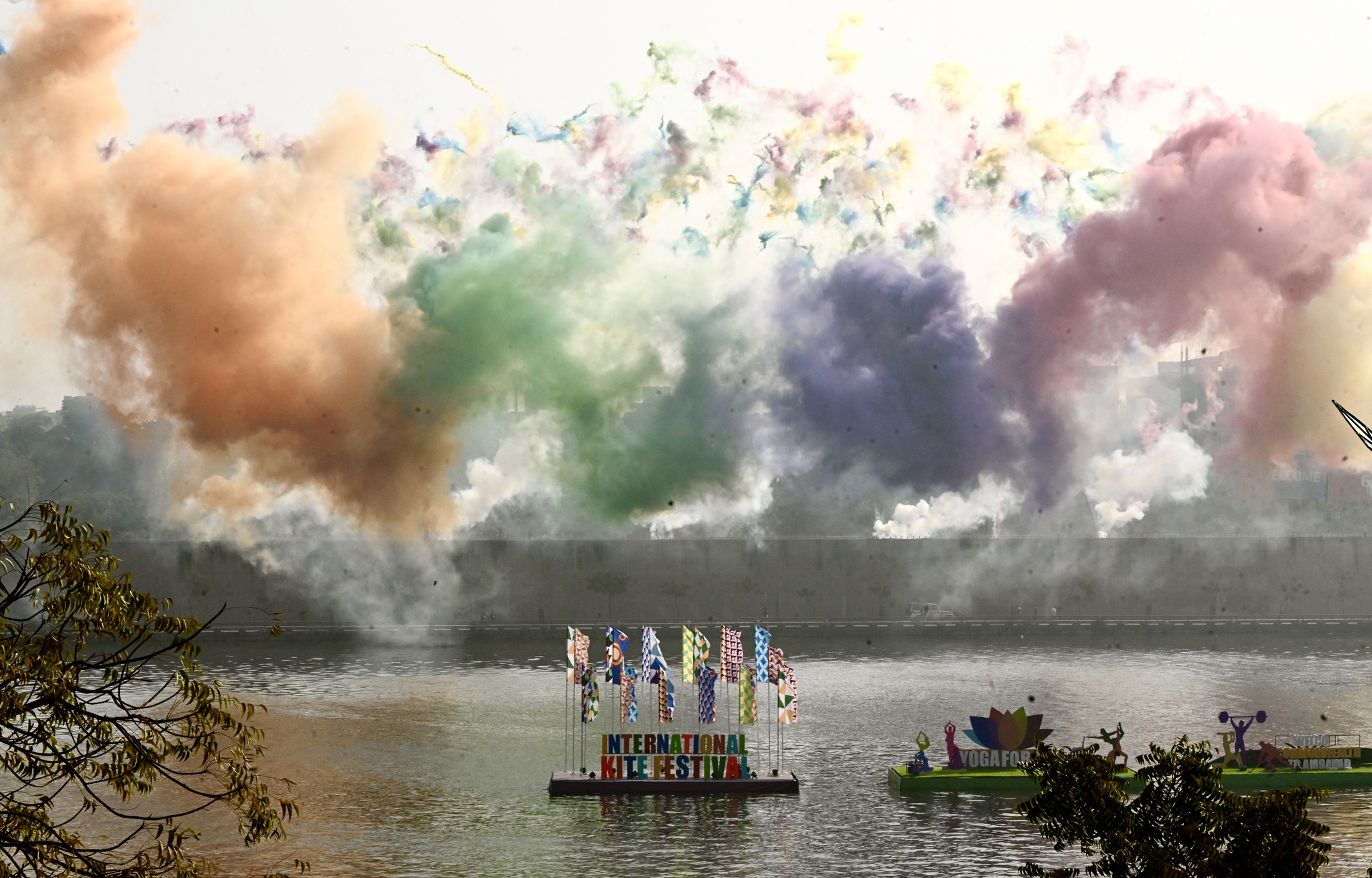
Uttarayan makes kite flying part of everyday Gujarati life; the international festival turns that tradition into a meeting point for makers and flyers from many countries. The scale changes, but the emotional vocabulary stays simple: color, competition, craft, and the childlike pleasure of seeing something impossible-looking stay aloft.
This 2026 riverfront photograph is a credited public editorial image included to establish the kite-flying scene while our personal festival sequence is still growing.
Why Gujarat flies · The meaning of Uttarayan
It begins with
a turn toward the sun.
Uttarayan is Gujarat’s celebration of Makar Sankranti, the seasonal point associated with the sun’s northward journey and the movement from winter toward warmer days. It is observed around January 14, when Gujarat’s winter sky is often clear, bright, and carried by the kind of steady breeze kite flyers wait for.
The holiday is much larger than the formal riverfront event. Across Ahmedabad, daily routines give way to rooftops filled with families, friends, music, food, and friendly competition. Lightweight paper kites are maneuvered against one another, and skilled flyers try to cut a rival’s line. Special meals and sweets keep everyone supplied through a celebration that can begin before dawn and continue after sunset.
The International Kite Festival is the public, global stage built around that local tradition. Ahmedabad has hosted it since 1989, inviting master kite makers and flyers from around the world while the city continues its own neighborhood celebrations above the streets.
What it is · When it happens · Why it matters
One tradition.
Two ways to experience it.
Rooftops become gathering places
Uttarayan belongs first to families and neighborhoods. Ahmedabad’s terraces fill with people flying compact fighter kites, sharing food, visiting friends, and calling out when a rival kite is cut.
The riverfront becomes a world stage
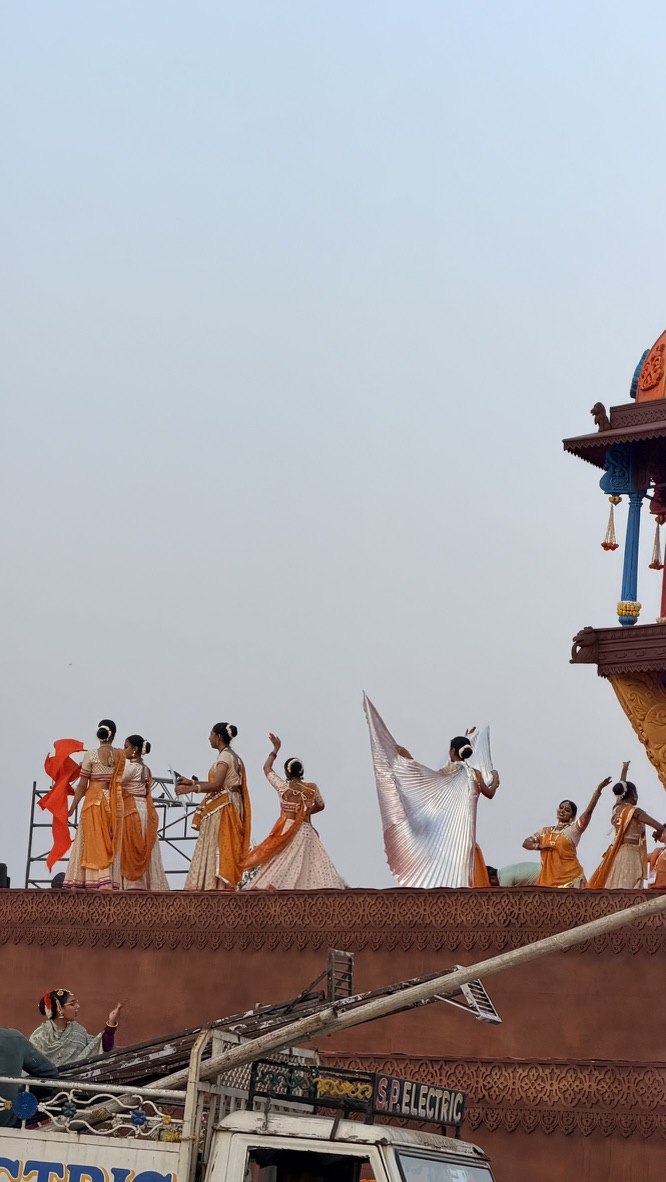
The official festival gives invited teams a protected flying field for giant, sculptural, traditional, and experimental kites. Visitors watch from designated public areas alongside cultural performances and food stalls.
Plan around January 14
Makar Sankranti and Uttarayan center on January 14. In 2026, Gujarat’s traveling international program ran January 10–14, with Ahmedabad hosting from January 12–14.
Inside the flying field · Craft at scale
The sky became
a moving gallery.
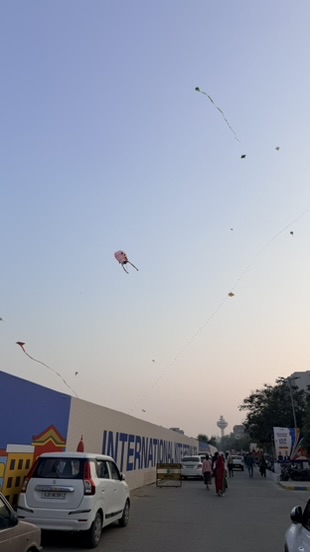
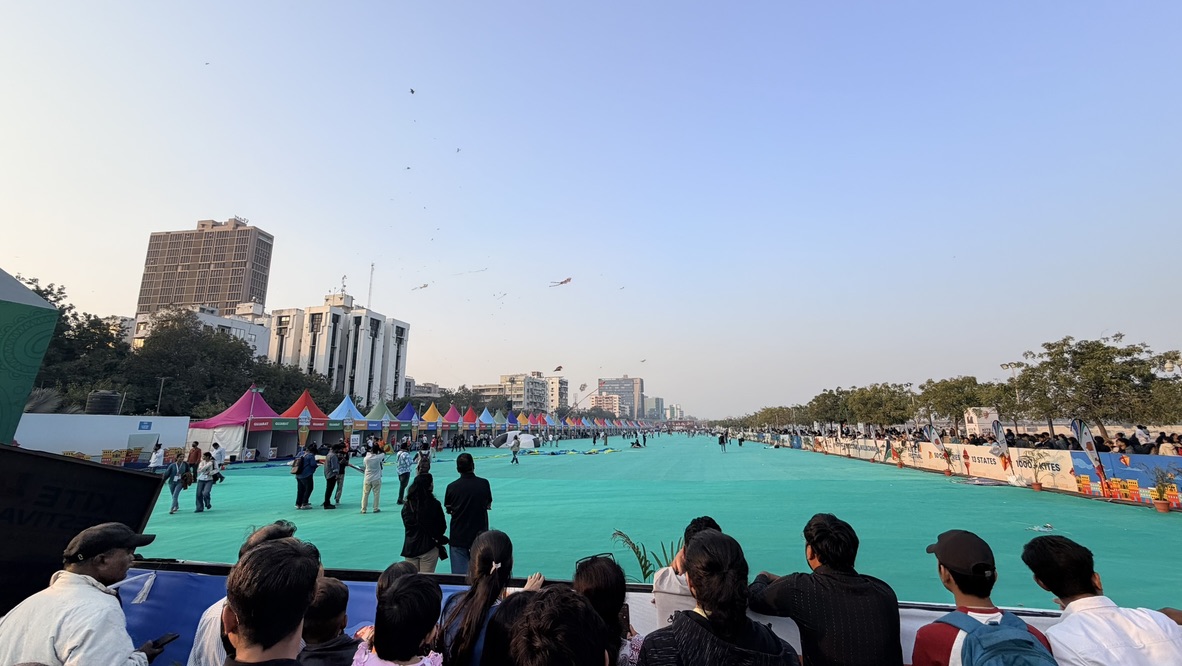
From the spectator edge, we could see why the international festival needs a protected field. Some kites rose as individual characters; others formed long trains, climbing in sequence and responding to every change in wind. The flyers were not simply releasing objects into the air. They were managing tension, balance, timing, and space.
Traditional Gujarati fighter kites use light paper stretched across thin bamboo. International teams broaden that vocabulary with large inflatables, sculptural forms, banners, and designs shaped by kite traditions from many countries. What unites them is the same invisible collaborator: the wind.
Safety note Watch kite lines as carefully as the kites. Competitive line can be abrasive or sharp, so stay within public areas and never handle a fallen line unless event staff say it is safe.
The feeling of the day
Joy was not
a spectator sport.
There are events you observe politely, and events that invite an immediate physical response. This was the second kind. Every new shape sent heads upward. Children pointed. Adults cheered. Strangers exchanged smiles because everyone had seen the same impossible-looking thing catch the wind.
By late afternoon, the light softened and the riverfront felt warmer in every sense. We had come for the kites, but the festival’s real gift was permission to be openly delighted.
The people we met
The photographs
became introductions.
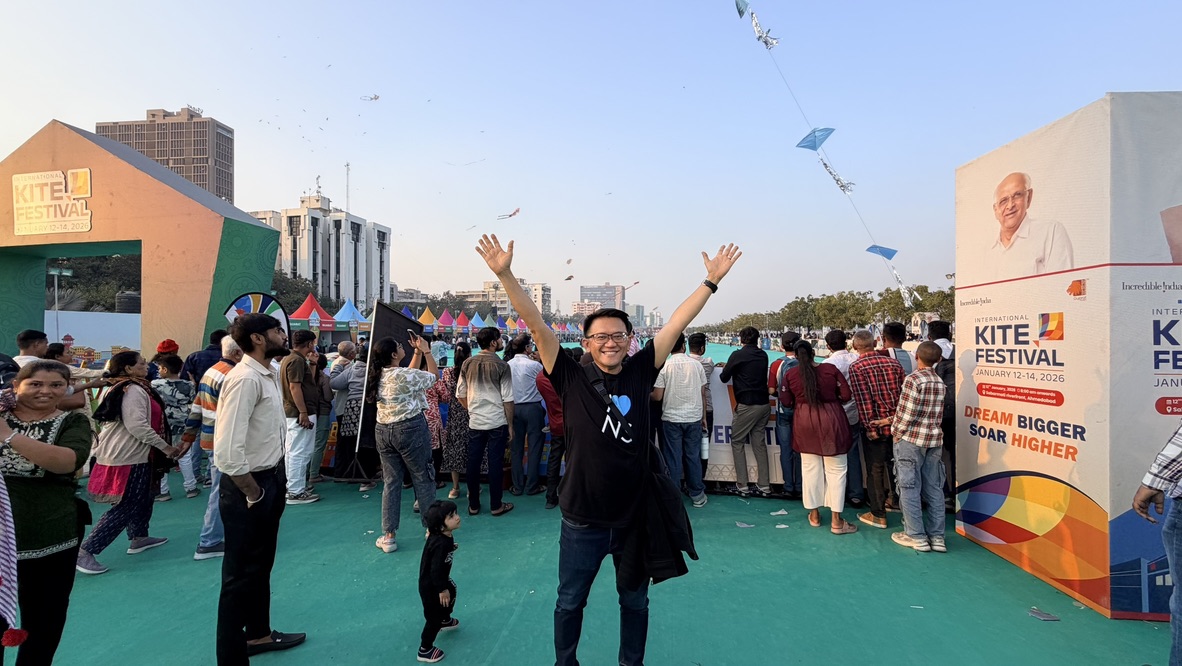
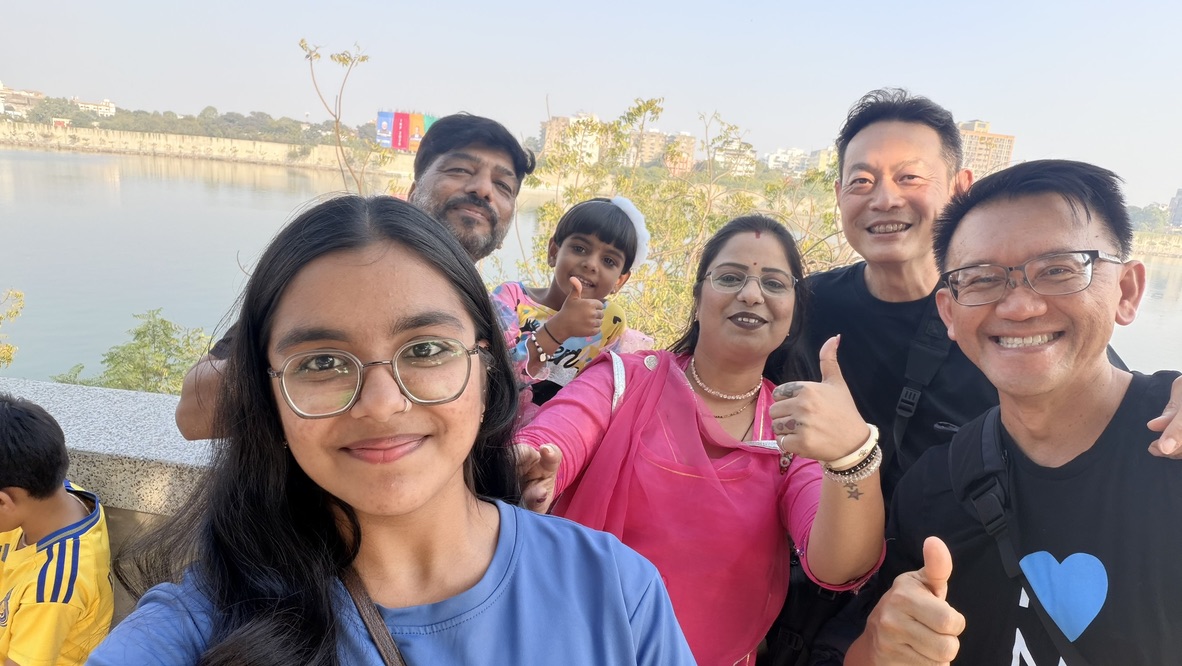
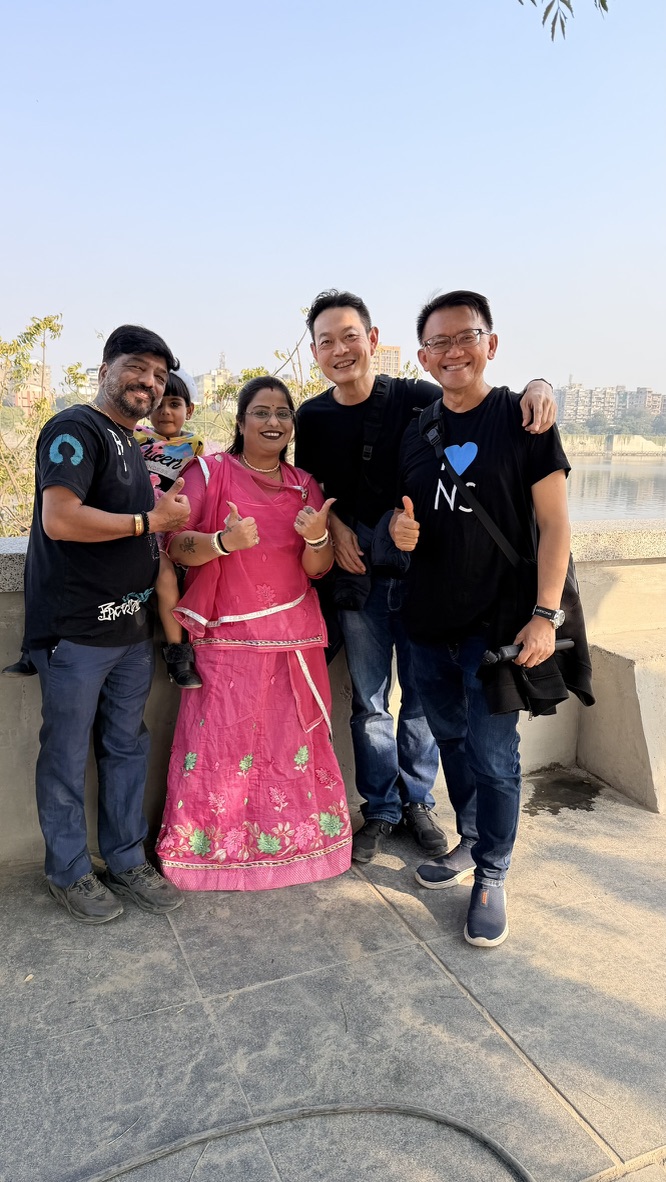
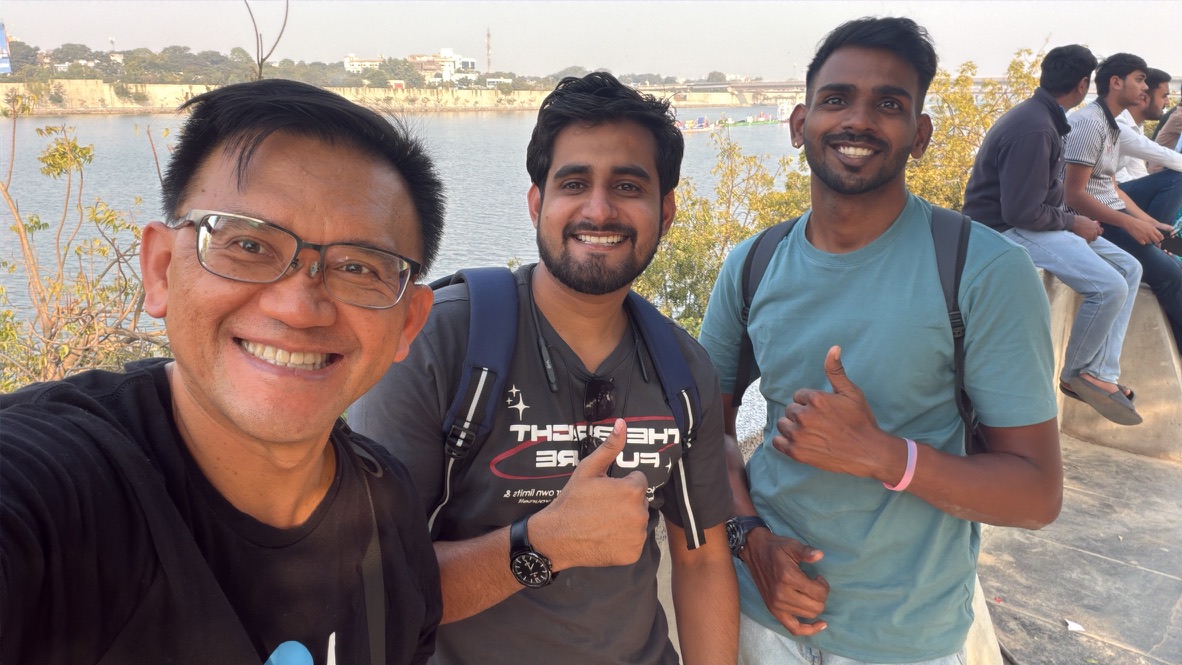
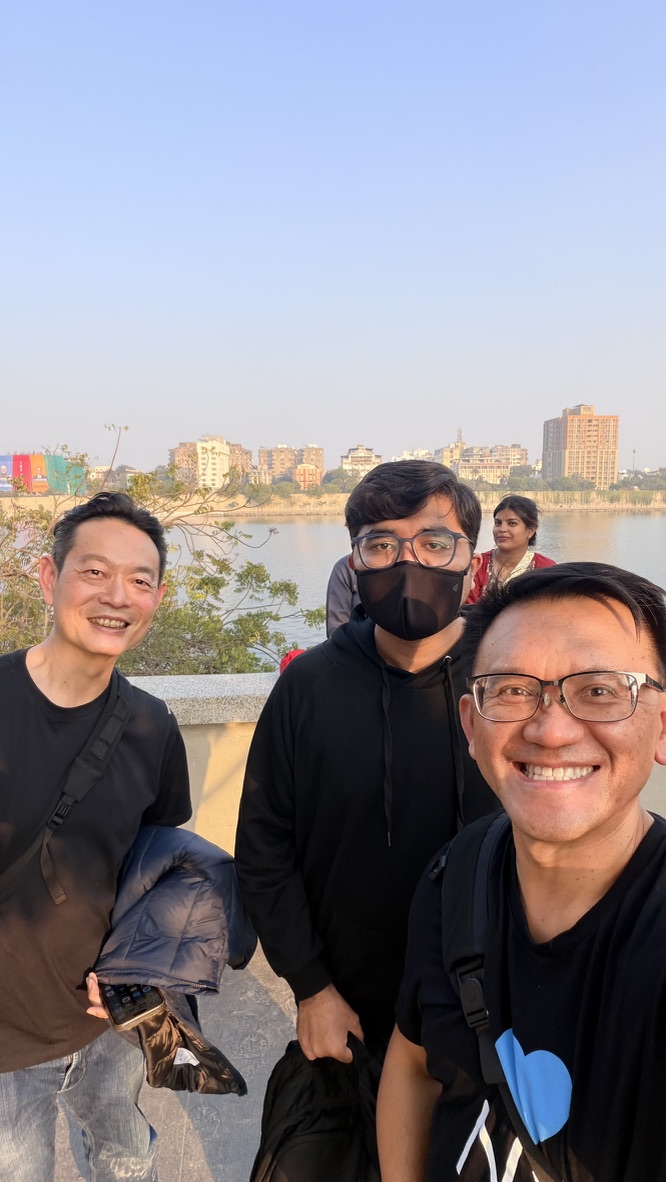
The easiest conversations began with a smile and a shared reaction to the sky. Families and other visitors made room for us beside the Sabarmati, and a quick photograph often became a few minutes of warmth, curiosity, and laughter.
I am leaving names unpublished because we did not record them carefully enough to verify. What mattered was the openness of the encounter. Ahmedabad had already welcomed us through hotels, homes, guides, and food. At the festival, that welcome became wonderfully spontaneous.
Beautiful day · Beautiful evening
One last kite
in the softening light.
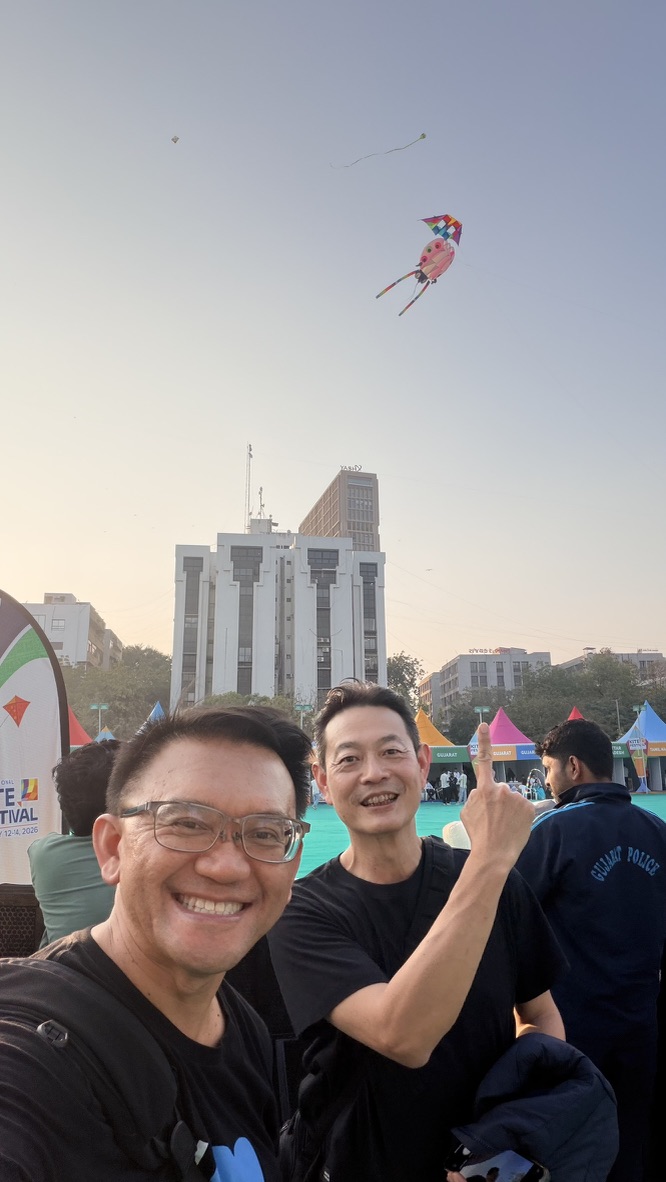
As afternoon leaned toward evening, the crowds stayed animated and the sky remained busy. We found one kite directly above us and managed the travel-photo trick that had defeated us all day: smiling at the camera while still pointing toward the reason we were there.
The photograph is playful, but it also holds the final mood of Ahmedabad—generous, colorful, layered, and never contained within a single landmark.
Gujarat inside the festival
Every display pointed
beyond the event.
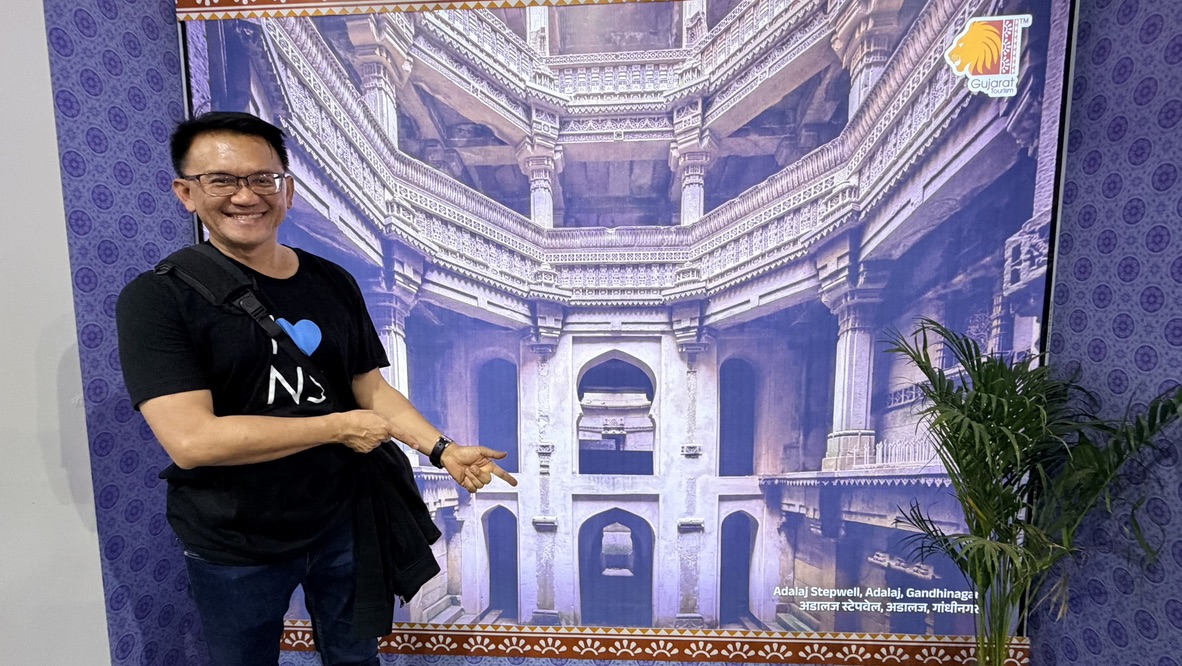
The riverfront grounds also became a visual introduction to the wider state. A Gujarat Tourism display of Adalaj Stepwell echoed the carved architecture we had already seen during the trip. This was a photographic backdrop rather than the monument itself, but it connected the celebration to Gujarat’s deeper architectural story.
The festival did not flatten the destination into kites alone. It offered a doorway toward dance, craft, food, historic sites, and cities beyond Ahmedabad—an invitation to return with more time.
A practical Ahmedabad field guide
Travel lightly.
Participate respectfully.
Walk when the experience is near
For the riverfront festival, walking from Hyatt Regency was our easiest option. It avoided event traffic and let us arrive alongside local visitors.
Use transit for the longer jump
For cross-city travel, check the official Ahmedabad Metro journey planner or the Ahmedabad BRTS planner before leaving. Use an auto-rickshaw or arranged car for the final connection when walking is impractical.
Keep the festival affordable
Public entry was free in 2026. A nearby hotel, refillable water, sun protection, and a planned return route prevent small convenience costs from taking over the day.
Be a considerate temporary local
Stay outside restricted flying areas, keep walkways clear, ask before taking close portraits, and give families and working kite teams room to enjoy the event on their own terms.
Ahmedabad · The final reflection
We arrived looking for heritage.
We left carrying relationships.
Ahmedabad gave us several cities at once. The old pols taught us to look closely at carved wood, thresholds, and the intelligence of neighborhoods built for community. Jama Masjid opened that intimate world into stone and sky. Sabarmati Ashram showed how disciplined daily life could influence a national movement.
Our three hotels revealed three different ways to stay: The House of MG placed us inside the historic city; ITC Narmada offered contemporary scale and full-service comfort; Hyatt Regency brought us close enough to the riverfront that the final celebration became a walk rather than a logistical project.
Then the kite festival brought everything together—craft, family, competition, performance, hospitality, and a city looking upward. The photographs I value most are not only the biggest kites or grandest buildings. They are the faces of people who made space for us inside their day.
Ahmedabad did not ask us simply to admire it. It invited us to participate.
The following morning, we would pack again and continue west—carrying Ahmedabad’s colors, conversations, and open sky into India’s next great city.
The journey continues
Next: Mumbai.
Ahmedabad has told its story.
Day 04
Ahmedabad → Mumbai
A last hotel breakfast, check-out, and the flight onward to Mumbai—the next chapter of the India journey.
Next chapter