Plaza de la Merced
Begin under the jacarandas and read the city from one square.
Passage 07 · Málaga · May 21
THE EXTRA DAY
Málaga stopped being the city I passed through. Now, every time I return to southern Spain, I protect a day simply to be here.
Walk into the light ↘Featured Picture: Diego Delso · Wiki Loves Monuments 2023 · CC BY-SA 4.0 · resized, metadata removed · License
07 / 09
Not my first Málaga—and that is the point
Whenever I come to this part of southern Spain, I leave an extra day for Málaga. It is no longer a practical stop before Marbella. It has become part of the journey itself.
What I love is not one grand sight. It is the compression: Roman stone below an Islamic fortress, Renaissance ambition around the corner, Picasso's childhood woven into ordinary streets, and a table waiting before you have decided whether you are hungry.
At midday the city is candid. The light is hard, the lanes are busy, and nothing is staged for golden hour. That honesty makes the walk feel less like sightseeing and more like returning to a rhythm I already know.
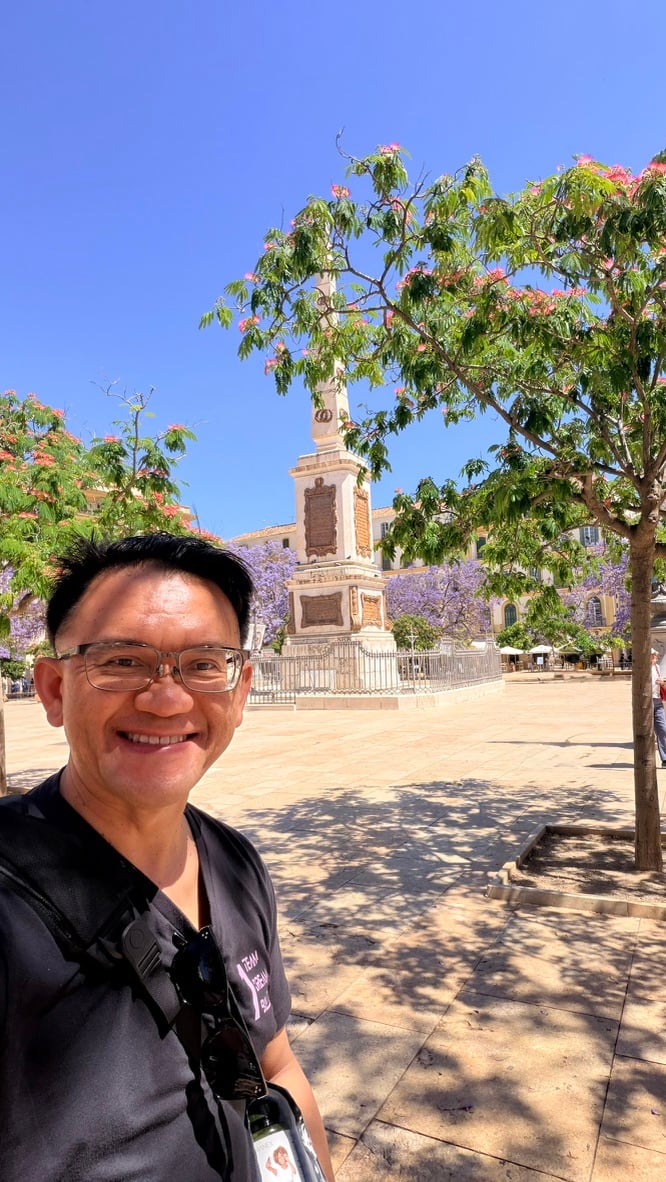
Start here · Plaza de la Merced
The plaza once held a public market and later became one of Málaga's civic gathering rooms. At its center, the nineteenth-century monument remembers General José María Torrijos and the companions executed with him in 1831.
But history does not make the square solemn. Jacarandas throw purple into the heat, terraces fill the edges, and Picasso's birthplace sits at number 15. In one slow circuit, Málaga's politics, art, shade, and everyday sociability all come into view.
Official history of Plaza de la Merced ↗Curated city context 01 / 04
Picasso was born here in 1881 and lived in the building on Plaza de la Merced until 1884. Knowing that changes the square: the balconies, pigeons, people, and sharp Andalusian light become more than backdrop.
This is why I like to begin outside before going into a museum. The city supplies the visual vocabulary first.
Picasso Birthplace Museum ↗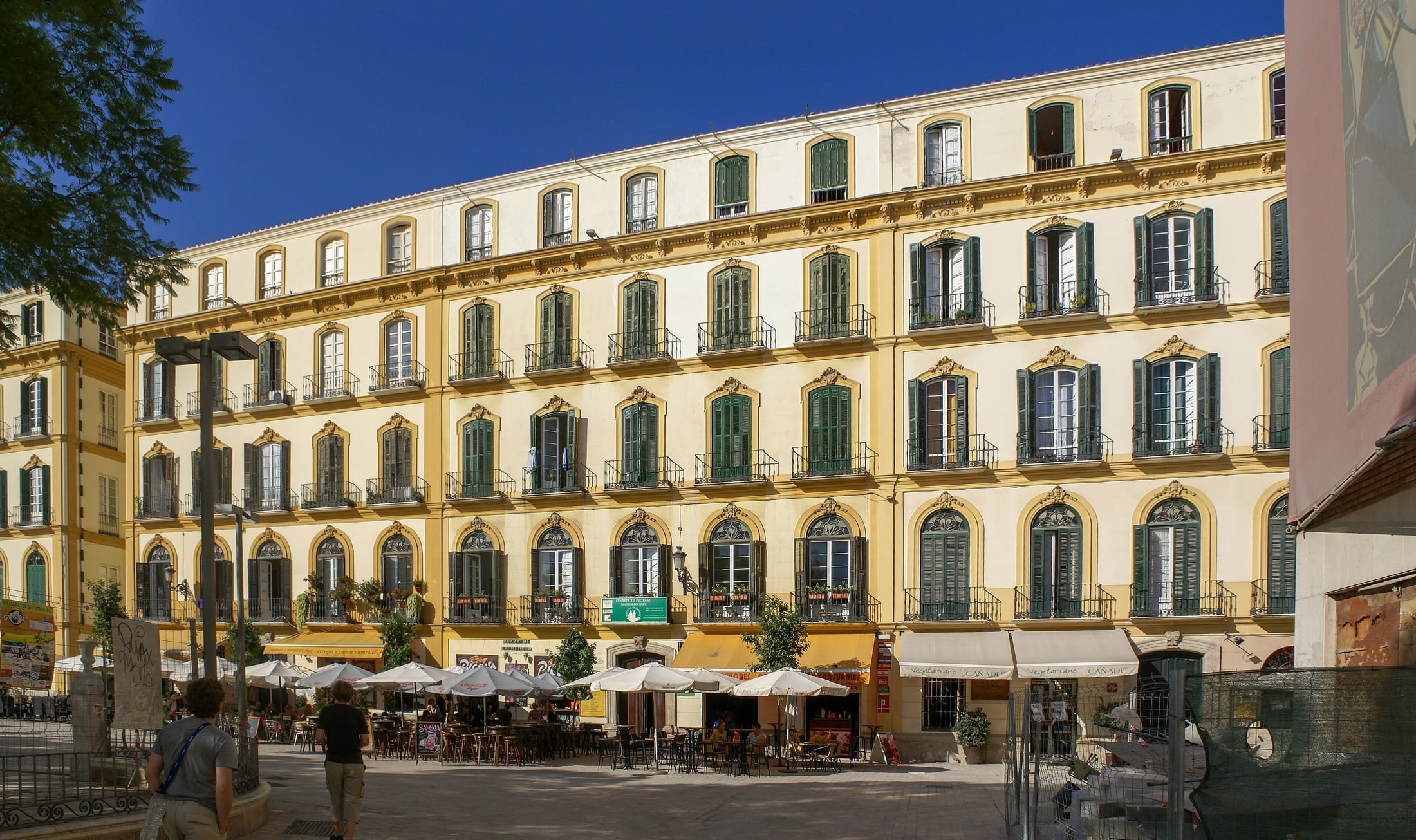
The historic center · 12:45
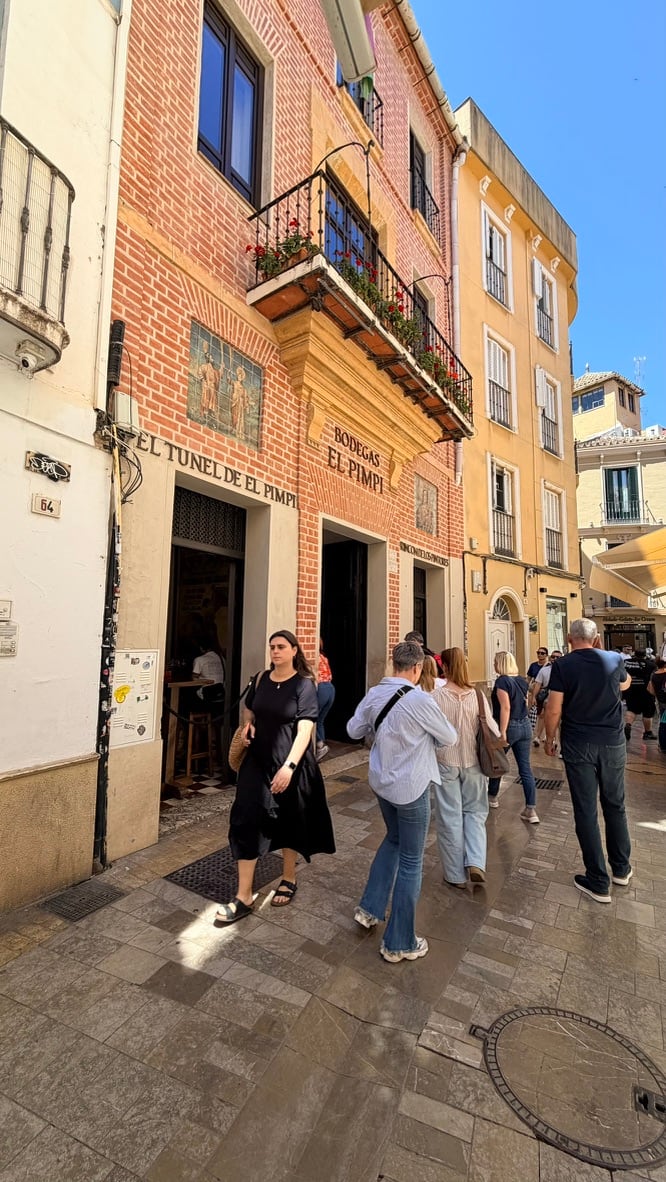
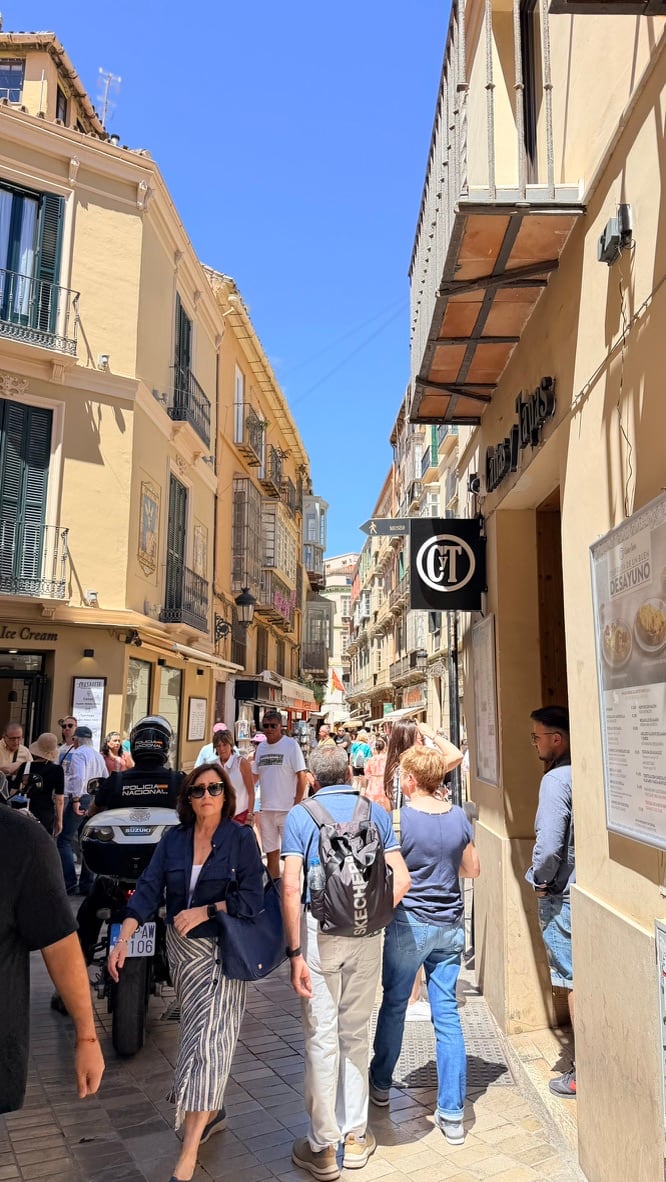
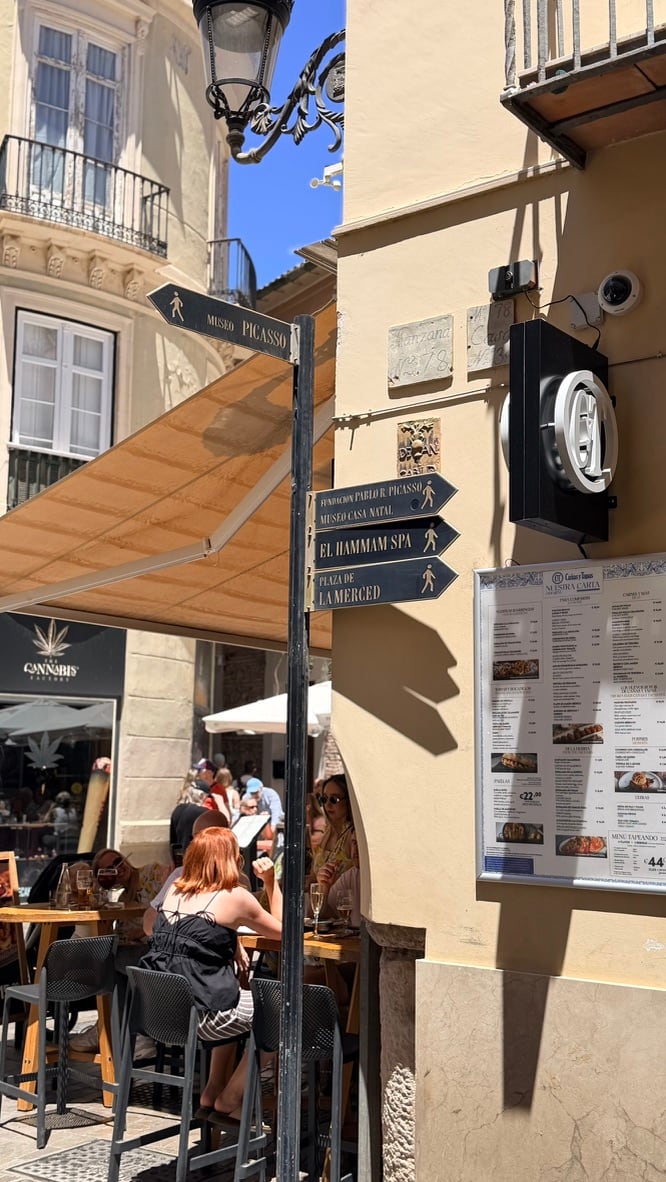
The old center is compact enough that getting slightly lost is useful. Calle Granada, Calle San Agustín, and the lanes around the Picasso Museum keep folding into one another. A wrong turn rarely costs much; it usually produces a tiled façade, a quiet doorway, or a lunch possibility.
The trick is to resist turning every famous doorway into an obligation. I use landmarks like El Pimpi to orient myself, then look down the side streets before deciding where to stop.
Good finds · no rigid list
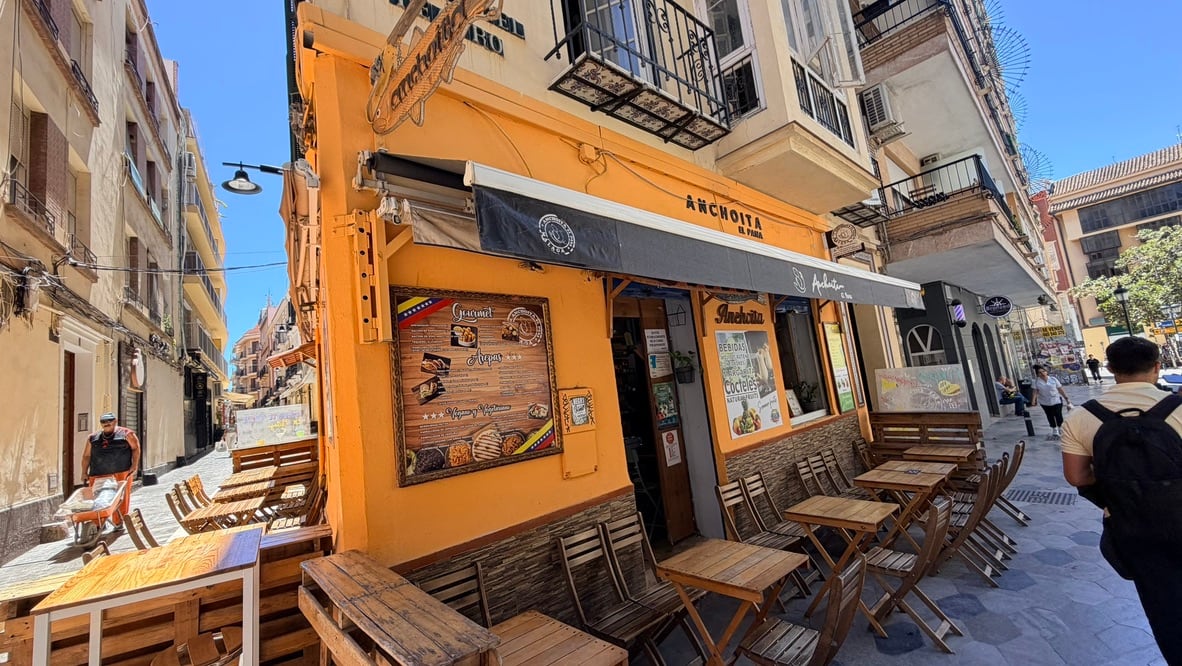
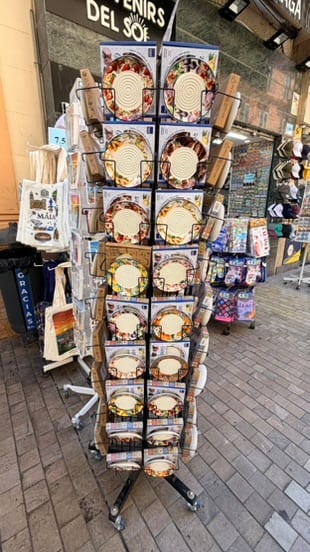
The city's pleasures often arrive as fragments: hand-painted color on a souvenir rack, an orange corner glowing in full sun, the choreography of a crowded terrace. None needs to become a major destination.
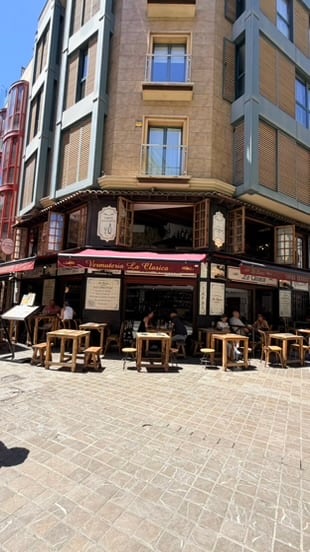
Casa Lola · a return, not a discovery
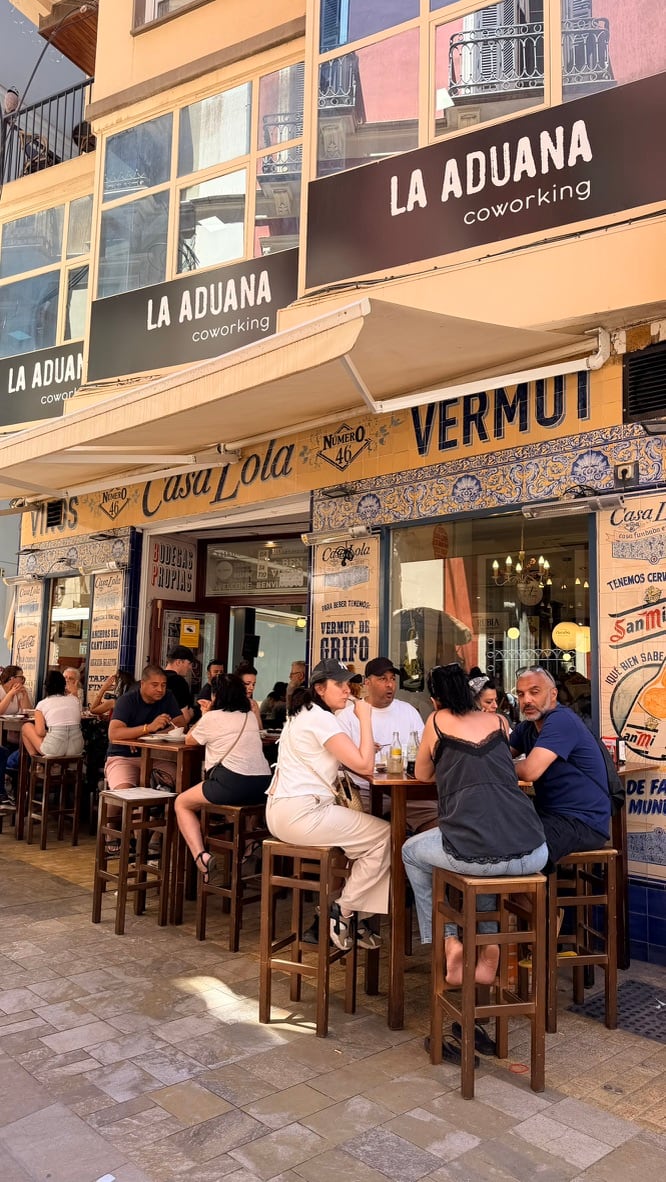
I had already found my way to Casa Lola the night before. By midday, its blue-and-yellow tilework and packed pavement tables looked entirely different—less intimate, more kinetic, but still unmistakably Málaga.
Coming back matters. Travel advice often worships the new, but a place you genuinely enjoyed earns another visit more than an unchecked name on a list.
Read the full Casa Lola review ↗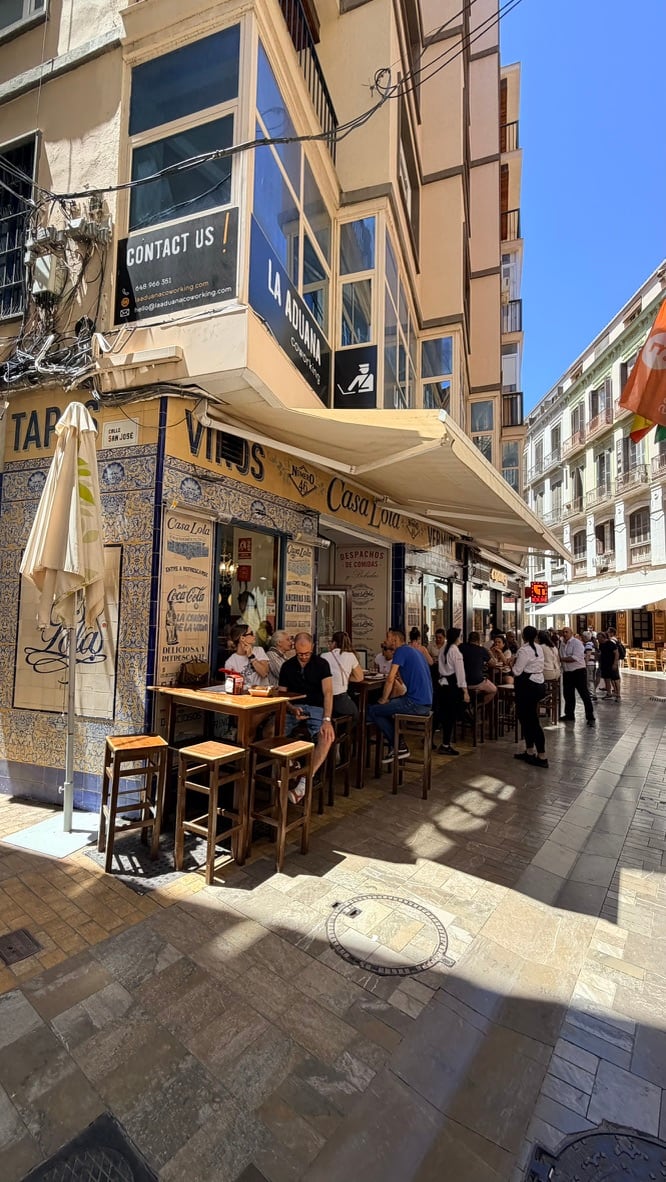
Calle Alcazabilla · history in one frame
Málaga's Roman Theatre was built in the early first century CE and used for roughly two centuries. It disappeared beneath later streets and buildings until gardening work in 1951 exposed its remains.
Above it, the Alcazaba rises from a different Málaga. Construction began in the eleventh century under the Taifa ruler Badis. From the pavement, the two monuments align so neatly that centuries stop feeling abstract.
Official Roman Theatre guide ↗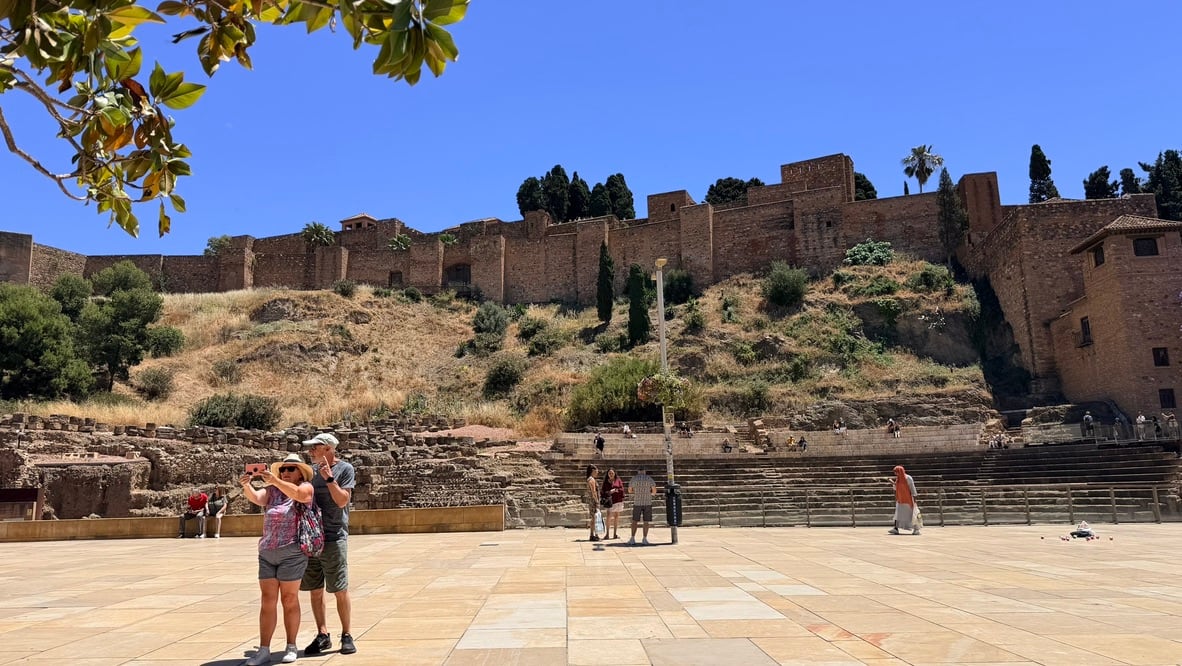
Curated city context 02 / 04
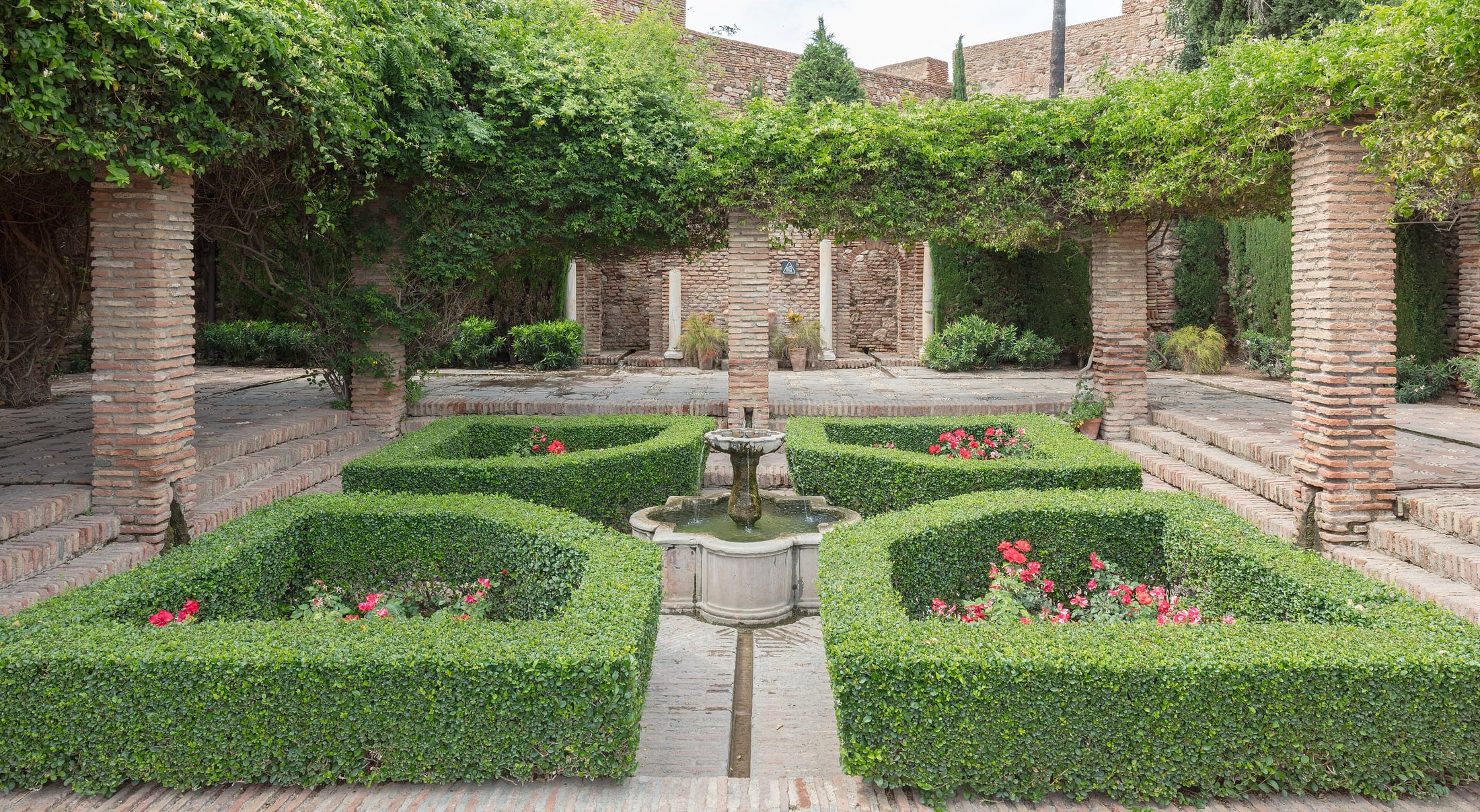
From below, the Alcazaba reads as fortification. Inside, courtyards, brick, clipped greenery, and water soften the experience. That contrast is the point: defensive architecture surrounding spaces built for coolness and calm.
If you enter, give it real time. If midday heat or your museum plan makes that unrealistic, the Roman Theatre and outer walls still deliver the essential visual relationship from Calle Alcazabilla.
Official Alcazaba history ↗The cathedral · 14:51
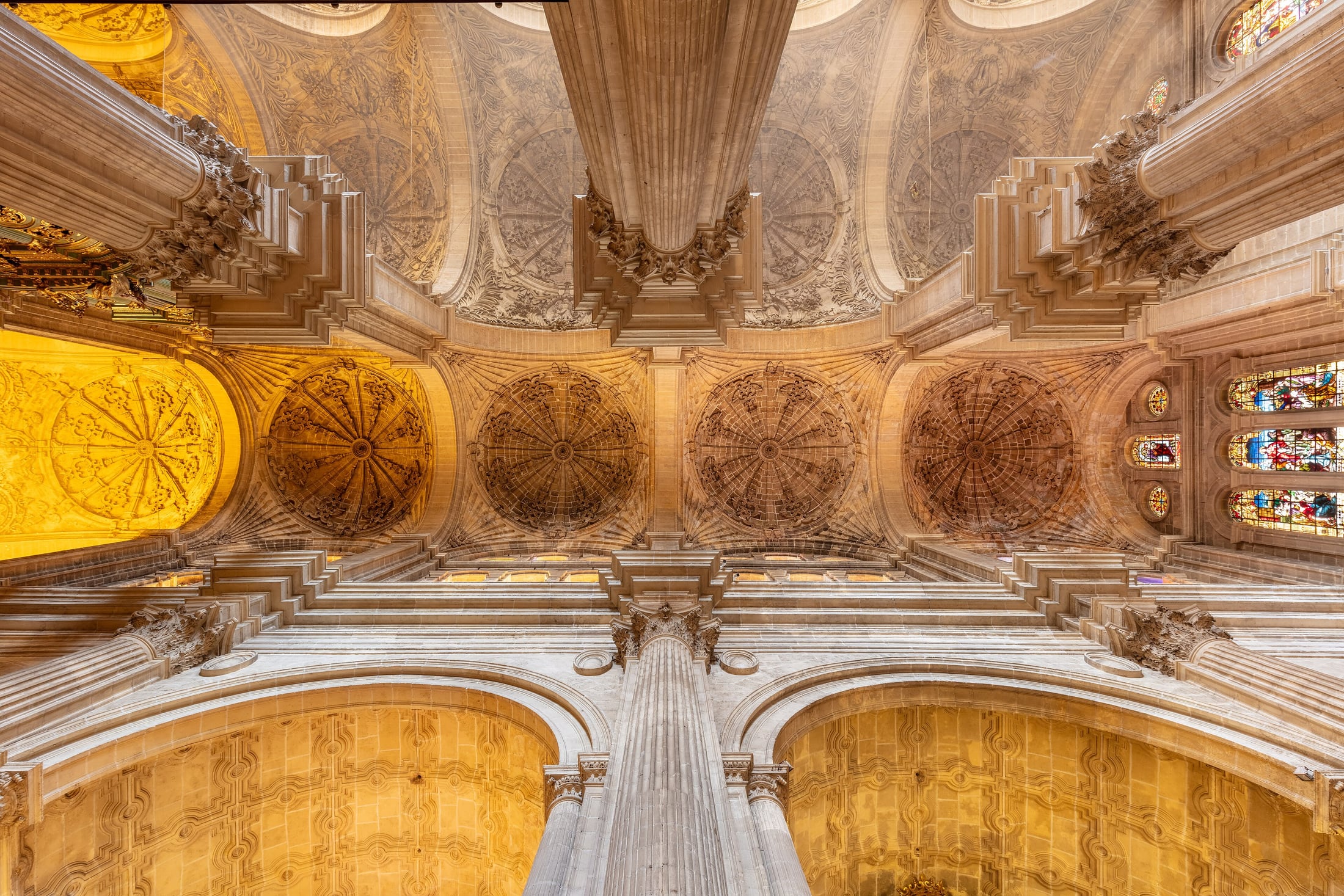
The cathedral rose over the site of the former main mosque, with construction beginning in the sixteenth century and continuing across generations. Its unfinished south tower gave Málaga the affectionate nickname La Manquita—the one-armed lady.
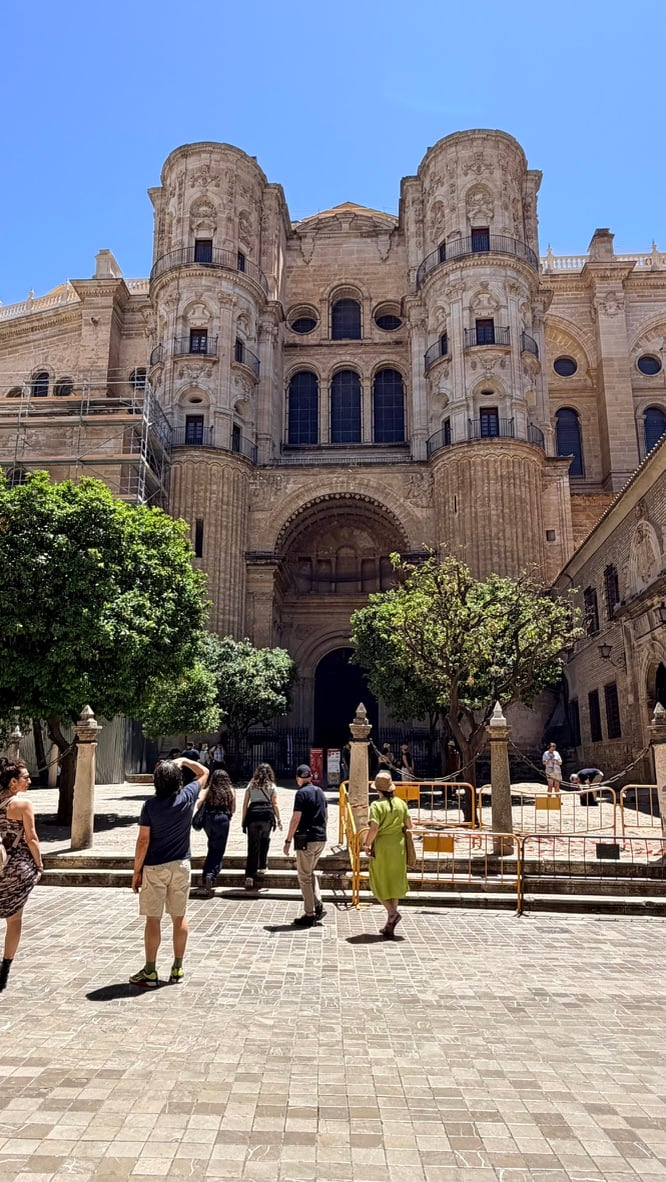
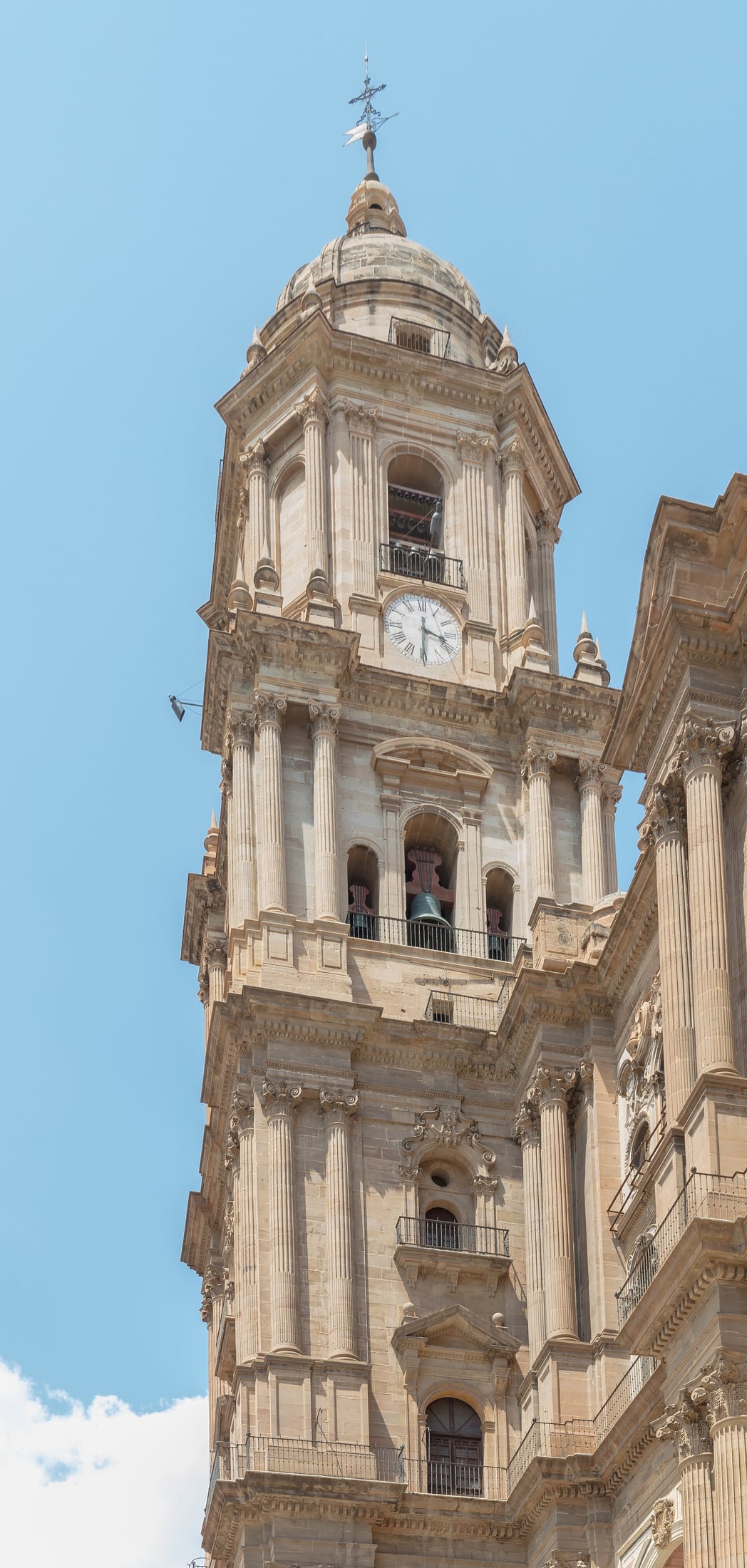
The nickname can sound like an imperfection. In person, the unfinished story gives the cathedral character. Málaga's most commanding building is also a reminder that cities do not need neat conclusions to feel complete.
The exterior is already rewarding. Go inside when the cathedral is central to your day; otherwise keep the interior for another visit. Returning is not a failure to finish—it is a better way to know a place.
Official cathedral guide ↗Curated city context 04 / 04
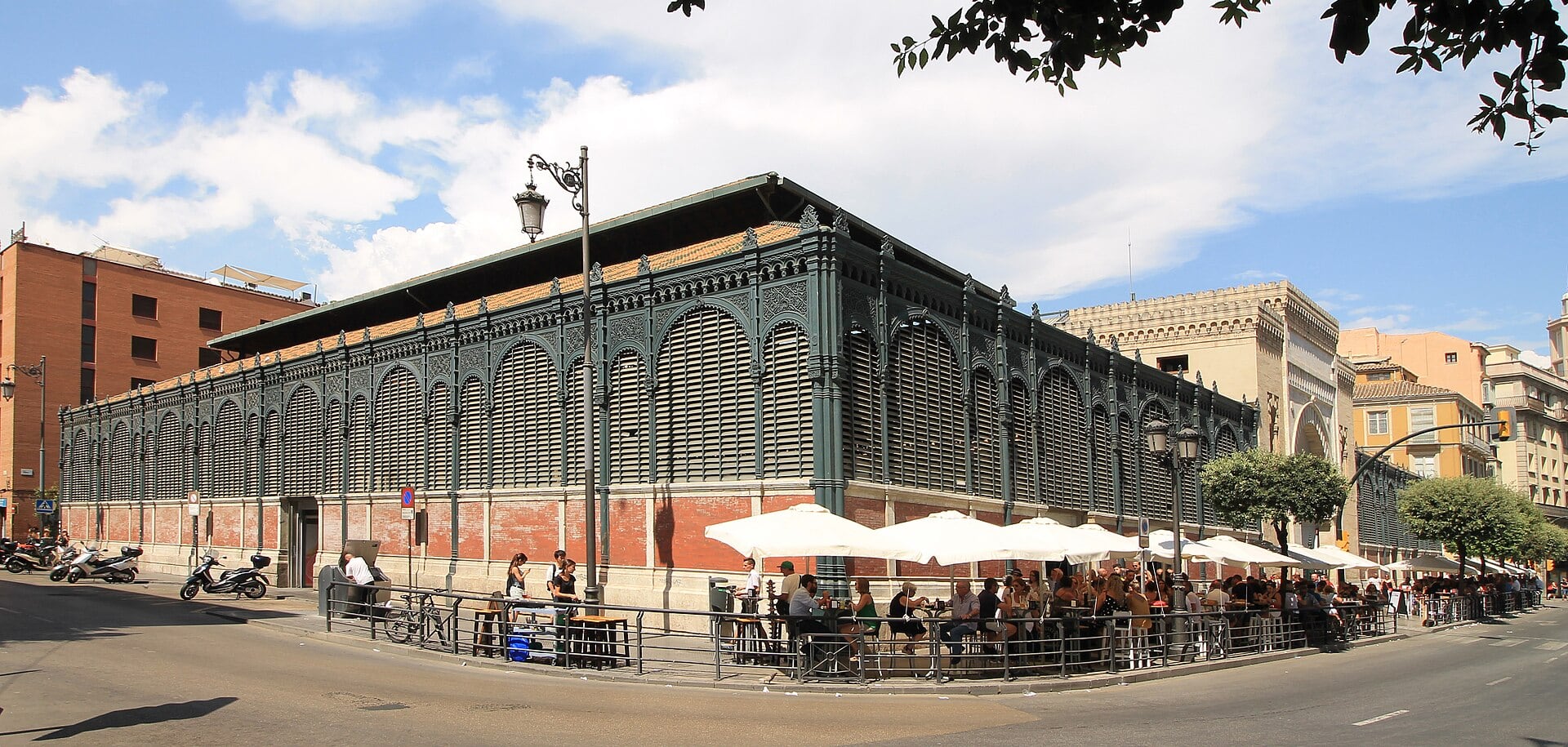
If your extra day begins earlier, extend the walk west to Mercado Central de Atarazanas. The iron-and-brick market hall adds another Málaga language: produce, seafood, counters, stained glass, and the practical energy of a city feeding itself.
Market rhythms are earlier than dinner rhythms. Check the official schedule before building the day around it, and treat the market as its own stop—not a guaranteed late-afternoon rescue.
The extra-day edit · about three hours
This is a sequence, not a stopwatch. Start where the city's stories overlap, leave space for one spontaneous table, and let heat—not ambition—decide how much you climb.
Begin under the jacarandas and read the city from one square.
Follow Calle Granada toward the museum quarter and Calle Alcazabilla.
See two eras in one frame; add the fortress if the heat and your timing agree.
Choose one or two dishes, then keep moving instead of making lunch the whole afternoon.
End in shade around the cathedral, Plaza del Obispo, or the route toward Atarazanas.
TOON's midday score
9.3/ 10A personal rating for the city walk I experienced. It reflects the richness, ease, and return value of Málaga's center—not a universal ranking of the city or its attractions.
The honest city review
Picasso, the Roman Theatre, the Alcazaba, the cathedral, and a dense network of food streets sit within an unusually compact walk.
The city does not isolate its history behind one district. Ancient stone, apartments, tapas terraces, shops, and school-day movement share the same frame.
Summer heat, crowds, and exposed stone can flatten your energy. Pick fewer interiors, protect the shaded hours, and make the pace deliberately gentle.
You can understand a surprising amount of Málaga from its public spaces before buying a ticket. Spend when a museum, monument, or meal truly matters to you.
The verdict
The city keeps giving me the same rare combination: enough history to deepen every return, enough street life to prevent it from feeling preserved, and enough ease that an unplanned afternoon can still feel complete.
I do not save an extra day because I have more Málaga to finish. I save it because I like who I become when I slow down here.
Next passage · Picasso Museum
Next: my first visit to the Museo Picasso Málaga—and what changes when you meet the artist after walking through the city that shaped his earliest view of the world.
Continue to Picasso ↗