The first proposal
Málaga official Juan Temboury Álvarez wrote to Picasso about dedicating rooms in the restored palace to the artist and his father. The project soon stalled.
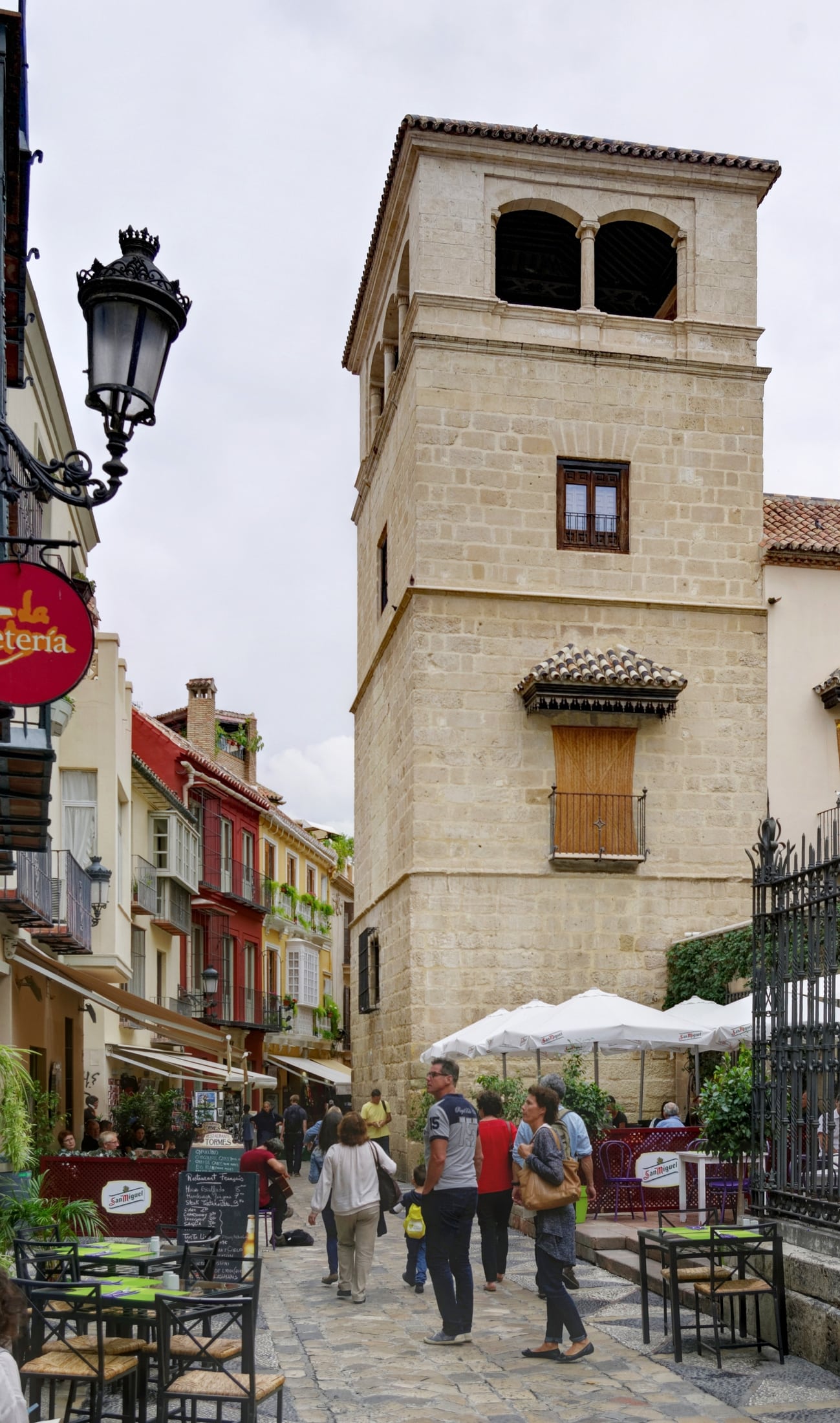
Passage 08 · Museo Picasso Málaga · May 21
PICASSO · IN HIS CITY
I came for Picasso. A Renaissance palace, a quiet courtyard, and nearly three thousand years beneath the floor changed the visit.
Enter the museum ↘Curated opening · Wikimedia Commons Quality Image: Berthold Werner · CC BY-SA 3.0 · resized, metadata removed · License
08 / 09
My first visit · 3:00 p.m.
His name is everywhere in the historic center: on signs, museum walls, the house where he was born, and the stories Málaga tells about itself. Yet this was my first time entering the museum created to bring his work back to his native city.
I arrived with a full-access ticket for the 3:00 p.m. window. The practical details were simple. What surprised me was how quickly the visit stopped feeling like a single-artist museum and became a portrait of invention, family persistence, architecture, and Málaga itself.
The collection does not ask you to admire one famous image and move on. It asks you to watch an artist keep changing the rules—across painting, sculpture, ceramics, drawing, and printmaking—without losing the questions that connected one decade to another.
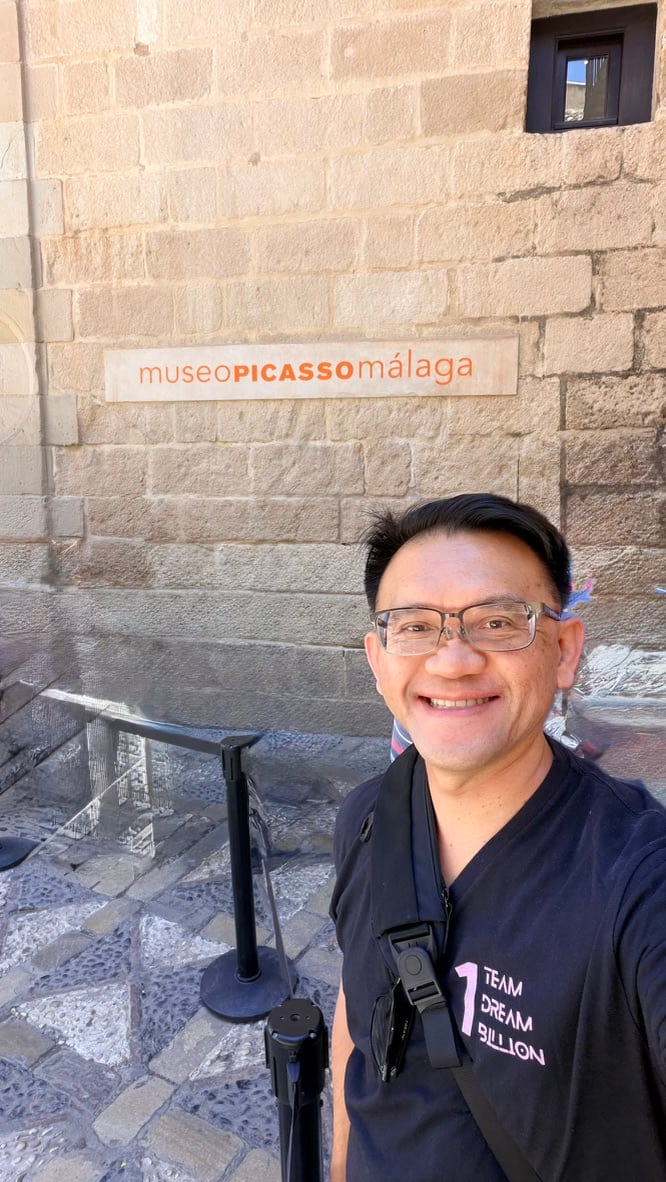
The reservation · details worth keeping private
The emailed ticket made arrival easy, but the QR code and reservation numbers belong in a wallet—not on a public travel page. I kept only the useful planning facts here.
The museum currently lists daily opening from 10:00 a.m. to 8:00 p.m., a €13 general ticket, and a mobile web-app audio guide included with admission. Hours, prices, exhibitions, and access conditions can change, so verify them when booking.
Check the museum's live visit page ↗Curated city context 01 / 04
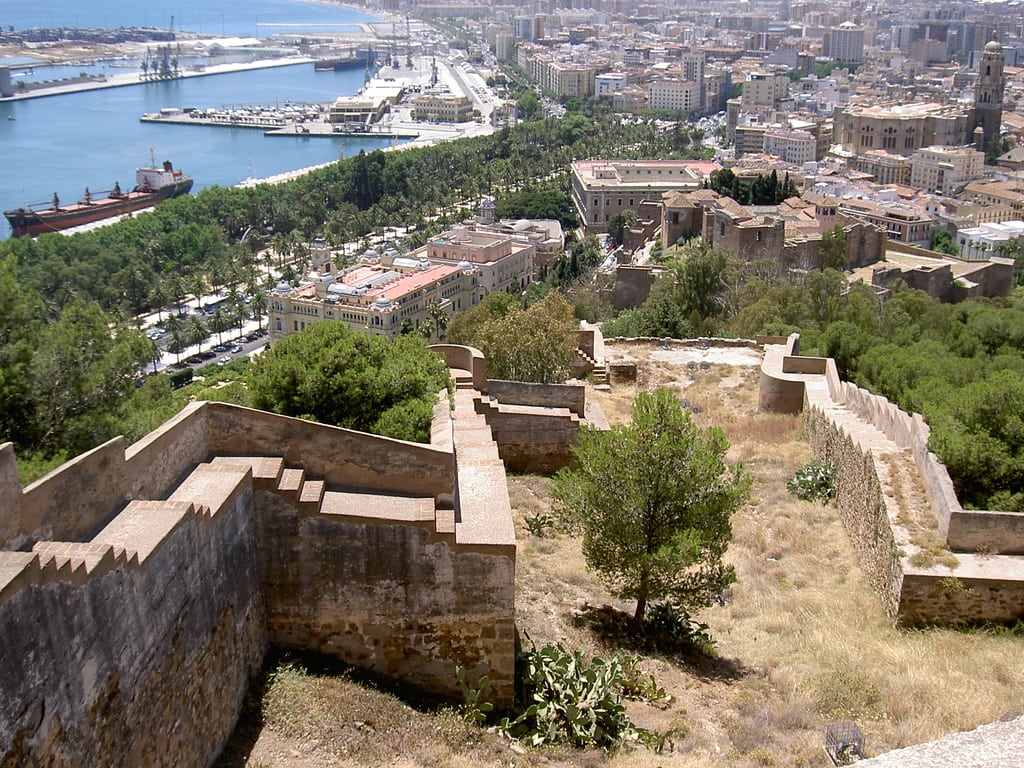
Picasso was born here in 1881 and spent his first decade in a Mediterranean port shaped by trade, religion, spectacle, industry, and an unusually dense meeting of cultures.
The museum never claims that one city explains an eighty-year career. But seeing the harbor, cathedral, bullring, Alcazaba, and compact historic center together makes his birthplace feel less like a footnote.
Palacio de Buenavista
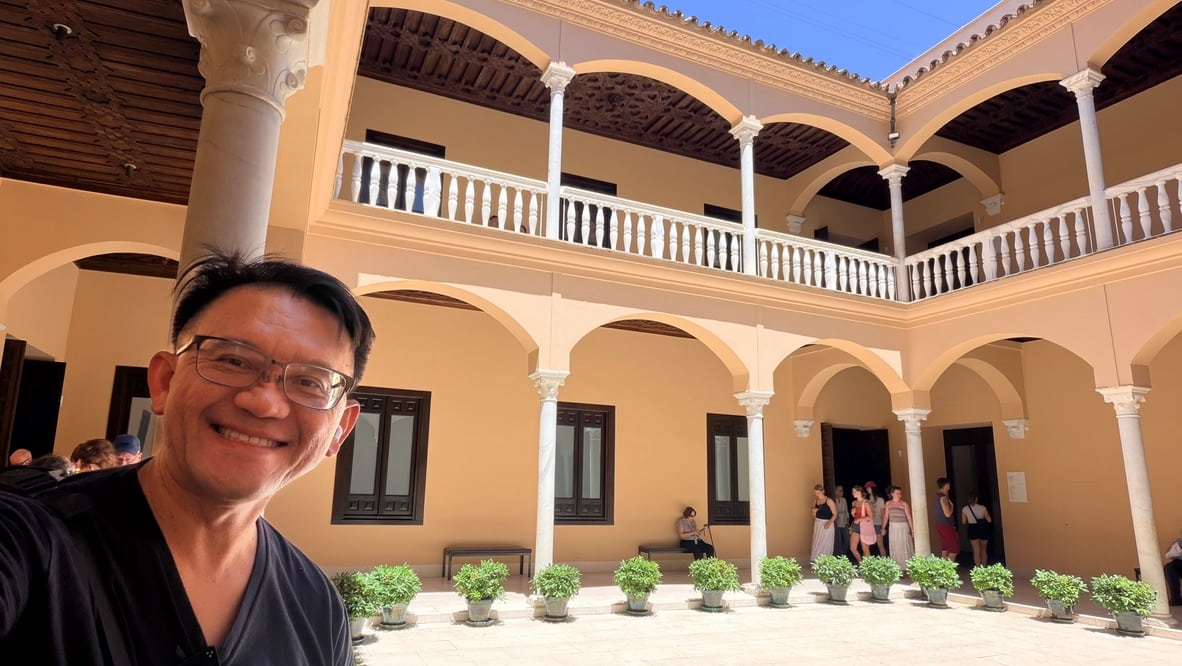
The collection lives in a sixteenth-century Andalusian palace where Renaissance and Mudéjar elements meet. The building was raised over remains of a Nasrid palace and lived many later lives—as a residence, school, factory, workshop, hospital, and fine-arts museum.
Picasso had wanted an “old and secular” building in the city for his work. Buenavista delivered that, but a modern museum required more space. Fifteen neighboring houses were folded into a restrained new wing rather than forcing the palace to pretend it was something else.
The result received the American Institute of Architects' Honor Award for Architecture in 2006. The courtyard explains why: restoration and modern intervention feel like one quiet conversation.
Explore the museum architecture ↗A museum fifty years in the making
Málaga official Juan Temboury Álvarez wrote to Picasso about dedicating rooms in the restored palace to the artist and his father. The project soon stalled.
After two enthusiastically received Málaga exhibitions, Christine Ruiz-Picasso revived the plan, joined by her son Bernard Ruiz-Picasso.
Christine and Bernard's donations made the collection possible. Museo Picasso Málaga opened on October 27, finally realizing the artist's desire for his work to be seen in his birth city.
Today the collection comprises more than 230 works. Its existence is not simply an institutional story; it is a family act of patience.
Read the museum's full history ↗On view during my visit · 2024–2028
Pablo Picasso: Structures of Invention—The Unity of a Life's Work deliberately resists the familiar sequence of Blue Period, Rose Period, Cubism, Classicism, and Surrealism.
Instead, works from different decades and media sit beside one another. The display argues that reinvention and memory were not competing forces for Picasso: each new idea continued a conversation with something he had already made.
For a first-time visitor, that is both the strength and the challenge. The galleries feel alive with connections, but less like a chronological textbook. Use the introductory timeline to anchor yourself, then let recurring forms—faces, bodies, still lifes, animals, and the artist's studio—do the guiding.
Current collection presentation ↗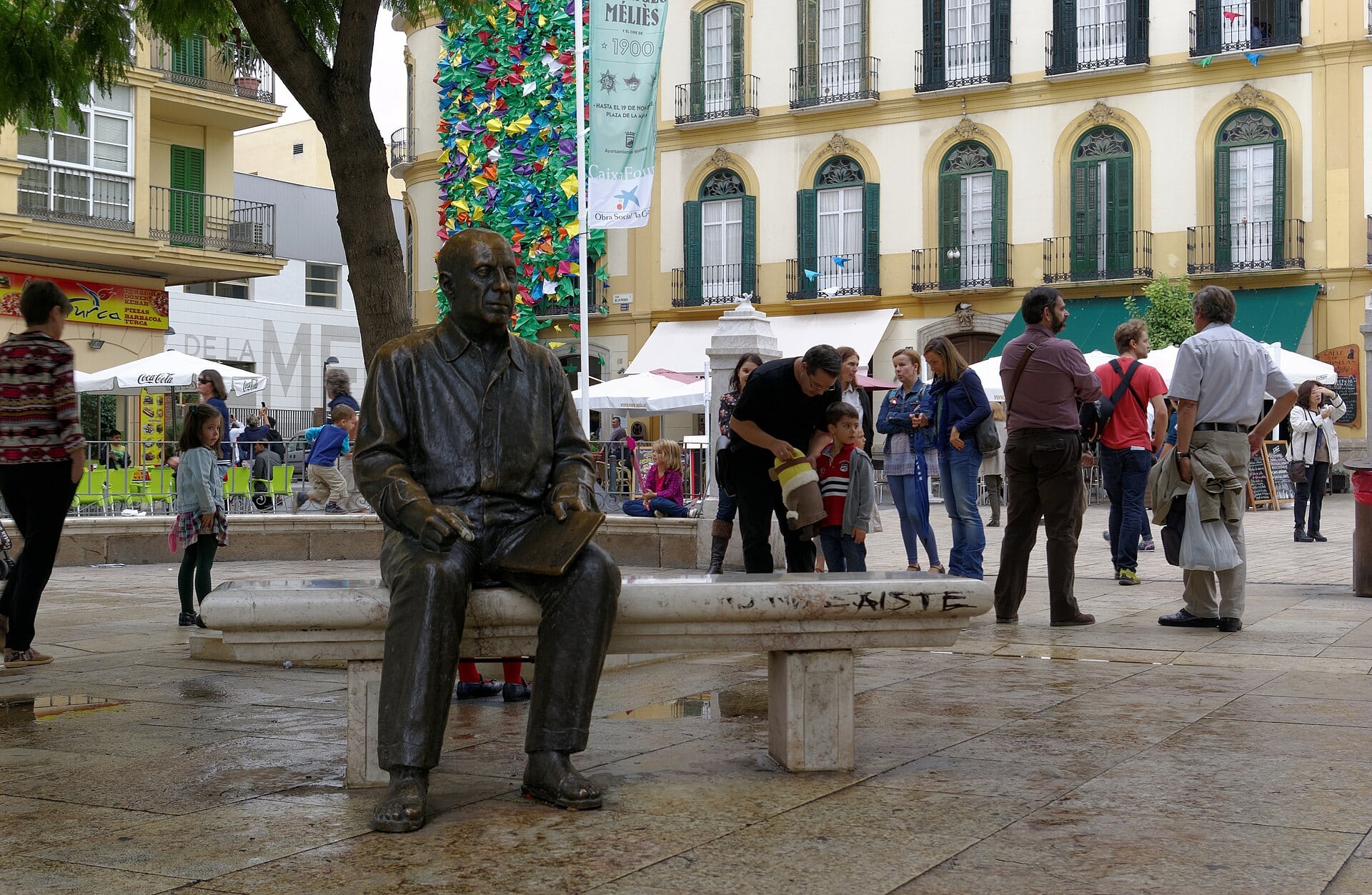
Curated city context 02 / 04
The bronze figure in Plaza de la Merced makes Picasso approachable: seated, sketchbook in hand, surrounded by children, café tables, and ordinary movement.
The museum does something similar. Instead of treating each stylistic period as a sealed room, it lets one restless artist remain visible through every transformation.
The unexpected masterpiece · below the museum
The palace basement contains a second museum: a cross-section through nearly three millennia of Málaga. It is easy to treat it as an appendix. I would not.
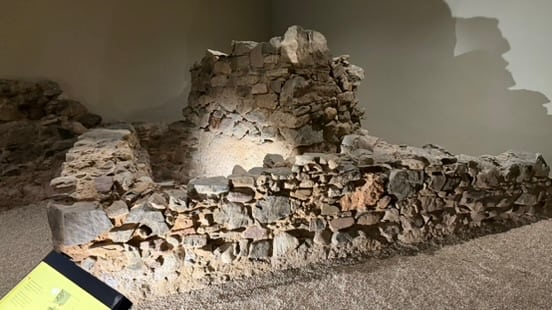
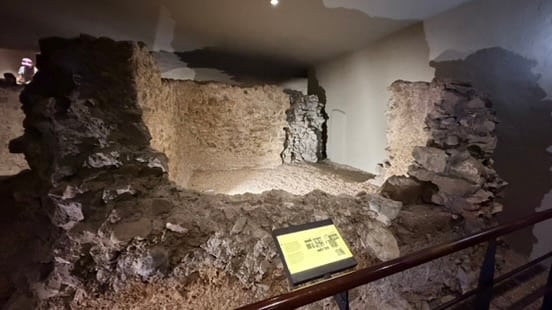
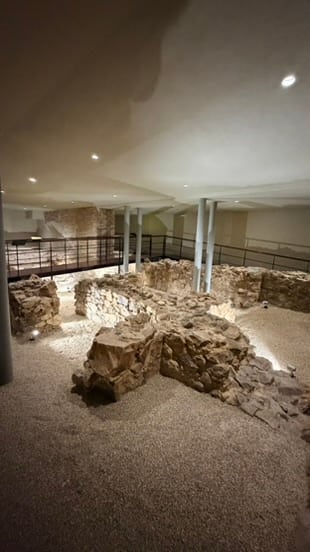
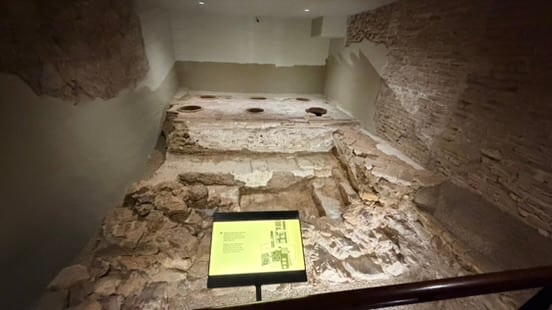
Fragments of a residence, defensive walls, and a tower reveal the early settlement on the lower slope beneath the Alcazaba.
Fish-salting vats point to products such as garum and to Málaga's role in Mediterranean trade.
A cobbled carriage street, original flooring, and embedded storage jars return the story to Buenavista itself.
Curated city context 03 / 04
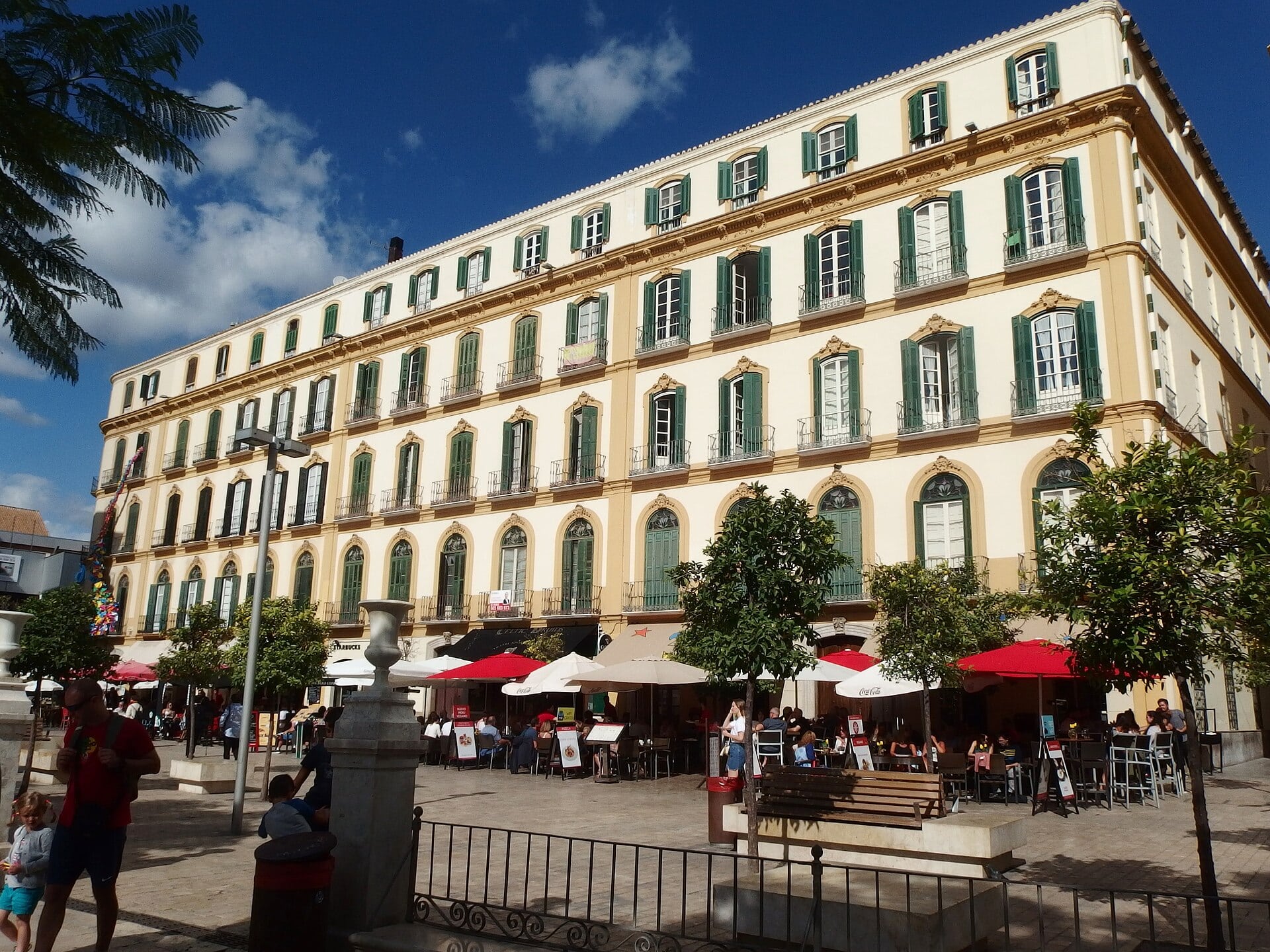
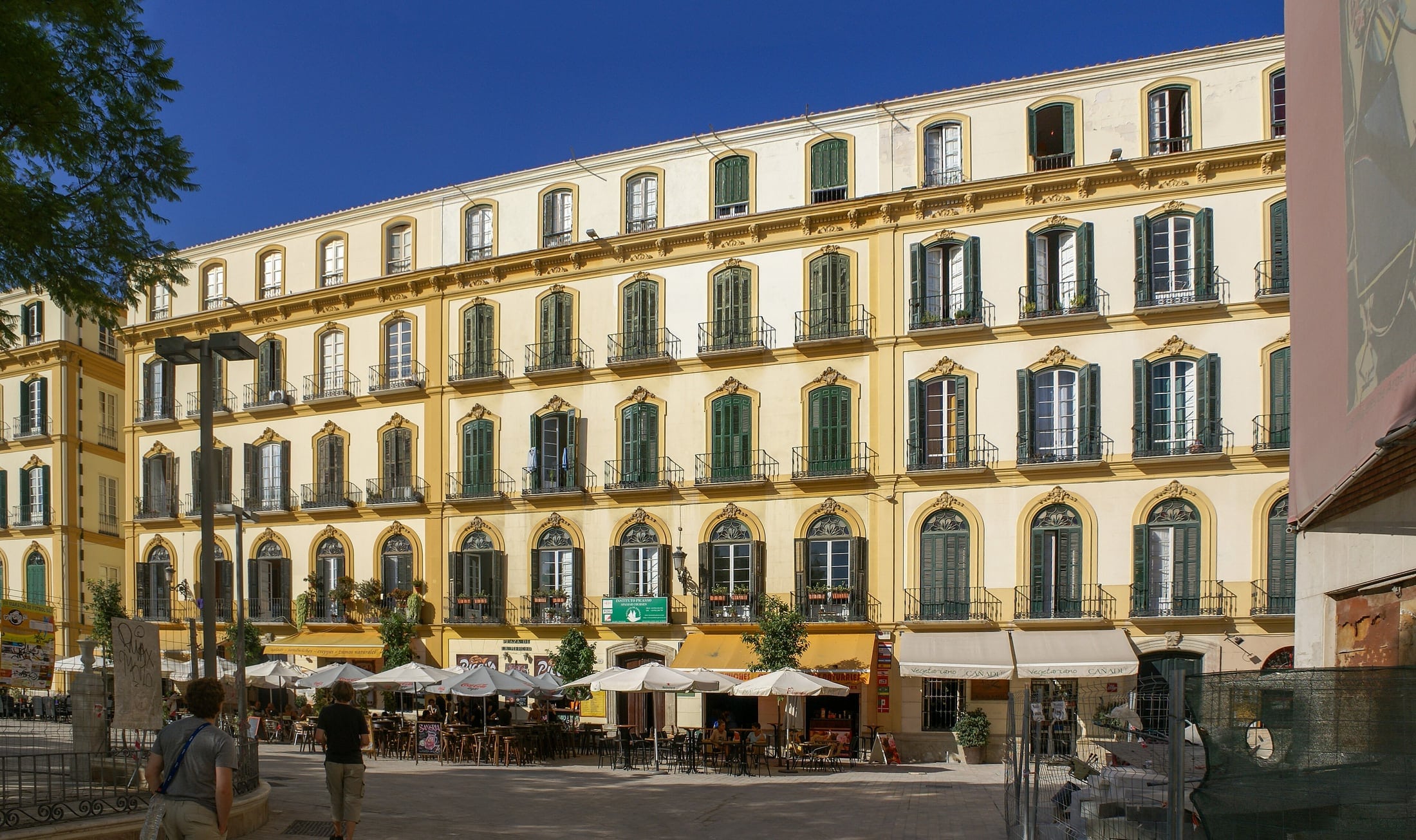
Museo Picasso Málaga and the Picasso Birthplace Museum are not the same place. Buenavista holds the major art collection; Casa Natal, at number 15 Plaza de la Merced, focuses on the family, childhood, documents, and the environment of his early years.
If you have only one art ticket, start with Buenavista. If you want the biographical frame, finish at the birthplace—it changes the final walk from museum exit to homecoming.
The three-hour Picasso route
This route gives the collection the largest share of time, protects the archaeology from being missed, and leaves the final half-hour for Picasso's Málaga outside the museum.
Reach Calle San Agustín 10–15 minutes early and keep the ticket ready without displaying its QR code publicly.
Pause before the galleries. The Renaissance-and-Mudéjar building is part of the visit, not merely its container.
Give the collection about 75 minutes. Follow recurring ideas across decades instead of trying to force a strict chronology.
Reserve 25–30 minutes for Phoenician walls, Roman fish-salting vats, and the old palace cellar.
Step back into the historic center and let the architecture reconnect the museum to Málaga.
Finish at Picasso’s birthplace and the bench sculpture—a separate institution and a useful final chapter.
Curated city context 04 / 04
The final walk to Plaza de la Merced is short, but it completes the visit. The museum explains a lifetime of invention; the square restores the scale of a child looking outward.
Sit for a few minutes. The plaza is not an epilogue added for tourists. It is still a working urban room—and that ordinary continuity is the most convincing link between Picasso and Málaga.
TOON's museum score
9.2/ 10A personal rating from my May 21 visit, balancing the collection, curatorial approach, architecture, archaeology, crowd comfort, and the €13 ticket I purchased.
The honest review
The mixed chronology makes Picasso's experimentation feel continuous rather than divided into tidy textbook chapters.
Phoenician, Roman, and Renaissance layers turn the museum into one of Málaga's clearest lessons in how the city accumulated.
Come for breadth, process, and connections—not a checklist of the world's most famous Picasso canvases. The current display rewards curiosity more than recognition.
Rushing straight from artwork to artwork misses the courtyard, tower, old palace rooms, and the calm transition between historical and modern spaces.
The verdict
The museum succeeds because it does not isolate the artist from the city. A family fought to bring the collection here. A palace makes room for it. Archaeology carries the story farther back than Picasso himself. Outside, the route continues to the square where he was born.
The best museum visits do not end at the exit. They return you to the street with better eyes.
Final Málaga passage · on to Marbella
Next: leaving Málaga for Marbella and the OTG Summit—the road that started this annual ritual, and the reason I learned to arrive one day early.
Return to the Málaga chapter ↗