A city made for walking
The pedestrian center lets the evening unfold without transport planning. Dinner, landmarks, people-watching, and the return to the hotel can all belong to the same route.
Passage 05 · Málaga after dark · May 20
MÁLAGA · NIGHT WALK
After tapas, there was no itinerary—only lit façades, full terraces, and the pleasure of letting Málaga choose the next turn.
Walk with me ↘TOON's photograph · Historic center, Málaga · May 2026
05 / 09
Dinner ended. Málaga did not.
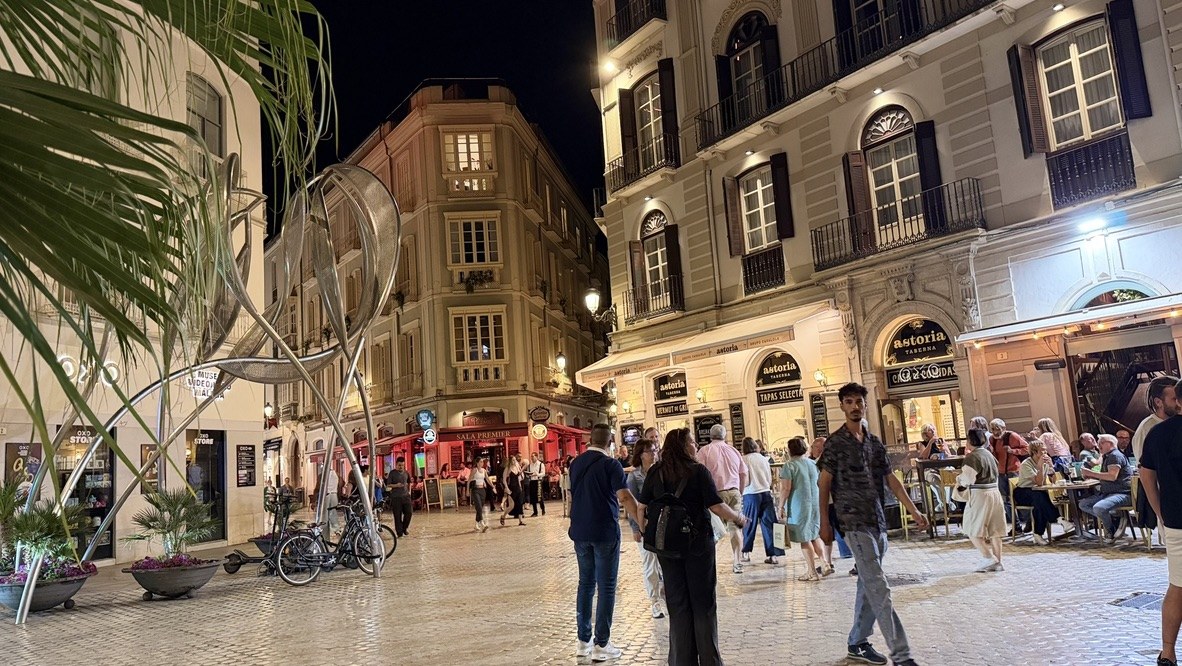
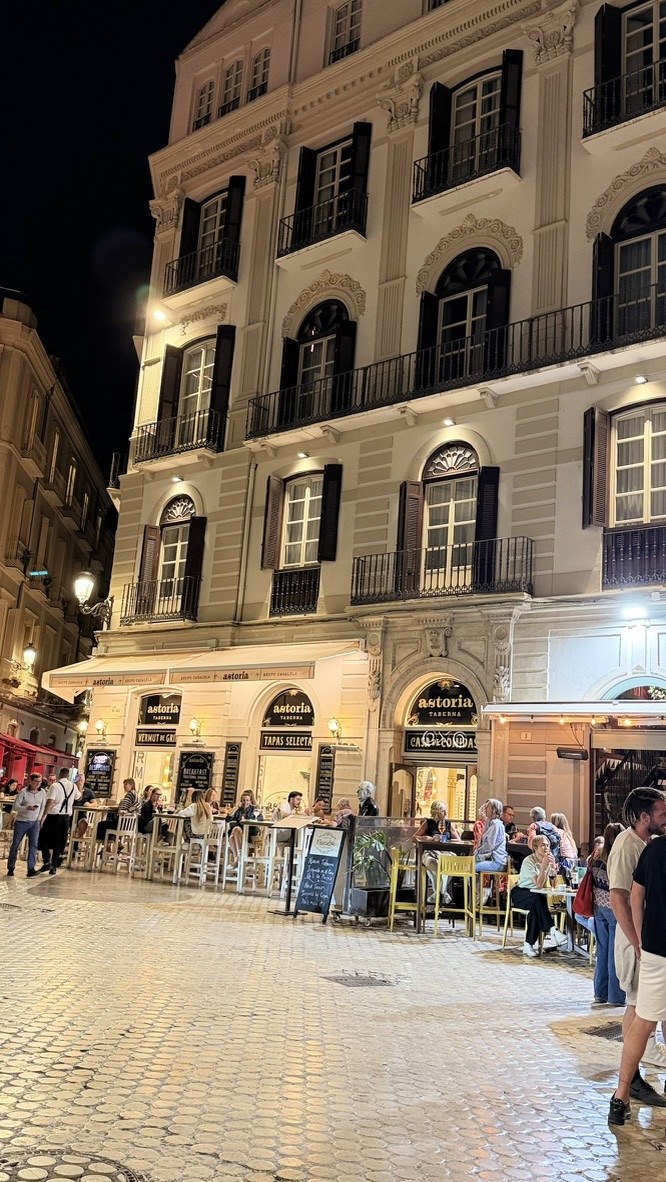
We left Casa Lola and stepped back into a historic center that felt more awake than it had in daylight. The air was easier, the façades were warmer, and dinner had moved beyond the restaurants: people stood at corners, filled the high tables, crossed the plazas, and let conversation take its time.
I did not need a checklist. I wanted the simple pleasure of walking without urgency—Calle Granada into the small plazas, then toward Calle Larios and Plaza de la Constitución, stopping whenever the street gave us a reason.
That is my strongest impression of Málaga at night: the city does not ask you to choose between sightseeing and going out. Architecture, dinner, people-watching, and the walk home become one continuous experience.
Calle Granada · Plaza del Siglo
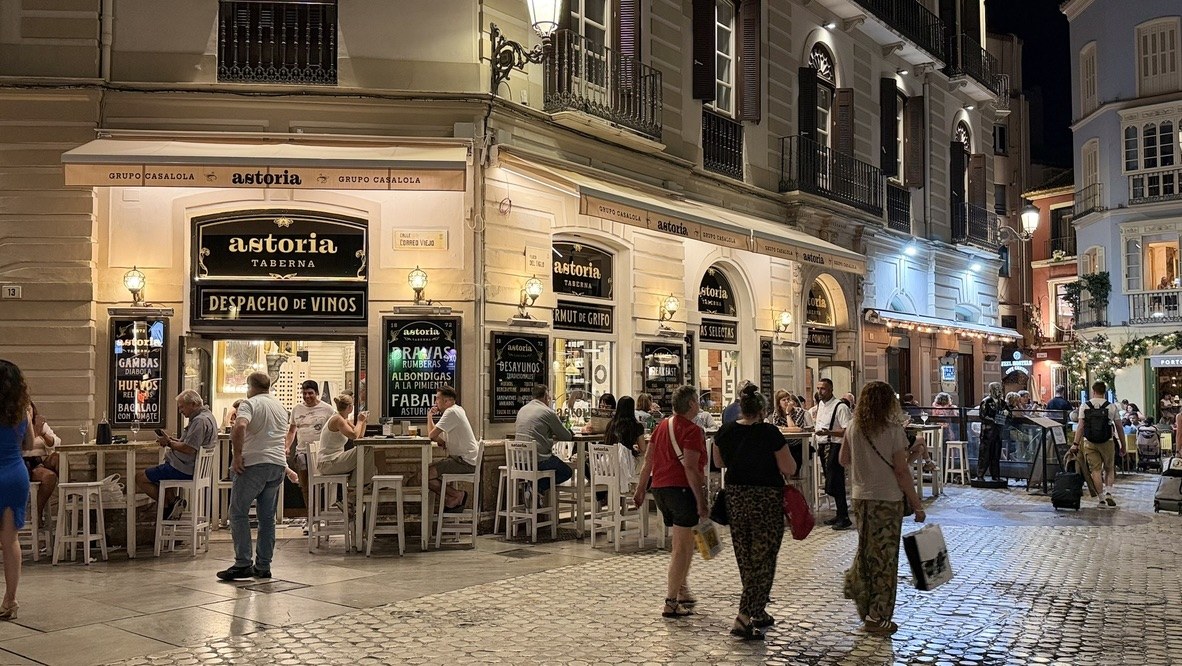
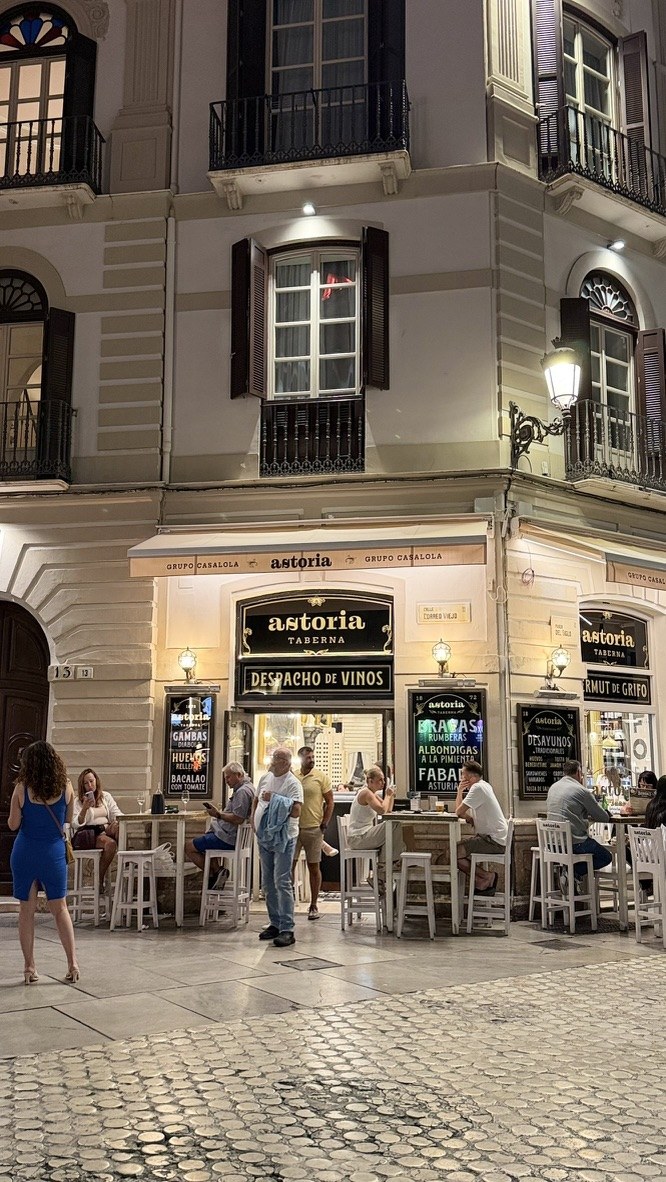
Astoria was glowing on the corner, its windows and high tables open to the street. We had not come to review another restaurant; we were watching the city turn public space into the next room of the evening.
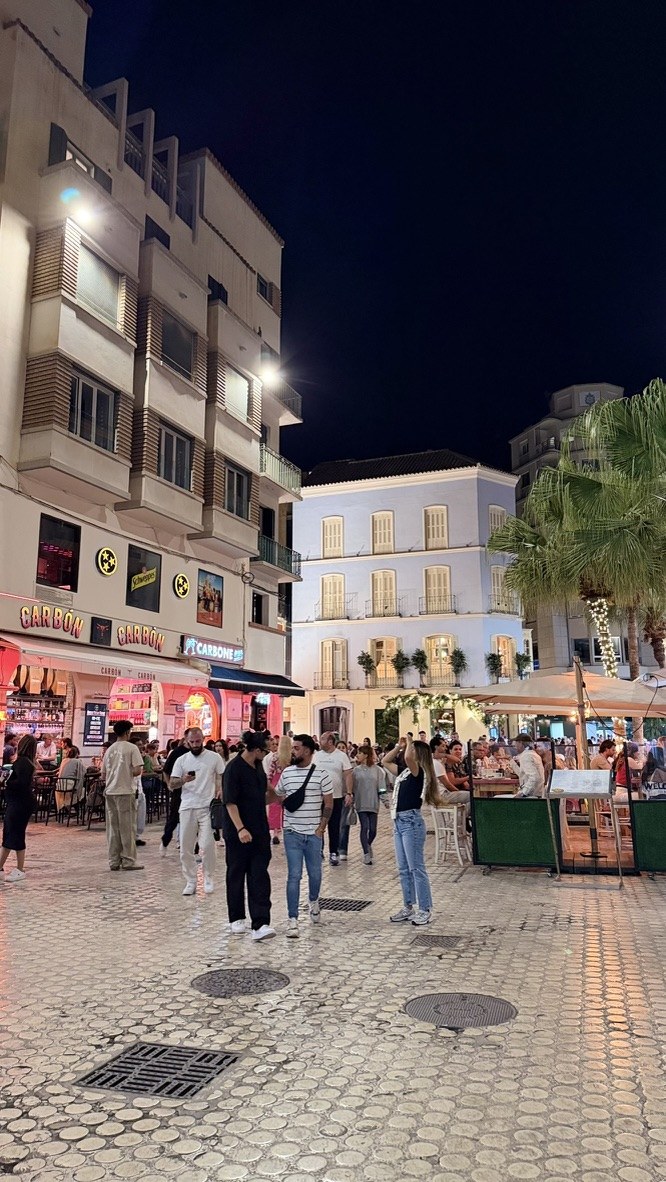
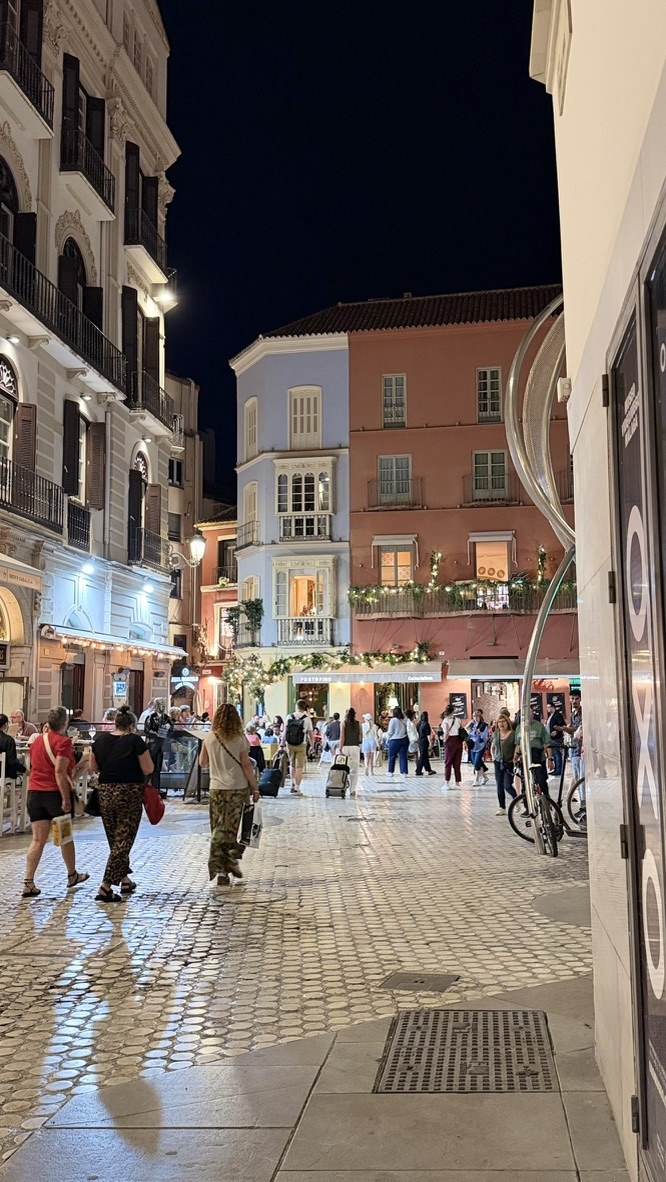
The historic center feels compact at this hour. A busy corner gives way to a quieter lane, then another pocket of tables. You can follow the light rather than a map and still remain within an easy walk of the center.
How I would walk it Start after dinner around Calle Granada, drift through Plaza del Siglo and Plaza del Carbón, then continue toward Calle Larios and Plaza de la Constitución. Add the cathedral or waterfront only if the night still has energy.
The cathedral after dark
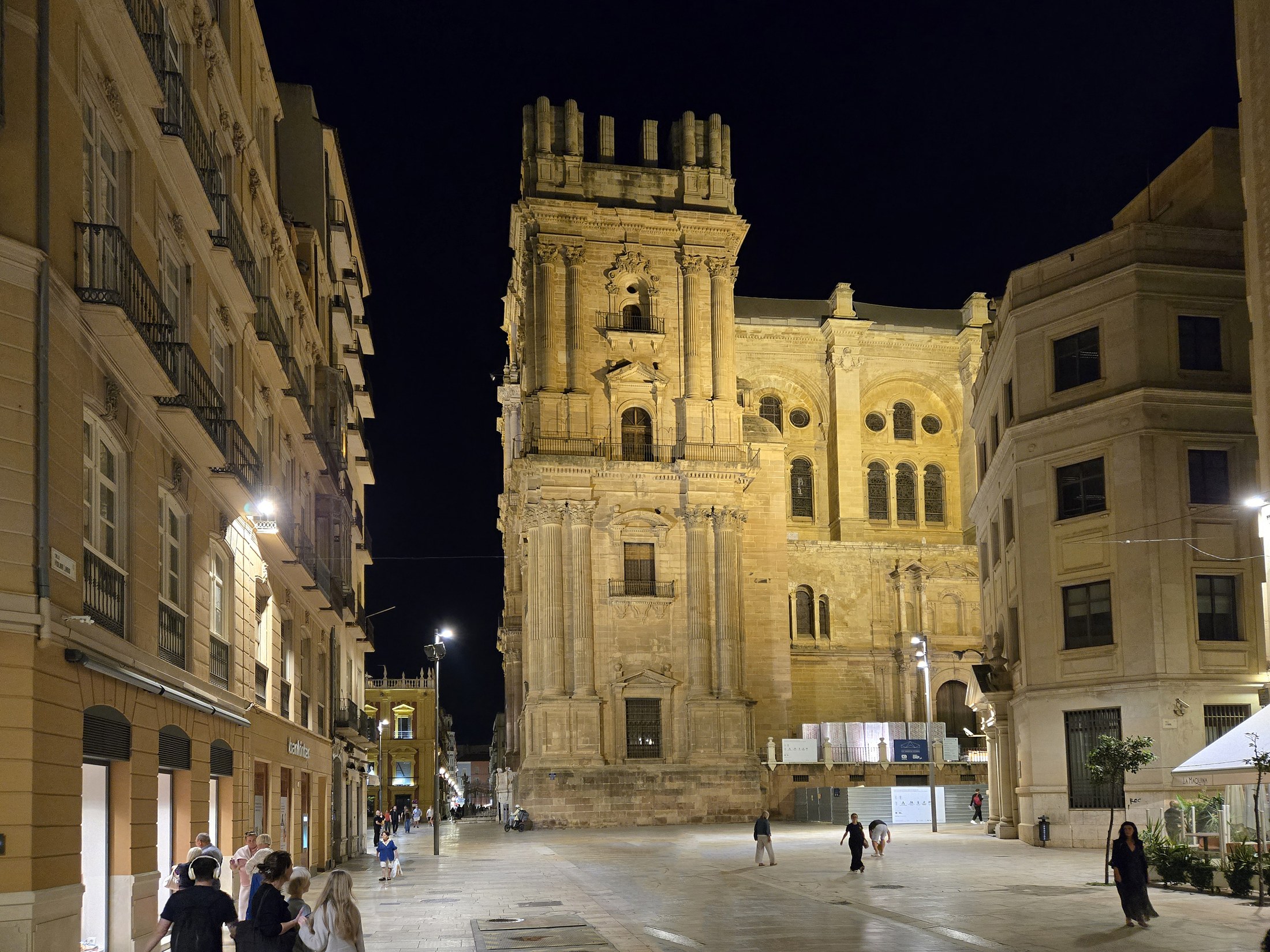
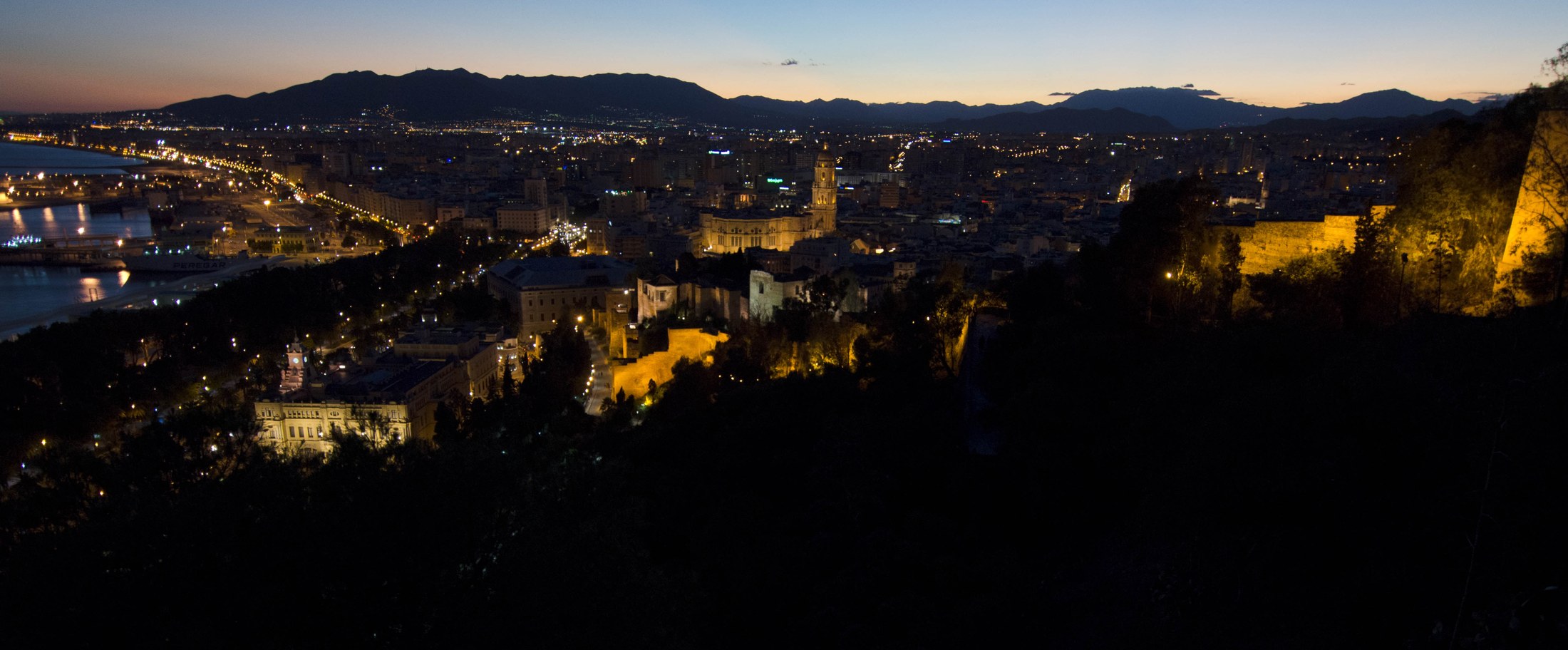
Málaga Cathedral began taking shape in the 16th century on the site of the former mosque, and its famously incomplete form still defines the old center. At night, the history is not hidden behind museum hours. Its illuminated stone rises above streets still full of ordinary life.
That contrast is one of Málaga's strengths: monumental architecture does not sit apart from dinner. It accompanies the evening, appearing between tables and at the end of narrow streets.
Official historic-center route ↗The social center
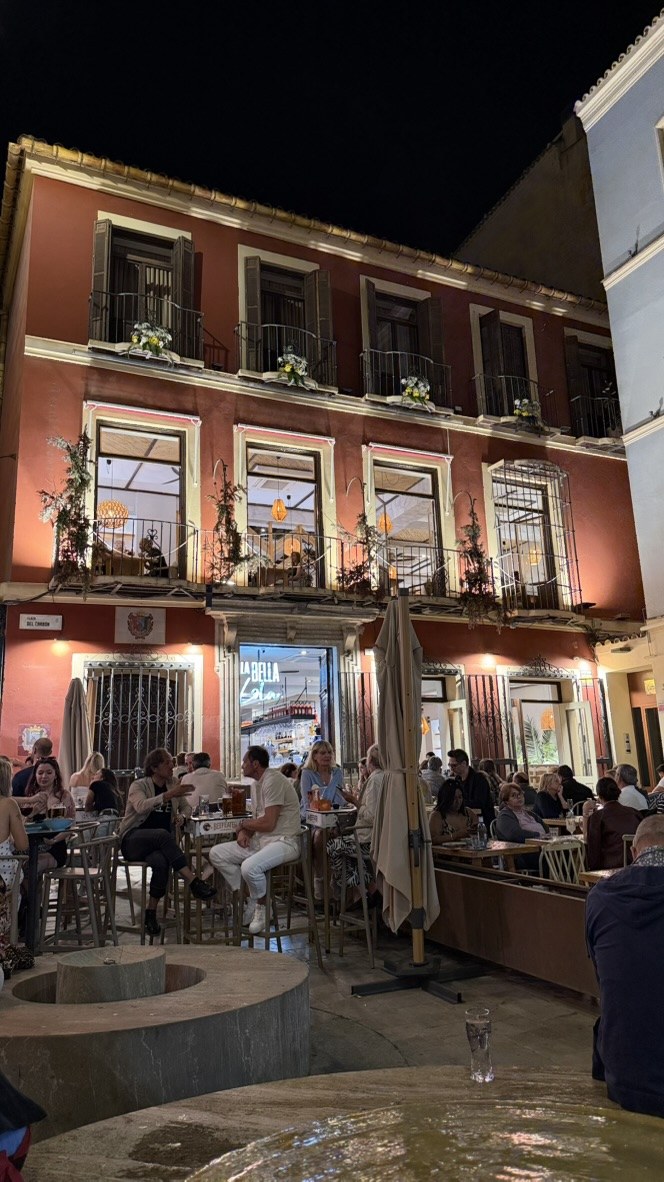
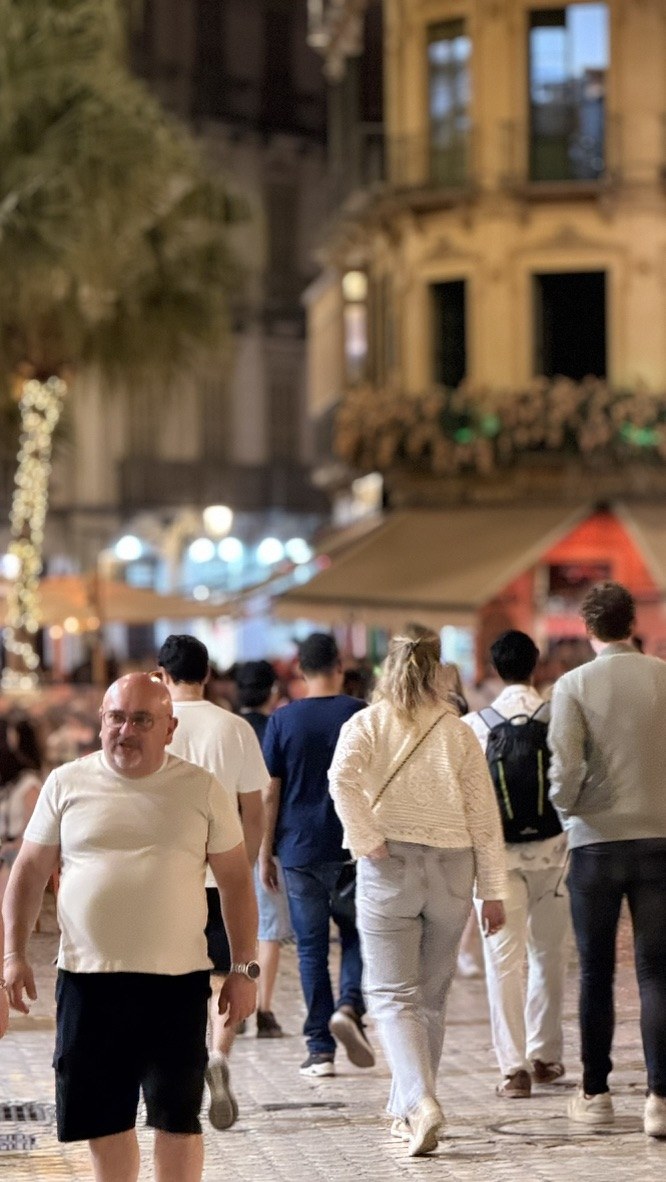
The evening did not feel organized around one attraction. It was made of small public rooms: a fountain, a painted façade, a line of café tables, a doorway full of music, then another corner where everyone slowed down.
Plaza del Carbón was busier and brighter, with groups moving between restaurants and bars. I liked the energy, though it also showed the compromise of central Málaga: at peak time the most popular pockets can feel crowded and visitor-heavy.
The answer is simple. Keep walking. One or two streets can change the mood completely, and the historic center is small enough to let curiosity do the navigation.
Curated context 02 / 04
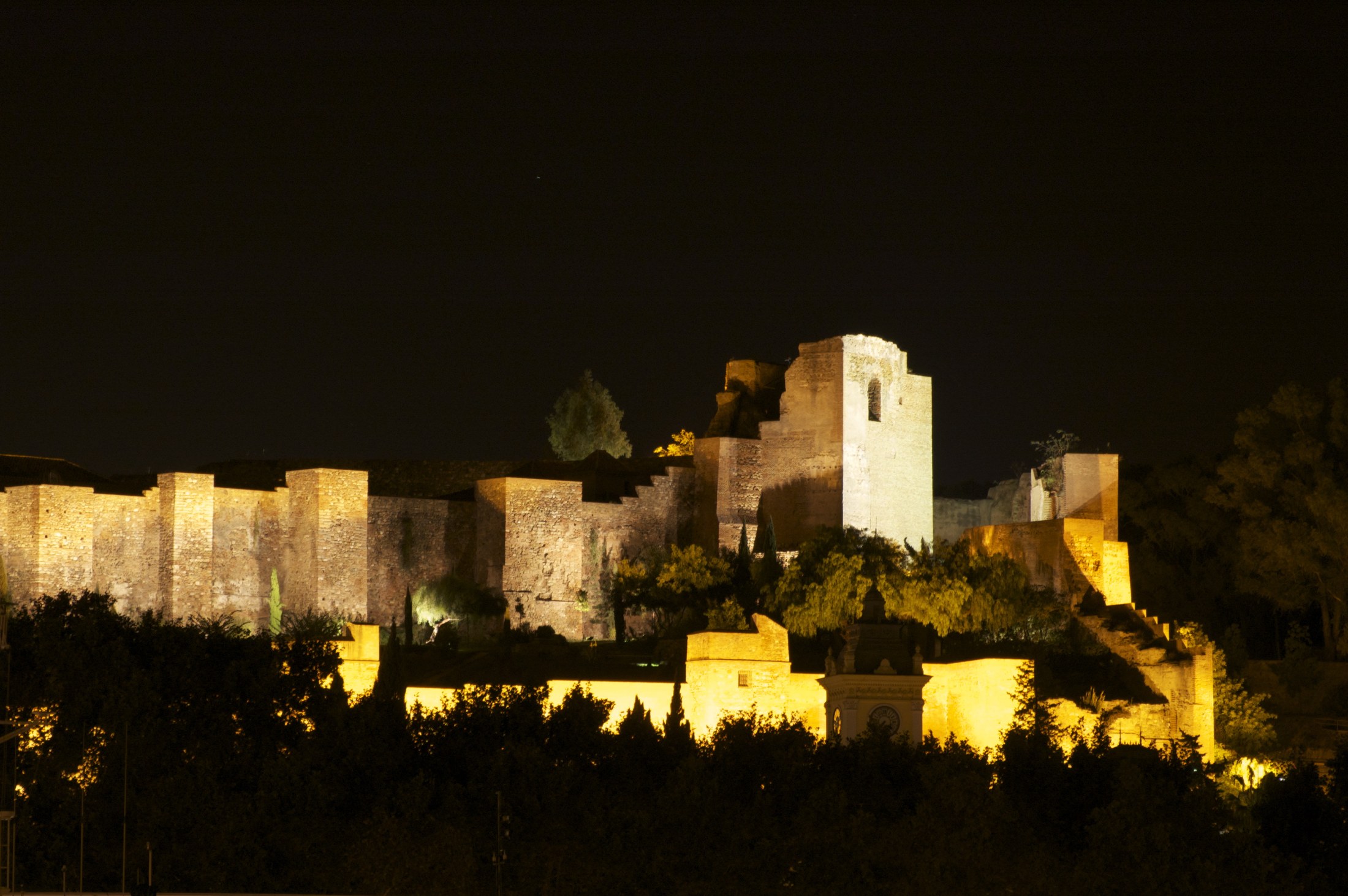
The Alcazaba was built between the 11th and 14th centuries as the palace-fortress of Málaga's Muslim rulers. Even when the interiors are closed, its illuminated walls give the night skyline a deeper scale.
This is where Málaga's compact geography becomes clear: Roman, Islamic, Renaissance, and modern layers remain close enough to encounter in a single walk. Entry hours are separate from the night experience, so verify them if you want more than the exterior view.
Calle Marqués de Larios
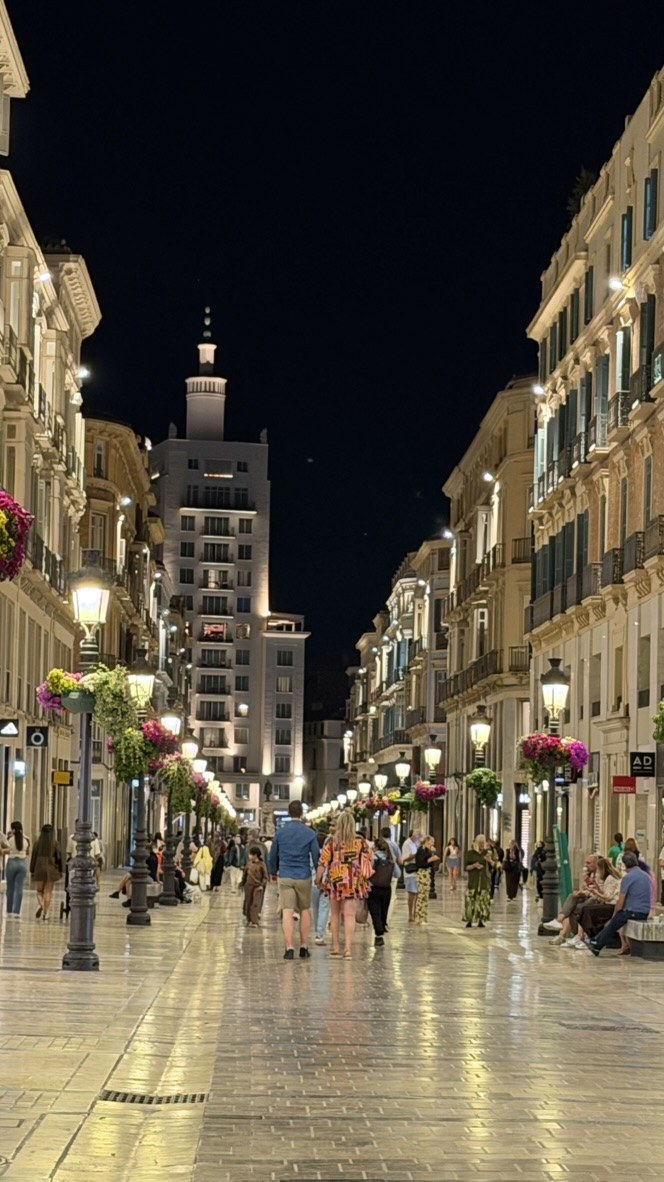
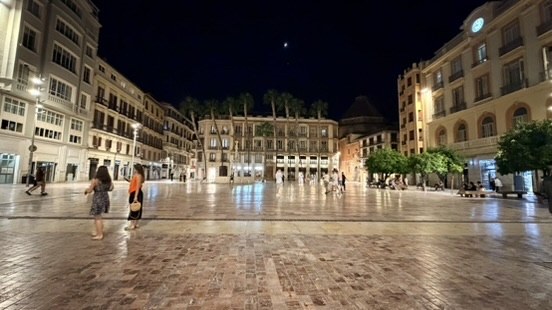
Calle Larios connects directly to Plaza de la Constitución, the heart of the historic center. Its scale is more formal than the side streets, but at night it still feels relaxed: lamplight, polished paving, flower baskets, and people moving at strolling speed.
This is where I would bring a first-time visitor to understand the city quickly. It is central, easy to orient from, and connected to smaller streets that feel more intimate. The pedestrian priority across the old center makes wandering unusually natural.
Practical note Comfortable shoes matter on polished and cobbled surfaces. In any busy city center, keep a phone and bag secure and use ordinary crowd awareness; lively does not mean careless.
The optional second act
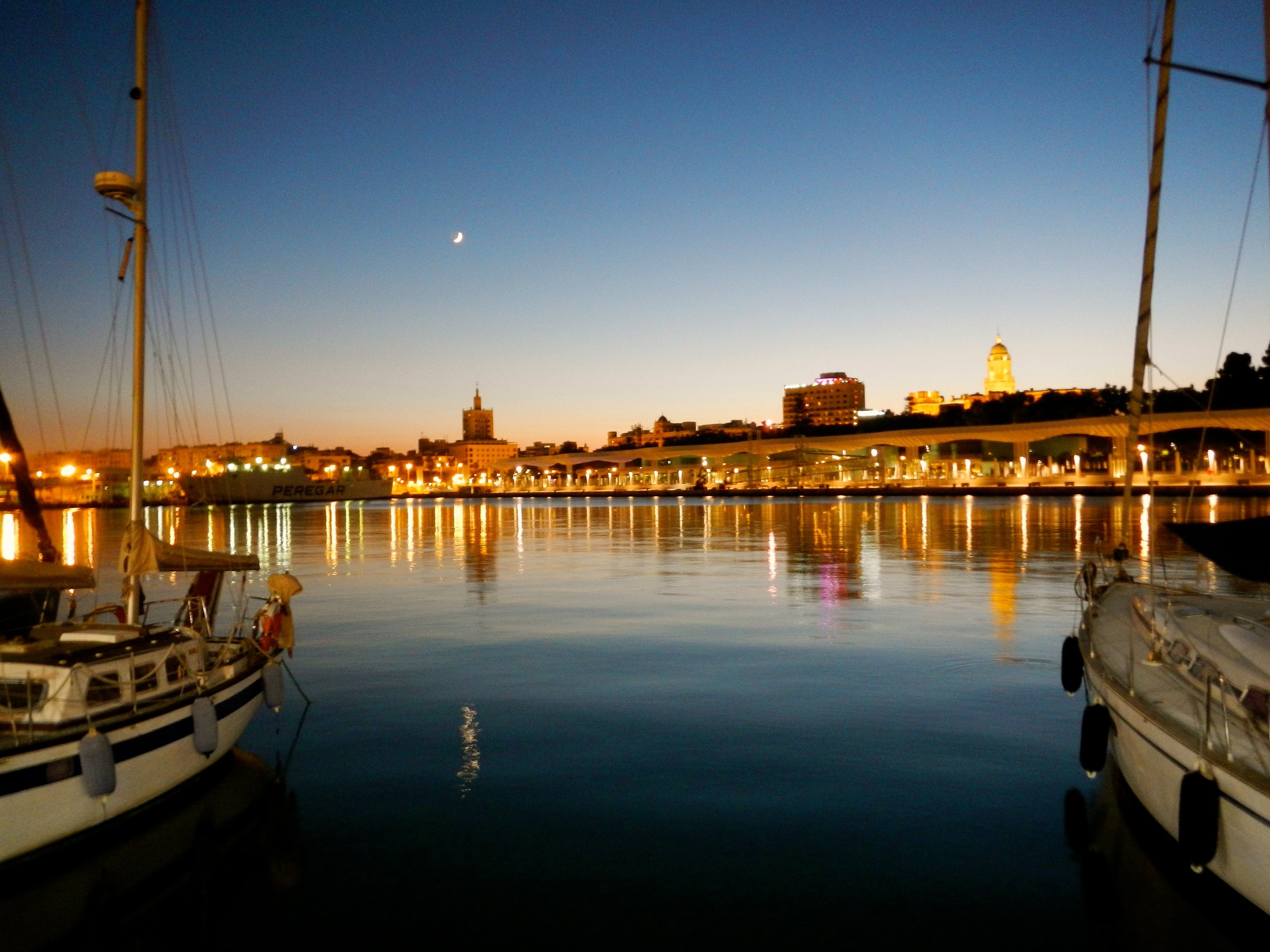
If the historic center is Málaga's social room, the waterfront is its release valve. Muelle Uno extends the walk toward the port, restaurants, Centre Pompidou Málaga, and La Farola lighthouse.
We kept this particular evening in the old center, but I would recommend the harbor as an easy extension—especially around sunset, when the water and city lights share the same frame.
Spain's official Málaga guide ↗The walk in fragments
Why the night works
Málaga's nighttime appeal is not one view or venue. It is the short distance between everything: a tapas table, an old façade, the cathedral, a plaza, the fortress above, and the harbor beyond.
TOON's city-after-dark score
9.1/ 10A personal editorial rating from this walk—not a crowdsourced score or a claim about every neighborhood.
The honest review
The pedestrian center lets the evening unfold without transport planning. Dinner, landmarks, people-watching, and the return to the hotel can all belong to the same route.
The best nightlife here is public life: terraces, plazas, conversation, and a late stroll. You do not need a club reservation to feel that the city is awake.
Central streets can be noisy, crowded, and visitor-heavy at peak times. Anyone looking for a private or tranquil evening should move beyond the busiest plazas.
You can spend on dinner or drinks, but the essential experience costs nothing: illuminated architecture, open public space, and the freedom to keep moving.
The Verdict
Travelers who value walkability, architecture, tapas culture, and a social evening that does not require a strict plan.
Calle Granada to the small plazas, Calle Larios and Plaza de la Constitución; add the cathedral or Muelle Uno when time and energy allow.
Expect crowds and noise in the most popular pockets, especially around dinner. Quieter travelers should wander a street or two beyond the obvious cluster.
Yes. This is exactly the kind of low-pressure evening that keeps southern Spain among my favorite places to travel.
We left dinner looking for a short walk. Málaga gave us the rest of the night.
Next passage · A Spanish morning
The next morning brings a different tempo: coffee, breakfast, and Málaga in the softer light before the day fills in.
Continue to breakfast ↗